Junte-se a nós em uma viagem ao mundo dos livros!
Adicionar este livro à prateleira
Grey
Deixe um novo comentário Default profile 50px
Grey
Assine para ler o livro completo ou leia as primeiras páginas de graça!
All characters reduced
Daisy's Necklace and What Came of It - cover
LER

Daisy's Necklace and What Came of It

Thomas Bailey Aldrich

Editora: DigiCat

  • 0
  • 0
  • 0

Sinopse

In "Daisy's Necklace, and What Came of It," Thomas Bailey Aldrich crafts a poignant narrative that intertwines themes of love, loss, and the social intricacies of 19th-century America. Written in a lyrical prose style that reflects Aldrich's poetic sensibilities, the story revolves around the titular character, Daisy, whose seemingly trivial act of wearing a beautiful necklace leads to a cascade of unforeseen consequences. Aldrich expertly employs irony and social commentary, shedding light on the era's concerns around materialism, reputation, and the fragility of human relationships, making the work a quintessential example of American realism infused with romantic idealism. Thomas Bailey Aldrich, an influential figure in American literature, was a poet, novelist, and editor whose work often explored the complexities of human emotion and societal norms. His diverse experiences, including a prominent career in journalism and editorship at prestigious periodicals, profoundly shaped his narrative style and thematic preoccupations. Aldrich's keen observational skills and deep empathy for his characters stem from his own encounters with both the elite and the struggling classes of his time, allowing him to create a rich tapestry of social commentary. This book invites readers to contemplate the profound impact of seemingly innocent choices, making it a must-read for those interested in the intertwining of everyday life with deeper philosophical questions. Aldrich's ability to blend humor with pathos captivates, providing a timeless exploration of the human condition that resonates regardless of the era.
Disponível desde: 16/09/2022.
Comprimento de impressão: 84 páginas.
Outros livros que poderiam interessá-lo

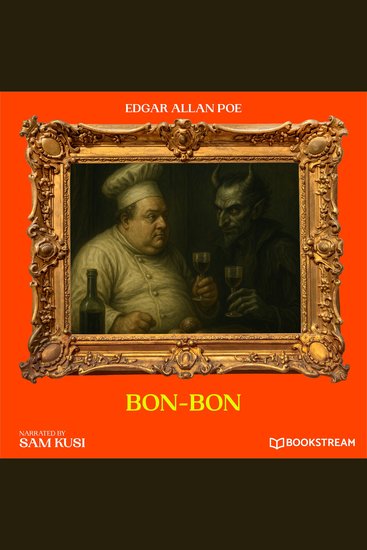
  • Bon-Bon - cover

    Bon-Bon

    Anônimo

    • 0
    • 0
    • 0
    "Bon-Bon" is a comedic short story by Edgar Allan Poe, first published in December 1832 in the Philadelphia Saturday Courier. Originally called "The Bargain Lost", it follows Pierre Bon-Bon, who believes himself a profound philosopher, and his encounter with the Devil. The story's humor is based on the verbal interchange between the two, which satirizes classical philosophers such as Plato and Aristotle. The Devil reveals that he has eaten the souls of many of these philosophers.
    The story, which received moderate praise, was originally submitted by Poe as "The Bargain Lost", and was his entry to a writing contest. Though none of the five stories he submitted won the prize, the Courier printed them all, possibly without paying Poe for them. This early version of the story has many differences from later versions, which Poe first published as "Bon-Bon" in 1835.
    Ver livro
  • Antony and Cleopatra - cover

    Antony and Cleopatra

    William Shakespeare

    • 0
    • 0
    • 0
    Antony and Cleopatra (First Folio title: The Tragedie of Anthonie, and Cleopatra) is a tragedy by William Shakespeare. The play was first performed, by the King's Men, at either the Blackfriars Theatre or the Globe Theatre in around 1607; its first appearance in print was in the Folio of 1623.
    The plot is based on Thomas North's 1579 English translation of Plutarch's Lives (in Ancient Greek) and follows the relationship between Cleopatra and Mark Antony from the time of the Sicilian revolt to Cleopatra's suicide during the Final War of the Roman Republic. The major antagonist is Octavius Caesar, one of Antony's fellow triumvirs of the Second Triumvirate and the first emperor of the Roman Empire. The tragedy is mainly set in the Roman Republic and Ptolemaic Egypt and is characterized by swift shifts in geographical location and linguistic register as it alternates between sensual, imaginative Alexandria and a more pragmatic, austere Rome.
    Many consider Shakespeare's Cleopatra, whom Enobarbus describes as having "infinite variety", as one of the most complex and fully developed female characters in the playwright's body of work. She is frequently vain and histrionic enough to provoke an audience almost to scorn; at the same time, Shakespeare invests her and Antony with tragic grandeur. These contradictory features have led to famously divided critical responses. It is difficult to classify Antony and Cleopatra as belonging to a single genre. It can be described as a history play (though it does not completely adhere to historical accounts), as a tragedy (though not completely in Aristotelian terms), as a comedy, as a romance, and according to some critics, such as McCarter, a problem play. All that can be said with certainty is that it is a Roman play, and perhaps even a sequel to another of Shakespeare's tragedies, Julius Caesar.
    Among the most significant works William Shakespeare: Hamlet, Othello, King Lear, Macbeth, Orpheus, Romeo and Juliet, Julius Caesar, Troilus and Cressida, The Tempest, Venus and Adonis, Antony and Cleopatra, Measure for Measure, The Winter's Tale and many more.
    Ver livro
  • Snow-White and Rose-Red - Story Time Episode 22 (Unabridged) - cover

    Snow-White and Rose-Red - Story...

    Brothers Grimm

    • 0
    • 0
    • 0
    Snow-White and Rose-Red are two little girls living with their mother, a poor widow, in a small cottage by the woods. Snow-White is quiet and shy and prefers to spend her time indoors, doing housework and reading. Rose-Red is outspoken, lively and cheerful, and prefers to be outside.
    Ver livro
  • Three Men in a Boat (To Say Nothing of the Dog) - cover

    Three Men in a Boat (To Say...

    Jerome K.

    • 0
    • 0
    • 0
    Three Men in a Boat (To Say Nothing of the Dog), published in 1889, is a humorous account by English writer Jerome K. Jerome of a two-week boating holiday on the Thames from Kingston upon Thames to Oxford and back to Kingston. The book was initially intended to be a serious travel guide, with accounts of local history along the route, but the humorous elements took over to the point where the serious and somewhat sentimental passages seem a distraction to the comic novel. One of the most praised things about Three Men in a Boat is how undated it appears to modern readers – the jokes have been praised as fresh and witty.
    The three men are based on Jerome himself (the narrator Jerome K. Jerome) and two real-life friends, George Wingrave (who would become a senior manager at Barclays Bank) and Carl Hentschel (the founder of a London printing business, called Harris in the book), with whom Jerome often took boating trips. The dog, Montmorency, is entirely fictional but, "as Jerome admits, developed out of that area of inner consciousness which, in all Englishmen, contains an element of the dog". The trip is a typical boating holiday of the time in a Thames camping skiff. This was just after commercial boat traffic on the Upper Thames had died out, replaced by the 1880s craze for boating as a leisure activity.[citation needed].
    Following the overwhelming success of Three Men in a Boat, Jerome later published a sequel, about a cycling tour in Germany, titled Three Men on the Bummel (also known as Three Men on Wheels, 1900).
    Famous works of the author Jerome K. Jerome:
    Idle Thoughts of an Idle Fellow, Three Men in a Boat, Diary of a Pilgrimage, Three Men on the Bummel, Paul Kelver, All Roads Lead to Calvary.
    Ver livro
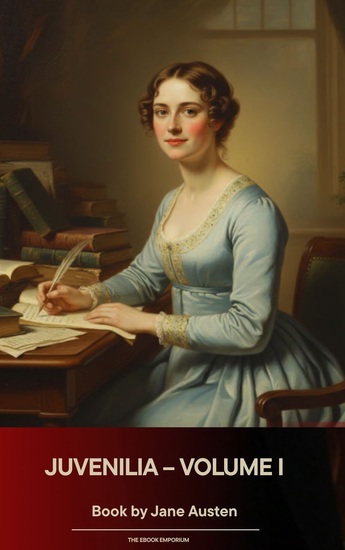
  • Juvenilia – Volume I - cover

    Juvenilia – Volume I

    Jane Austen

    • 0
    • 0
    • 0
    "I have a great mind to go to Italy and be a nun, but I don't think I should like it."
    
    Long before she created Elizabeth Bennet or Emma Woodhouse, a teenage Jane Austen was already skewering the tropes of 18th-century literature. Juvenilia – Volume I is a riotous collection of "scraps" and "sketches" that displays none of the refined restraint of her later novels. Instead, readers are treated to dark humor, absurd plots, and characters who drink too much, marry too often, and faint with alarming frequency. From the chaotic social blunders of "Frederic and Elfrida" to the wild escapades of "Henry and Eliza," this volume offers a rare, unvarnished look at the birth of a satirist who would go on to change the world of fiction.
    
    The Roots of Satire: In these early pages, Austen mocks the "Sirs" and "Madams" of the sentimental novels she grew up reading. She takes the dramatic clichés of her time—vows of eternal friendship, tragic coincidences, and fainting fits—and pushes them to a level of hilarious absurdity. It is a masterclass in parody that shows a young girl already in full command of her wit.
    
    A Window into the Austen Household: These stories were meant to be read aloud to the Austen family at Steventon Rectory. They reflect the lively, intellectual, and often irreverent atmosphere in which Jane was raised. Many stories are dedicated to her siblings or cousins, making the volume an intimate piece of literary history that bridges the gap between a private family hobby and public masterpiece.
    
    Dark Comedy and High Energy: Readers expecting the polite drawing rooms of Mansfield Park will be surprised by the energy here. In "Jack and Alice," for example, we find a world of "red-faced" drinking and physical comedy. This volume proves that Austen was always a rebel at heart, using her pen to puncture the pomposity of the world around her from the very start.
    
    Discover the girl behind the genius. Purchase "Juvenilia – Volume I" today.
    Ver livro
  • Mr Britling Sees It Through (Unabridged) - cover

    Mr Britling Sees It Through...

    H. G. Wells

    • 0
    • 0
    • 0
    Mr. Britling Sees It Through is H.G. Wells's "masterpiece of the wartime experience in south eastern England." The novel was published in September 1916.
    Mr. Britling Sees It Through tells the story of a renowned writer, Mr. Britling, a protagonist who is quite evidently an alter ego of the author. The garrulous, easy-going Mr. Britling lives with family and friends in the fictional village of Matching's Easy, located in the county of Essex, northeast of London. The novel is divided into three parts. Book the First, entitled "Matching's Easy At Ease," is set in June-July 1914 and is at first narrated from the point of view of an American, Mr. Direck, who visits Mr. Britling's establishment in Dower House and falls in love with Cissie, the sister of Mr. Britling's secretary's wife. Also in the company are Mr. Britling's son Hugh and a visiting German student, Herr Heinrich, who is forced to leave when war breaks out. Book the Second, "Matching's Easy at War," covers August 1914 to October 1915, when Mr. Britling's son Hugh is killed at the front. In Book the Third, "The Testament of Matching's Easy," Mr. Britling learns that Herr Heinrich has also been killed, and writes a long letter to the dead German soldier's parents.
    Ver livro