Join us on a literary world trip!
Add this book to bookshelf
Grey
Write a new comment Default profile 50px
Grey
Subscribe to read the full book or read the first pages for free!
All characters reduced
Mountain Herding Ways - cover

Mountain Herding Ways

Theresa Walton

Translator A AI

Publisher: Publifye

  • 0
  • 0
  • 0

Summary

Mountain Herding Ways explores the intricate relationship between traditional livestock herding and family structures in mountain societies worldwide. It examines how these communities have adapted to challenging environments, revealing that family members play crucial roles in sustaining these practices. The book highlights the gendered divisions of labor, where men, women, and children each contribute to managing livestock and processing animal products. Through historical and social context, it becomes clear that mountain herding is not just an economic activity, but a deeply embedded cultural practice.

 
The book investigates the adaptation strategies employed by mountain herders, such as transhumance and agro-pastoralism, to thrive in diverse environments. It traces the evolution of these practices from ancient roots to present-day forms while focusing on how geographical constraints and seasonal migrations have influenced the development of specific herding techniques.

 
Case studies from the Andes, the Himalayas, and the Alps illustrate both the common threads and unique adaptations that characterize mountain herding societies. The book unfolds across three major parts, starting with an analysis of diverse adaptation strategies, followed by an examination of gendered labor divisions, concluding with an exploration of modernization and climate change impacts.

 
Ultimately, Mountain Herding Ways offers valuable insights for sustainable development, cultural preservation, and policies aimed at supporting vulnerable mountain regions.
Available since: 02/27/2025.
Print length: 67 pages.
Other books that might interest you

  • A Rare Recording of Lord Haw-Haw - cover

    A Rare Recording of Lord Haw-Haw

    Lord Haw-Haw

    • 0
    • 0
    • 0
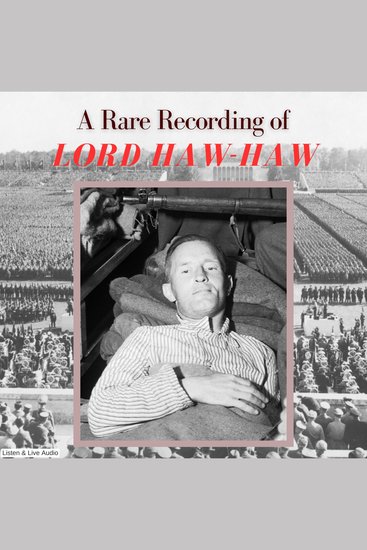
    Lord Haw-Haw was a nickname given to the American-born Brit, William Joyce, who broadcast Nazi propaganda to Britain from Germany during the Second World War. Lord Haw-Haw was a Nazi broadcaster during World War II. Joyce emigrated to Germany and broadcast Nazi messages for several years. The Reich Ministry of Propaganda used these broadcasts to discourage and demoralize Allied forces and the British population by exaggerating their war losses. Up to 60% of the British population actually tuned in to Lord Haw-Haw’s broadcasts. They lasted from 1939-1945. Eventually Joyce was captured by Allied forces and brought back to England for trial. He was convicted of treason and hanged on January 3, 1946. This recording from April 9, 1940 is about the Nazi invasion of Denmark and Norway.
    Show book
  • Changing Perceptions - Deciphering the language of behaviour - cover

    Changing Perceptions -...

    Graham Chatterley

    • 2
    • 0
    • 0
    This timely book moves the dial on the perception of challenging behaviour in schools. De-escalation is important but it is only part of the process: if we really want to change behaviour, we have to understand it.
    The causes of poor behaviour are many and varied: fear, stress, anxiety and the feeling of being overwhelmed can all take their toll.Changing Perceptionsexamines the motives behind challenging behaviour and the consequences that come with it, detailing ways in which these situations can be managed calmly and consistently. Better understanding and empathy can make children feel safer, build their trust, develop belonging and consequently create more effective learners in the classroom.
    Empathy is the master key to unlocking the most challenging pupils. When we consistently respond to children with empathy and compassion, we don't just put a sticking plaster over a problem, we change their experiences: how they feel and how they behave long term. Importantly, this approach also greatly improves staff wellbeing by increasing understanding of challenging behaviour and how it is perceived.
    In this book, Graham sets out why it is so important to teach behaviour and provides practical ways to deal with the most challenging situations in the classroom and stop the conflict spiral. He also covers the importance of validating feelings, building self-esteem, improving emotional resilience, raising expectations, fostering positive values and much more.
    Essential reading for teachers, school leaders and everyone working with challenging behaviour.
    Show book
  • The Mind Games THEY Play - cover

    The Mind Games THEY Play

    Halbert Ward

    • 0
    • 0
    • 0
    Decode Mind Games Like a Pro: 
    Your Ultimate Guide to Spotting, Resisting, and Thriving Amid Manipulation Tactics 
    What's mind control, you ask? 
    It's the skill that can propel you forward in life, giving you the ability to understand, influence, and navigate the minds of those around you. Whether it's decoding your boss's intentions or enhancing personal relationships, this book is your guide to mastering the art. 
    In "The Mind Games THEY Play," Halbert Ward takes you on a fascinating journey through the intricacies of human psychology, offering 11 proven strategies to unravel the secrets of manipulation and fortify yourself against it. 
    Ward explores the depth of human connection, emphasizing that excellence isn't just about intelligence, it's about forming genuine bonds and possessing a high emotional quotient. Through the pages of this book, you'll discover how to read minds, interpret signals, and build meaningful personal and business relationships. 
     "The Mind Games THEY Play" is not about turning people into robots. It's about knowing what's up, reading the room, and making connections that count. It's also about connecting with people, rocking your emotional intelligence, and navigating life like a champ. From accelerating your career path to keeping your love life drama-free, this book has got your back. 
    So, if you're ready to decode the mysteries of human behavior, stand tall in the face of manipulation, and become a people-whisperer extraordinaire, This book is your go-to guide. Let the Mind Games...begin! 
    Get Your Copy Now! 
    Show book
  • Inheriting the Ancient Near East after Alexander the Great: The Rise and Fall of the Seleucid Empire and the Ptolemaic Kingdom - cover

    Inheriting the Ancient Near East...

    Editors Charles River

    • 0
    • 0
    • 0
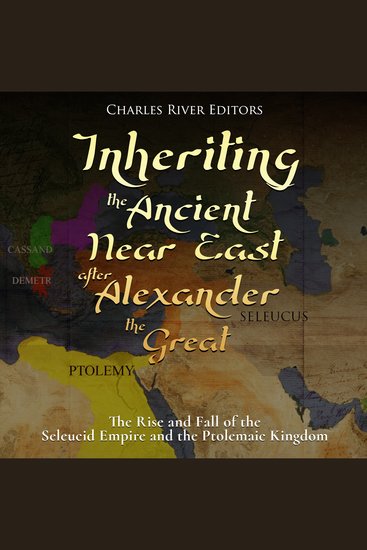
    On his deathbed, some historians claim that when he was pressed to name a successor, Alexander the Great muttered that his empire should go “to the strongest”. Other sources claim that he passed his signet ring to his general Perdiccas, thereby naming him successor, but whatever his choices were or may have been, they were ignored. Alexander’s generals, all of them with the loyalty of their own corps at their backs, would tear each other apart in a vicious internal struggle that lasted almost half a century before four factions emerged victorious: Macedonia, the Seleucid Empire in the east, the Kingdom of Pergamon in Asia Minor, and the Ptolemaic dynasty in Egypt. During the course of these wars, Alexander’s only heir, the posthumously born Alexander IV, was murdered, extinguishing his bloodline for ever.  
    	For a time, the Seleucids commanded the largest empire in the world as it stretched from the high plains and deserts of what is now Afghanistan in the east to parts of the Levant and Asia Minor in the west. The empire’s early kings were strong and shrewd and committed to the ideas of Hellenism as much as holding power and expanding the realm of their empire, but later rulers did not prove as capable. In time, the Seleucid royal house often descended into orgies of violence which were driven by ambitious men and women.   
    	Although Alexander never lived to rule over Egypt, one of his generals, Ptolemy I, did, and it was he who established the last great pharaonic dynasty in Egypt, known as the Ptolemaic Dynasty. Despite the infighting among them, one thing Alexander’s generals did agree upon was their Hellenistic culture. Most famously, Ptolemy’s line firmly established the Hellenistic culture of the Greeks while ruling over Egypt, and by marrying within their family line, the Ptolemaic pharaohs kept their Hellenistic heritage until the very end of Ptolemy’s line, which died with Cleopatra in 30 BC.
    Show book
  • Dog Meat Samosa - cover

    Dog Meat Samosa

    Stanley Gazemba

    • 0
    • 0
    • 0
    Nairobi, Kenya’s capital, is a rambling traffic-choked metropolis, bursting at the seams with people striving to earn a living on its mean streets. While Nairobi has every appearance of a fast-growing, modern African city with the mushrooming skyscrapers and superhighways, the city possesses a dark underbelly. Dog Meat Samosa delves into the bowels of Nairobi’s crowded urban backstreets to paint a gritty picture of its underworld, to describe the human experience within this once glorious “City in the Sun” that has since metamorphosed into a cutthroat hustlers’ paradise.
    Show book
  • Anna's Erotic Education: From Innocent to Madame in Victorian London - cover

    Anna's Erotic Education: From...

    Dorian Shellan

    • 0
    • 0
    • 0
    Anna would have become the virtuous lady her parents had intended, but their sudden deaths leaves her orphaned and destitute and she is taken in by her godfather, a strict disciplinarian. 
    While defiant and afraid when first disciplined, Anna soon becomes an aficionado to the art of birching and realizes she is more excited by giving than receiving. She also develops a taste for the sensual pleasures of another woman with Sally, her godfather's maid, who soon becomes submissive to Anna's lascivious desires. 
    Unwilling to enter domestic service as a governess, Anna is apprenticed to Madame Stewart who quickly sells her virginity to a well-placed lord. His lordship is so delighted with Anna that he sets her up as his mistress in a fashionable London suite. But tiring of the confinement of the life of a concubine and his lordship's jealousy, she escapes to the continent. Following exposure to erotica by a ship's captain and a series of sexual adventures in Naples and Paris, Anna becomes a wealthy woman of pleasure and returns to London to establish her own brothel. 
    This erotic Victorian adventure includes birching, lesbian sex, virgin deflowering, role play and prostitution.
    Show book