Join us on a literary world trip!
Add this book to bookshelf
Grey
Write a new comment Default profile 50px
Grey
Subscribe to read the full book or read the first pages for free!
All characters reduced
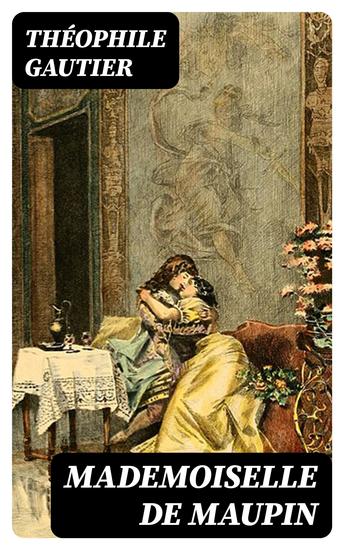
Mademoiselle de Maupin - cover

Mademoiselle de Maupin

Théophile Gautier

Translator I. G. Burnham

Publisher: DigiCat

  • 0
  • 0
  • 0

Summary

Set against the vibrant backdrop of 19th-century France, Théophile Gautier's "Mademoiselle de Maupin" is a striking exploration of gender, identity, and the complexities of love. Written in a lush, Romantic style that merges prose and poetry, this novel intricately weaves the tale of the androgynous character, Mademoiselle Madeleine de Maupin, whose enigmatic charm captivates both men and women alike. Gautier deftly navigates the bohemian world of Paris, encapsulating the spirit of the era through richly detailed descriptions and philosophical musings, inviting readers into a tantalizing exploration of freedom and desire in a society bound by convention. Gautier, a key figure in the Romantic movement, was influenced by his own experiences in the culturally rich milieu of Paris. His fascination with beauty, art, and the performative nature of identity is evident in "Mademoiselle de Maupin," which mirrors the societal tensions he witnessed regarding gender roles and artistic expression. Gautier's life, steeped in the avant-garde, positioned him perfectly to ponder these themes, making the novel not only a narrative but also a reflection of his own artistic convictions. I highly recommend "Mademoiselle de Maupin" to readers who seek a transgressive love story intertwined with philosophical depth. It is a profound reflection on the human experience, challenging readers to reconsider societal norms and the fluid nature of identity. Gautier's masterful prose will leave you enchanted, propelling you into an exquisite journey of passion and self-discovery.
Available since: 11/13/2022.
Print length: 323 pages.


Other books that might interest you

  • Madame Bovary - The Classic Tale - cover

    Madame Bovary - The Classic Tale

    Gustave Flaubert

    • 0
    • 0
    • 0
    Written over a century and a half ago, Madame Bovary is still an extraordinarily fresh, exciting and shockingly frank novel, at once an acute psychological study of a woman drawn into adultery through circumstances we can partly understand, and a sharply-observed comedy that offers a fascinating glimpse of the social and cultural divisions running through French provincial society in the mid nineteenth century. This translation is by Eleanor Marx-Aveling, a prominent social activist and literary translator. She was the youngest daughter of Karl Marx. 
     
    Gustave Flaubert was a highly influential, he has been considered the leading exponent of literary realism in his country. According to the literary theorist Kornelije Kvas, "in Flaubert, realism strives for formal perfection, so the presentation of reality tends to be neutral, emphasizing the values and importance of style as an objective method of presenting reality".He is known especially for his debut novel Madame Bovary (1857), his Correspondence, and his scrupulous devotion to his style and aesthetics. The celebrated short story writer Guy de Maupassant was a protégé of Flaubert. On the occasion of Flaubert's 198th birthday (12 December 2019), a group of researchers at CNRS published a neural language model under his name.
    Show book
  • Leda - cover

    Leda

    Aldous Huxley

    • 0
    • 0
    • 0
    “Their Ethiop wives—sleek wineskins of black silk, Jellied and huge from drinking asses’ milk Through years of tropical idleness, to pray For offspring (whom he ever sent away With prayers unanswered, lest their ebon race Might breed and blacken the earth’s comely face.”? Aldous Huxley, LedaThough he gained recognition for his later essays and novels, Aldous Huxley started his writing career as a poet. Published in 1920, Leda is his fourth compilation of poetry. It begins with the passionate and slightly erotic poem "Leda", which recalls the love affair between Queen Leda, the mother of Helen of Troy, and her swan, Zeus in disguise. Some short poems follow. The book ends with two long sections. The first, "Beauty," is a short collection of vignettes where the author reflects on the concept of beauty through an ideal model of physical desire, Helen of Troy. The second, "Soles Occidere et Redire Possunt," or "Suns Can Set, and Suns Can Rise Again," is another long poem that reflects a day in the life of John Ridley, a deceased friend of Huxley's, who was mentally challenged throughout his entire life. Author Aldous Huxley was an English writer and philosopher. He wrote nearly fifty books, both novels and non-fiction works—as well as wide-ranging essays, narratives, and poems.Born into the prominent Huxley family, he graduated from Oxford, with an undergraduate degree in English literature. Early in his career, he published short stories and poetry and edited the literary magazine Oxford Poetry, before going on to publish travel writing, satire, and screenplays. Huxley spent the latter part of his life in the United States, living in Los Angeles from 1937 until his death. By the end of his life, Huxley was widely acknowledged as one of the foremost intellectuals of his time.
    Show book
  • Some Recollections of Mortality (Unabridged) - cover

    Some Recollections of Mortality...

    Charles Dickens

    • 0
    • 0
    • 0
    Charles Dickens was a writer and social critic who created some of the world's best-known fictional characters and is regarded as the greatest novelist of the Victorian era. His works enjoyed unprecedented popularity during his lifetime, and by the twentieth century critics and scholars had recognised him as a literary genius. His novels and short stories enjoy lasting popularity.
    SOME RECOLLECTIONS OF MORTALITY: I Had parted from the small bird at somewhere about four o'clock in the morning, when he had got out at Arras, and had been received by two shovel-hats in waiting at the station, who presented an appropriately ornithological and crow-like appearance.
    Show book
  • The Hound of the Baskervilles - cover

    The Hound of the Baskervilles

    Arthur Conan Doyle

    • 0
    • 0
    • 0
    A chilling mystery unfolds on the desolate moors of Dartmoor. Sir Henry Baskerville, heir to a cursed estate, fears a legendary hound, said to stalk the family, threatening his life. Sherlock Holmes and Dr. Watson investigate, uncovering a web of secrets, conspiracies, and long-held grudges within the Baskerville family and the local community. Supernatural elements intertwine with rational explanations in this suspenseful tale of murder, intrigue, and the pursuit of a terrifying beast.
    Show book
  • The Waves - cover

    The Waves

    Virginia Woolf

    • 0
    • 0
    • 0
    Experience the Rhythmic Pulse of the Human Soul.
    
    Widely considered Virginia Woolf's most sophisticated and experimental achievement, The Waves transcends the traditional novel to become a "play-poem" of extraordinary beauty. The story follows the lives of six friends—Bernard, Susan, Rhoda, Neville, Jinny, and Louis—from childhood through old age, told through a series of internal soliloquies that blend their individual identities into a single, collective human experience.
    
    Framed by luminous interludes describing the sun's journey across the sky and the waves breaking on the shore, the novel captures the fleeting nature of time and the profound depth of our inner lives. Woolf's masterful poetic prose explores the search for meaning, the pain of loss, and the eternal struggle to define the "self" against the backdrop of an indifferent universe.
    
    A landmark of Modernist literature, The Waves is an immersive sensory experience that challenges the boundaries of fiction. It remains a hauntingly beautiful meditation on friendship, mortality, and the rhythmic flow of existence.
    
    Dive into the depths of consciousness. Buy "The Waves" today and experience Virginia Woolf at the height of her creative powers.
    Show book
  • The Tragedy of Coriolanus - cover

    The Tragedy of Coriolanus

    William Shakespeare

    • 0
    • 0
    • 0
    Coriolanus is a tragedy by William Shakespeare, believed to have been written between 1605 and 1608. The play is based on the life of the legendary Roman leader Caius Marcius Coriolanus. The tragedy is one of the last two tragedies written by Shakespeare, along with Antony and Cleopatra.
    Coriolanus is the name given to a Roman general after his military success against various uprisings challenging the government of Rome. Following this success, Coriolanus becomes active in politics and seeks political leadership. His temperament is unsuited for popular leadership and he is quickly deposed, whereupon he aligns himself to set matters straight according to his own will. The alliances he forges along the way result in his ultimate downfall.
    The play opens in Rome shortly after the expulsion of the Tarquin kings. There are riots in progress, after stores of grain were withheld from ordinary citizens. The rioters are particularly angry at Caius Marcius, a brilliant Roman general whom they blame for the loss of their grain. The rioters encounter a patrician named Menenius Agrippa, as well as Caius Marcius himself. Menenius tries to calm the rioters, while Marcius is openly contemptuous, and says that the plebeians were not worthy of the grain because of their lack of military service. Two of the tribunes of Rome, Brutus and Sicinius, privately denounce Marcius. He leaves Rome after news arrives that a Volscian army is in the field.
    Among the most significant works William Shakespeare: Hamlet, Othello, King Lear, Macbeth, Orpheus, Romeo and Juliet, Julius Caesar, Troilus and Cressida, The Tempest, Venus and Adonis, Antony and Cleopatra, Measure for Measure, The Winter's Tale and many more.
    Show book