Join us on a literary world trip!
Add this book to bookshelf
Grey
Write a new comment Default profile 50px
Grey
Subscribe to read the full book or read the first pages for free!
All characters reduced
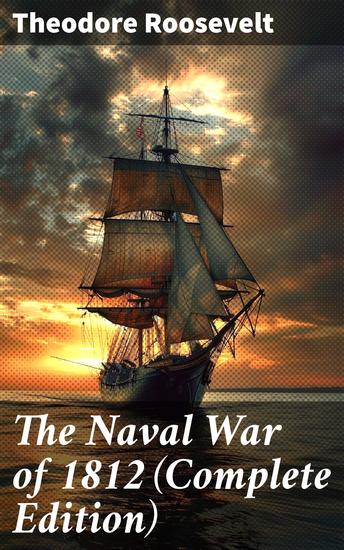
The Naval War of 1812 (Complete Edition) - Uncovering America's Naval Battles of 1812 - cover

The Naval War of 1812 (Complete Edition) - Uncovering America's Naval Battles of 1812

Theodore Roosevelt

Publisher: Good Press

  • 0
  • 0
  • 0

Summary

In "The Naval War of 1812," Theodore Roosevelt delves into the pivotal maritime conflict that shaped the United States'Äô early naval identity. Through meticulous research and an engaging narrative style, Roosevelt examines the strategies, battles, and key figures involved in this multifaceted war. His prose is both accessible and scholarly, integrating primary sources to illuminate the complexities and dynamics of naval warfare in the early 19th century. The book is not just a historical account; it serves as a critical analysis of the nascent American navy, showcasing the strategic thinkers who emerged during this tumultuous period. Theodore Roosevelt, the 26th President of the United States, was a passionate advocate for naval power and expansion. His own experiences as a soldier and policymaker influenced his profound interest in military history and its implications for American greatness. Roosevelt's scholarly pursuits were marked by a belief in the importance of a strong navy, rooted in his understanding of geography, economics, and national security, thus providing a unique perspective that enriches this historical narrative. Highly recommended for history enthusiasts and scholars alike, this comprehensive edition of "The Naval War of 1812" not only offers a vivid portrayal of naval battles but also integrates Roosevelt's insights into the broader themes of national identity and power. Readers will gain a deeper appreciation for this defining conflict while recognizing its enduring impact on the United States' naval heritage.
Available since: 01/17/2024.
Print length: 359 pages.
Other books that might interest you

  • Beloved by Toni Morrison (Book Analysis) - Detailed Summary Analysis and Reading Guide - cover

    Beloved by Toni Morrison (Book...

    Bright Summaries

    • 0
    • 0
    • 0
    Unlock the more straightforward side of Beloved with this concise and insightful summary and analysis!
    This engaging summary presents an analysis of Beloved by Toni Morrison, which tells the story of Sethe, a former slave who was prepared to commit a horrific crime rather than be forced back into slavery with her children. The novel explores the aftermath of her actions, and starkly illustrates the devastation wreaked by the institution of slavery and the legacy of trauma it left for African-American families. Toni Morrison is one of America's most acclaimed living writers, having received awards including the National Book Critics Circle Award, the Pulitzer Prize for Fiction and the Nobel Prize in Literature in the course of her decades-long career.
    Find out everything you need to know about Beloved in a fraction of the time!
    This in-depth and informative reading guide brings you:
    •A complete plot summary
    •Character studies
    •Key themes and symbols
    •Questions for further reflection
    Why choose BrightSummaries.com?
    Available in print and digital format, our publications are designed to accompany you on your reading journey. The clear and concise style makes for easy understanding, providing the perfect opportunity to improve your literary knowledge in no time.
    
    See the very best of literature in a whole new light with BrightSummaries.com!
    Show book
  • Going Big - FDR’s Legacy Biden’s New Deal and the Struggle to Save Democracy - cover

    Going Big - FDR’s Legacy Biden’s...

    Robert Kuttner, Joseph E. Stiglitz

    • 0
    • 0
    • 0
    Joe Biden has found his way back to Franklin Roosevelt's New Deal. After four decades of diminishing prospects for ordinary people, the public likes what Biden is offering. Yet American democracy is in dire peril as Republicans, increasingly the national minority, try to destroy democracy in order to cling to power. It is the best of times and the worst of times. In Going Big, bestselling author and political journalist Robert Kuttner assesses the promise and peril of this critical juncture. 


    Biden, like FDR in his time, faces multiple challenges. Roosevelt had to make terrible compromises with racist legislators to win enactment of his program. Biden, to achieve the necessary governing coalition, needs to achieve durable multiracial coalitions. Roosevelt had to conquer fascism in Europe; Biden must defeat it at home. And after four decades of neoliberal policy disasters reflecting Wall Street's political influence, Biden needs to go beyond what even FDR achieved, to restore a democratic economy of broad possibility. 


    From a writer with an unparalleled understanding of the history and politics that have made this moment possible, this book is the essential guide to what is at stake for Joe Biden, for America, and for our democracy.
    Show book
  • The Constitution of the United States - The Original Document September 17 1787 - Includes All 27 Amendments - cover

    The Constitution of the United...

    America's Founding Fathers

    • 0
    • 0
    • 0
    This audiobook is designed for you to listen to while reading the Kindle book of the same title or any unabridged version of the U.S. Constitution. Reading while listening to Howard Lester's smooth and flawless narration creates an immersive multi-sensory experience for studying, understanding, and enjoying this most revered American document. This proven approach of reading while listening will aid your comprehension and retention of the nation-building words of America's Founding Fathers. The U.S. Constitution is one of the most important documents in history. It comes alive in this audiobook and will inspire a renewed respect, appreciation, and gratitude for the written charter that launched the United States of America.
    Show book
  • Sociology of Society - Foundations and Theories of Social Life (3 in 1) - cover

    Sociology of Society -...

    Fred Grandsen

    • 0
    • 0
    • 0
    This book bundle is a comprehensive 3-in-1 guide that explores the structures, behaviors, and ideas that shape human life in community. This volume introduces readers to the essential foundations of sociology, weaving together the study of social organization, the psychology of human interaction, and the grand theories that explain collective behavior. 
    The first section, Society, investigates how individuals come together to form communities, institutions, and cultures. Topics include norms, values, group structures, institutions, and the forces that hold or disrupt social cohesion. 
    In the second section, Social Psychology, the focus narrows to how individuals behave in social contexts. It examines identity, attitudes, conformity, group influence, and the psychological mechanisms driving human interaction in everyday life. 
    The final section, Social Theory, offers insight into the foundational ideas of key thinkers like Karl Marx, Max Weber, and Émile Durkheim. It explores modern and postmodern theories, systems of power, inequality, identity, and the forces of change and resistance that shape social realities. 
    This book is ideal for students, educators, and curious minds who want a clear, engaging, and meaningful introduction to the study of society and its most powerful forces.
    Show book
  • A Rare Recording of President Nixon's Farewell Speech to White House Staff - cover

    A Rare Recording of President...

    President Richard Nixon

    • 0
    • 0
    • 0
    Richard Milhous Nixon (January 9, 1913 - April 22, 1994) was the 37th president of the United States, serving from 1969 to 1974. A member of the Republican Party, he previously served as a representative and senator from California and was the 36th vice president from 1953 to 1961 under President Dwight D. Eisenhower. His five years in the White House saw reduction of U.S. involvement in the Vietnam War, détente with the Soviet Union and China, the first crewed Moon landings, and the establishment of the Environmental Protection Agency and Occupational Safety and Health Administration. Nixon's second term ended early, when he became the only US president to resign from office, as a result of the Watergate scandal.
    Show book
  • Mediterranean Dictators - The Story of Benito Mussolini Torquemada and Francisco Pizarro - cover

    Mediterranean Dictators - The...

    Kelly Mass

    • 0
    • 0
    • 0
    These dictators all lived in Southern European countries. Meet the evil despots called: 
    Benito Mussolini: Ironically, when we think of fascism, we often look at someone as brutal and influential as Adolf Hitler, but the word “fascism” originated from Italian. The ideology that was carried out in the vicious Spanish War right before World War 2, and was embraced by Nazi Germany, was actually pushed and more or less invented by the Italians during a critical time in history when many changes were made, and when fear and uncertainty were all in the air. Mussolini was efficient and influential. He was a fearless leader not to be trifled with. Let’s take a look at what he did and why. 
    Torquemada: The Spanish inquisition was nasty in the 15th century. I am glad we don’t live in those times anymore. We have our own problems to deal with here. But back then, in some countries, primarily the Catholic-dominated ones in Europe, being called a heretic, a witch, or a sinner meant business. It could mean the end of your life. And often, you had nothing to defend yourself with. There weren’t enough fancy lawyers to stand up to the Catholic Church. And so, it is with a tragic view on the past that we see countless innocent victims being accused of something they never did, with no bad intentions or rebellious behavior, and nonetheless being executed in brutal manners. 
    Francisco Pizarro: Conquistadores (or Conquistadors) were the Spanish and Portuguese conquerors who invaded parts of the world that hadn’t been discovered by the Europeans before the 16th century. Some of these conquerors behaved fairly nice and respectful towards the local population in South America, Asia, Africa, and Central America. Others were incentivized by greed, lust, and dominance, which caused them to pillage, steal, and enslave the indigenous people they encountered. Many of their leaders were notorious for their brutality.
    Show book