Junte-se a nós em uma viagem ao mundo dos livros!
Adicionar este livro à prateleira
Grey
Deixe um novo comentário Default profile 50px
Grey
Assine para ler o livro completo ou leia as primeiras páginas de graça!
All characters reduced
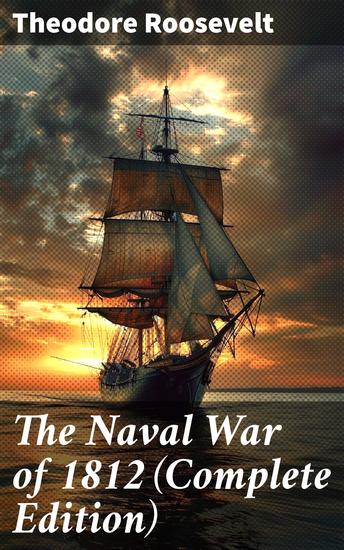
The Naval War of 1812 (Complete Edition) - Uncovering America's Naval Battles of 1812 - cover
LER

The Naval War of 1812 (Complete Edition) - Uncovering America's Naval Battles of 1812

Theodore Roosevelt

Editora: Good Press

  • 0
  • 0
  • 0

Sinopse

In "The Naval War of 1812," Theodore Roosevelt delves into the pivotal maritime conflict that shaped the United States'Äô early naval identity. Through meticulous research and an engaging narrative style, Roosevelt examines the strategies, battles, and key figures involved in this multifaceted war. His prose is both accessible and scholarly, integrating primary sources to illuminate the complexities and dynamics of naval warfare in the early 19th century. The book is not just a historical account; it serves as a critical analysis of the nascent American navy, showcasing the strategic thinkers who emerged during this tumultuous period. Theodore Roosevelt, the 26th President of the United States, was a passionate advocate for naval power and expansion. His own experiences as a soldier and policymaker influenced his profound interest in military history and its implications for American greatness. Roosevelt's scholarly pursuits were marked by a belief in the importance of a strong navy, rooted in his understanding of geography, economics, and national security, thus providing a unique perspective that enriches this historical narrative. Highly recommended for history enthusiasts and scholars alike, this comprehensive edition of "The Naval War of 1812" not only offers a vivid portrayal of naval battles but also integrates Roosevelt's insights into the broader themes of national identity and power. Readers will gain a deeper appreciation for this defining conflict while recognizing its enduring impact on the United States' naval heritage.
Disponível desde: 17/01/2024.
Comprimento de impressão: 359 páginas.

Outros livros que poderiam interessá-lo

  • House of the Spirits by Isabel Allende The (Book Analysis) - Detailed Summary Analysis and Reading Guide - cover

    House of the Spirits by Isabel...

    Bright Summaries

    • 0
    • 0
    • 0
    Unlock the more straightforward side of The House of the Spirits with this concise and insightful summary and analysis!
    This engaging summary presents an analysis of The House of the Spirits by Isabel Allende, a sweeping narrative which chronicles the lives of three generations of the Trueba-del Valle family. As the members of this family grow older, fall in love, develop their own political beliefs and come into conflict with each other, their story provides a constant echo of the rise and fall of the ideologies, traditions and systems that shaped Latin America itself. Isabel Allende is a Chilean writer, and is one of the most popular Spanish-language authors in the world. The House of the Spirits was her debut novel, and its popularity with readers catapulted her to widespread fame when it was published in 1982. Allende was awarded the Chilean National Prize for Literature in 2010 in tribute to her long and varied literary career.
    Find out everything you need to know about The House of the Spirits in a fraction of the time!
    This in-depth and informative reading guide brings you:
    •A complete plot summary
    •Character studies
    •Key themes and symbols
    •Questions for further reflection
    Why choose BrightSummaries.com?
    Available in print and digital format, our publications are designed to accompany you on your reading journey. The clear and concise style makes for easy understanding, providing the perfect opportunity to improve your literary knowledge in no time.
    See the very best of literature in a whole new light with BrightSummaries.com!
    Ver livro
  • Jane Austen - A Very Short Introduction - cover

    Jane Austen - A Very Short...

    Tom Keymer

    • 0
    • 0
    • 0
    Jane Austen wrote six of the best-loved novels in the English language, as well as a smaller corpus of works unpublished in her day, including three volumes of witty, non-realist juvenilia and the innovative, unfinished, Sanditon. She pioneered new techniques for representing voices, minds, and hearts in narrative prose, and was a penetrating satirist of social tensions and trends. Yet Austen struggled for many years to break into print, and even as she became a published author in the last years of her relatively short life, reading tastes and book-trade expectations constrained as much as they enabled her literary career. 


    This Very Short introduction explores the major themes of Austen criticism through close analysis of her major and minor works, with particular emphasis on the literary, social, and political backgrounds from which the novels emerge, and with which they engage. Thomas Keymer combines critical introductions to each of Austen's six major novels with an exploration of the key themes in her works. The Austen who emerges is a writer shaped by the literary experiments and socio-political debates of the revolution decade, drawn in her maturity to a fundamentally conservative vision of social harmony, yet forever complicating this vision through the disruptive ironies and satirical energies of her prose.
    Ver livro
  • Why Governments Get It Wrong - And How They Can Get It Right - cover

    Why Governments Get It Wrong -...

    Dennis C. Grube

    • 0
    • 0
    • 0
    'This humane, accessible and lucid work will enlighten any voter, and remind any would-be – or currently serving – politician of the pitfalls to avoid' - TLSBarely a week goes by without another government U-turn and with the cost of living crisis and rising mortgage rates we really need those in charge to get it right. In this timely book Cambridge Professor Dennis C. Grube explores the pitfalls, failures and successes of those in power around the world.'A must-read' - Sebastian Payne'Convincing' - David Lammy MPWe live in an era when we really need governments to be effective – the economy, our health and the future of the planet are at stake – but so often they can seem clueless, and their decisions leave us confused. With insight and wit, Grube explains how governments can improve their decision-making and by examining fascinating case studies he highlights the key factors that make for effective government. With the stakes higher than ever before, this original and important book is an essential read for any concerned citizen who wants to understand why governments make the wrong decisions and, crucially, what can be done about it.‘Highly original and very entertaining' - Gavin Esler'There is a real gap for this book' - Isabel Hardman
    Ver livro
  • The Fall of Saigon - End of the Vietnam War - cover

    The Fall of Saigon - End of the...

    Nova Ashford

    • 0
    • 0
    • 0
    In the final phase of the Vietnam War, North Vietnam’s military strategy shifted into high gear. Following the 1973 Paris Peace Accords, which led to the withdrawal of U.S. troops, the North Vietnamese leadership viewed the South as vulnerable and unprotected. They seized this opportunity to begin a calculated and aggressive push toward Saigon. With the People's Army of Vietnam (PAVN) leading the offensive, key cities and regions across South Vietnam began to fall in rapid succession. Unlike earlier phases of the war, which were marked by a slow grind of guerrilla warfare and jungle battles, this stage saw well-coordinated, large-scale military campaigns. The North's confidence was bolstered by the perception that American military support would not return in a meaningful way. 
    This advance was not just a military endeavor—it was psychological. Each victory in the North’s campaign chipped away at the morale of South Vietnamese forces. Soldiers deserted in droves, supplies were stretched thin, and leadership at the local and national levels began to falter under pressure. In places like Ban Me Thuot and Pleiku, the speed of the North's takeover stunned both local populations and the South Vietnamese military, who had grown reliant on U.S. support during prior conflicts. Fear and confusion spread among civilians, many of whom began fleeing their homes in anticipation of the advancing northern troops. 
    The North Vietnamese did not rely on brute force alone. They combined strategic military planning with psychological operations to deepen the sense of inevitable defeat among South Vietnamese soldiers and citizens. Leaflets and radio broadcasts promised fair treatment to those who surrendered and warned of dire consequences for those who resisted. The result was an erosion of will more powerful than any bombing campaign. Defenses crumbled not only because of lack of resources, but because of fear and fatigue.
    Ver livro
  • We Shall All Be Changed - How Facing Death with Loved Ones Transforms Us - cover

    We Shall All Be Changed - How...

    Whitney K. Pipkin

    • 0
    • 0
    • 0
    TGC 2024 Book Award WinnerDeath teaches us how to live.When Whitney K. Pipkin’s mother was diagnosed with terminal cancer, she wasn’t ready. How could she be? She searched for resources that could help her walk through this heavy yet sacred time in her life. But she struggled to find the guidance she longed for in a season of anticipatory grief.We Shall All Be Changed is a companion for those experiencing the lonely season of suffering and death. In this book, Whitney reaches across the pages to hold the hand of the caregiver. Walking through death with a loved one can be incredibly isolating and unsettling. This book reminds us that we can experience God’s very presence in life’s dark and deep valleys. As Whitney draws from her own experience, she sheds light and hope. She shows that we are not alone. And she reveals the mysterious way that God ministers to and transforms us through death and suffering.Beautifully honest and theologically rich, Whitney invites us to consider death so that we might understand life and how to live it.Rather than wanting to run from discussions of death—as I did for so long—I now want to press into them, to wring from one of the hardest trials life has to offer every drop of sanctification and glory. I see now that having a front seat to my mom’s final days has forever changed the ones I have left to live. —Whitney PipkinA book for those who are caring for the sick and dying . . . for those who will care for parents, family, or friends in their last days . . . and for those who have already walked this journey. This book is for us.
    Ver livro
  • European Genocides - Details about the Holocaust and Yugoslavian War - cover

    European Genocides - Details...

    Kelly Mass

    • 0
    • 0
    • 0
    This audiobook contains two topics: 
    1 - The Yugoslavian Genocide is hard to explain. So many factors have contributed to the war, and eventually, the genocide in Bosnia, that many UN soldiers didn’t even know what to do with it. A lack of response, though, made the problem worse. And looking back on some of the cowardice and indifference, I’m sure many countries involved would like to go back in time and do it over. A combination of historical aspects such as the division of religion, the world wars, the Iron Curtain, and the fall of the Soviet Union were part of what led to a conflict that lasted for years in this sensitive region in Europe. Throughout the Bosnian War of 1992-- 1995, the Yugoslavian or Bosnian genocide describes either the Srebrenica massacre or the larger criminal activities against mankind and ethnic cleaning project performed by the Army of Republika Srpska (VRS) in areas controlled by the Army of Republika Srpska. 
    2 - Most people know what the Holocaust was. They have at least a vague image of what transpired in Europe during the 1940s. Still, the details may be blurry. So, let’s take a look at history and the events that shocked the world. And even though this was clearly not the first genocide in the world, it was one of particular proportions and scale, and therefore noteworthy. At the time of The Second World War, the Holocaust, also referred to as the Shoah, was a genocide of European Jews. Between 1941 and 1945, Nazi Germany and its allies killed around 6 million Jews in German-occupied Europe, representing about two-thirds of Europe's Jewish population.
    Ver livro