Join us on a literary world trip!
Add this book to bookshelf
Grey
Write a new comment Default profile 50px
Grey
Subscribe to read the full book or read the first pages for free!
All characters reduced
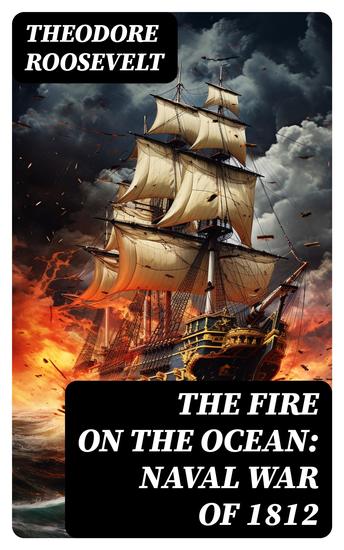
The Fire on the Ocean: Naval War of 1812 - cover

The Fire on the Ocean: Naval War of 1812

Theodore Roosevelt

Publisher: DigiCat

  • 0
  • 0
  • 0

Summary

In "The Fire on the Ocean: Naval War of 1812," Theodore Roosevelt immerses readers in the tumultuous maritime conflicts that defined early 19th-century America. With a compelling narrative style that blends meticulous historical detail with vivid storytelling, Roosevelt adeptly captures the heroism and strategic intricacies of naval warfare during this pivotal era. The book not only discusses famous battles and naval tactics but also contextualizes the broader implications of these events on American identity and international relations, reflecting Roosevelt's belief in the importance of naval power as a key to national strength. Theodore Roosevelt, known for his robust personality and prolific authorship, was deeply influenced by his own experiences as a soldier, politician, and conservationist. His fascination with military history and the sea stems from both a personal longing for adventure and a strategic understanding of the United States' position in global affairs. This work is a testament to Roosevelt's passion for history and his mission to inspire a sense of American exceptionalism through a nuanced understanding of its naval past. Highly recommended for history enthusiasts and scholars alike, "The Fire on the Ocean" serves as a crucial companion to the study of American naval history. Roosevelt's engaging prose and knowledgeable insights provide not just a recounting of events but a profound exploration of their significance, making this book an essential read for anyone interested in the complexities of the War of 1812.
Available since: 12/15/2023.
Print length: 358 pages.

Other books that might interest you

  • Welcome to Vietnam Macho Man - Reflections of a Khe Sanh Vet - cover

    Welcome to Vietnam Macho Man -...

    Ernest Spencer

    • 0
    • 0
    • 0
    This is hands down the most heartbreaking and thought provoking historical novel about Khe Sanh and even the Vietnam War you will ever have the honor to read. Other books are easier to read, yet none of them will leave you a believer like this book will. It is January, 1968 and Ernest returns to Khe Sanh from R&R to the opening of the longest battle in the Vietnam War. He is a Korean American Marine Commander and the Rifle Commander of Delta 6, leading over 250 men through the toughest of battles and conditions. The siege at Khe Sanh went on non-stop for 2.5 months. Life was shrunken to full time living inside bunkers, watching rations and supplies slide out the back of cargo planes as they flew low past Hill 881 and finding ways to remain hopeful while being unable to use camaraderie or communications to keep it real. What is to become of the survivors of this incredible battle? 
    Seldom is the author so true to himself and the memory of those lost that he is willing to blind others with their own tears and shame rather than sacrifice what he knows to be the true story. At the end of the book, the author, Ernest Spencer was faced with having to identify a casualty from his battalion. He says," Rodriguez is gone and I am still here. Why? I feel fear wash through me. They die while I watch. Who will care? How long will they care?" 
    Listen to this story and learn the haunting truths. It will probably make you feel uncomfortable. Take a few more moments and try to imagine first living the story and then laying it down on paper. It is our debt to read this book, in honor of those who have given more than we can ever imagine. And to remember what really mattered: the men and women who served and sacrificed for a country that has remained ungrateful. This book is pages and pages of heart and soul - bare naked anger, hate, suffering and despair. You will feel the weight of the Vietnam War in your hands.
    Show book
  • The Problems of Philosophy - cover

    The Problems of Philosophy

    Bertrand Russell

    • 0
    • 0
    • 0
    In this book, Russell tackles some of the most fundamental questions of human existence and provides a clear and concise introduction to the field of philosophy. Throughout the book, Russell's writing is clear, engaging, and accessible, making complex philosophical ideas understandable to readers with little or no background in the field. "The Problems of Philosophy" is a must-read for anyone interested in philosophy, and a great starting point for those new to the subject. Read in English, unabridged.
    Show book
  • Tyrannosaurus Rex and Velociraptors: The History of the Cretaceous Period’s Most Famous Carnivores - cover

    Tyrannosaurus Rex and...

    Editors Charles River

    • 0
    • 0
    • 0
    The massively popular 1990 novel Jurassic Park by Michael Crichton and its subsequent movie adaptations led to a huge resurgence in interest in dinosaurs and the prehistoric world. That interest continues to the present day, even though most of the dinosaurs in Jurassic Park weren’t actually from the Jurassic period. Triceratops, Velociraptor, Tyrannosaurus Rex and the huge sauropods such as Brachiosaurus that feature in the book and movies all actually belong to the Late Cretaceous period, more than 40 million years after the end of the Jurassic. Regardless, certain kinds of dinosaurs remain instantly recognizable, and among them, the “king” is undoubtedly the Tyrannosaurus.  
    The first discovery of a Tyrannosaurus was made in 1902 and the largest carnivorous dinosaur ever found at the time quickly gripped the popular imagination. Even its name was dramatic - Tyrannosaurus Rex means “King of the Tyrant Lizards.” The T-Rex as it quickly became known didn’t appear until the last age of the Late Cretaceous period, the Maastrichtian, but when it did, it was the biggest and most terrifying of all the theropod predators.  
    	Thanks to the movie, there has been some unwitting confusion over the identity of the Velociraptor, and this confusion was due in large part to the fact the name sounds far more scary than the creature to which the name originally belonged. Moreover, the creature to which the label was applied in the novel and movie was actually a distant cousin named Deinonychus, but as the story goes, the author, Michael Crichton, thought “Velociraptor” sounded “more dramatic.” The actual Velociraptor lived not in the badlands of North America, but in the badlands of central-eastern Asia, and it was not nearly as intimidating as Deinonychus. In fact, the main species of genus Velociraptor - Velociraptor mongoliensis - was no bigger than a turkey.
    Show book
  • Jo March and Not-Like-The-Other-Girls Trope - Little Women Podcast Presents - cover

    Jo March and...

    Niina Niskanen, Hejar Sinem

    • 0
    • 0
    • 0
    Calling all Little Women enthusiasts! Step into the enchanting world of Louisa May Alcott's timeless masterpiece with the Little Women Channel audiobook. Immerse yourself in the captivating story of the March sisters as they navigate life, love, and sisterhood. Hosted by renowned Alcott essayist Niina Niskanen. This channel offers a unique opportunity to study and explore the intricate themes and intersections that make Little Women an enduring classic. With regular visits from literary scholars and passionate fans alike, you'll be part of a vibrant community dedicated to unraveling the beauty and depth of this literary gem. Prepare to be transported into a world where dreams are pursued, friendships are cherished, and love knows no bounds. Join us on the Little Women Channel and embark on a journey that will leave you inspired and captivated. 
    Here at the Little Women channel we've got many questions about Jo's occasional not-like-the-other-girls attitude and how harmful it was for her (and how she grew out of it). Hejar and I will also be discussing Jo's and Amy's relationship and how the two sisters are actually quite similar in terms of their tempers and unconventionally. Hejar is going to talk to us about Louisa May Alcott's love for two very famous German authors, Friedrich Schiller and Goethe. We are also discussing about the possibility that our beloved Friedrich Bhaer was named after Friedrich Schiller. Schiller makes surprisingly many entries in Little Women series. He is mentioned often in discussions between Jo and Friedrich and Meg and John.
    Show book
  • Classical Japan - Art Power and Tradition (3 in 1) - cover

    Classical Japan - Art Power and...

    Rolf Hedger

    • 0
    • 0
    • 0
    The classical era of Japan was defined by a rich interplay of art, power, and evolving traditions, spanning the Nara, Heian, and Kamakura periods. The Nara Period saw the establishment of Japan’s first permanent capital, heavily influenced by Chinese culture, with Buddhism gaining prominence and shaping religious and artistic developments.  
    The Heian Period marked the height of imperial court culture, where poetry, literature, and refined aesthetics flourished under the rule of aristocratic families like the Fujiwara. It was also during this time that the kana writing system emerged, giving rise to literary masterpieces such as The Tale of Genji. As courtly elegance gave way to the rise of the samurai, the Kamakura Shogunate ushered in a new era of warrior rule, led by the Minamoto clan.  
    The establishment of a military government transformed Japan’s political landscape, laying the groundwork for feudal society while facing external threats like the Mongol invasions. These three periods together shaped Japan’s cultural and political identity, leaving an enduring legacy that continues to influence the nation today.
    Show book
  • Law The: Book Summary & Analysis - cover

    Law The: Book Summary & Analysis

    Miles Thatcher

    • 0
    • 0
    • 0
    This content is an independent and unofficial summary created for informational and educational purposes only. It is not affiliated with, authorized, approved, licensed, or endorsed by the original author or publisher. All rights to the original work belong to its respective copyright holders. This summary is not intended to substitute the original book, but to offer a concise overview and interpretation of its main ideas
     
    This classic work explores the principles of justice, liberty, and the proper role of government in society. It argues for the protection of individual rights, the limitations of state power, and the importance of free markets in fostering human prosperity. With a clear and concise style, the book delivers a timeless critique of overreaching government intervention while defending the rights of individuals to life, liberty, and property. It remains a foundational text for anyone interested in philosophy, economics, and political thought.
    Show book