Join us on a literary world trip!
Add this book to bookshelf
Grey
Write a new comment Default profile 50px
Grey
Subscribe to read the full book or read the first pages for free!
All characters reduced
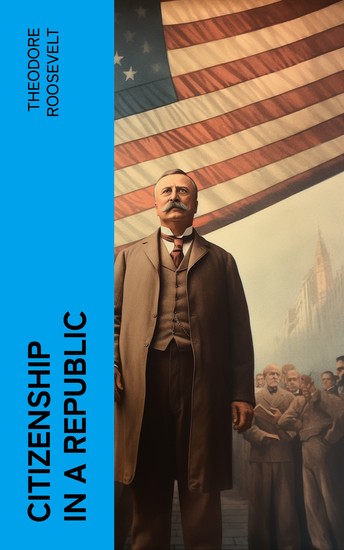
Citizenship in a Republic - cover

Citizenship in a Republic

Theodore Roosevelt

Publisher: e-artnow

  • 0
  • 0
  • 0

Summary

Citizenship in a Republic is the title of a speech given by Theodore Roosevelt, former President of the United States, at the Sorbonne in Paris, France, on April 23, 1910. One notable passage from the speech is referred to as "The Man in the Arena": It is not the critic who counts; not the man who points out how the strong man stumbles, or where the doer of deeds could have done them better.
Available since: 12/06/2023.
Print length: 22 pages.
Other books that might interest you

  • Popular History of Ireland Book 07 - cover

    Popular History of Ireland Book 07

    Thomas D'Arcy McGee

    • 0
    • 0
    • 0
    Thomas D'Arcy McGee was an Irish refugee and a father of the Canadian confederation. His work on Irish history is comprehensive, encompassing twelve books; Book 7 subtitled “Unionized Crowns of England and Ireland”, addresses the Tudor period, particularly the actions of Woolsey and Henry VIII, before the Reformation, in 1541. (Summary by Sibella Denton)
    Show book
  • First Bull Run: The History of the Civil War’s First Major Battle - cover

    First Bull Run: The History of...

    Jonathan Gianos-Steinberg

    • 0
    • 0
    • 0
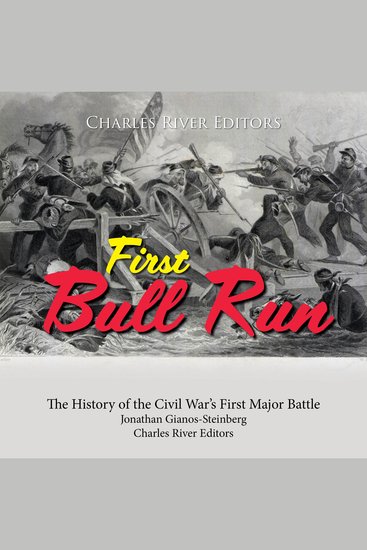
    After Fort Sumter, the Lincoln Administration pushed for a quick invasion of Virginia, with the intent of defeating Confederate forces and marching toward the Confederate capitol of Richmond. Lincoln pressed General Irvin McDowell to push forward. Despite the fact that McDowell knew his troops were inexperienced and unready, pressure from Washington politicians forced him to launch a premature offensive against Confederate forces in Northern Virginia.  
    	McDowell’s strategy during the First Battle of Bull Run was grand, and in many ways it was the forerunner of a tactic Robert E. Lee, Stonewall Jackson and James Longstreet executed brilliantly on nearly the same field during the Second Battle of Bull Run in August 1862. McDowell’s plan called for parts of his army to pin down General P.G.T. Beauregard’s Confederate soldiers in front while marching another wing of his army around the flank and into the enemy’s rear, rolling up the line. McDowell assumed the Confederates would be forced to abandon Manassas Junction and fall back to the next defensible line, the Rappahannock River. In July 1861, however, this proved far too difficult for his inexperienced troops to carry out effectively.  
    	As the first major land battle of the Civil War, the First Battle of Bull Run made history in several ways. The two sides fought near the railroad junction at Manassas on July 21, 1861, just 25 miles away from Washington, which was close enough for many civilians from the nation’s capital to come and watch what they expected to be a rout of Confederate forces, and for awhile it appeared as though that might be the case.  
    	McDowell’s strategy ultimately fell apart though, mostly thanks to the use of the railroad. Confederate reinforcements under General Joseph E. Johnston, including a brigade led by Thomas Jonathan Jackson, arrived by train in the middle of the day, a first in the history of American warfare.
    Show book
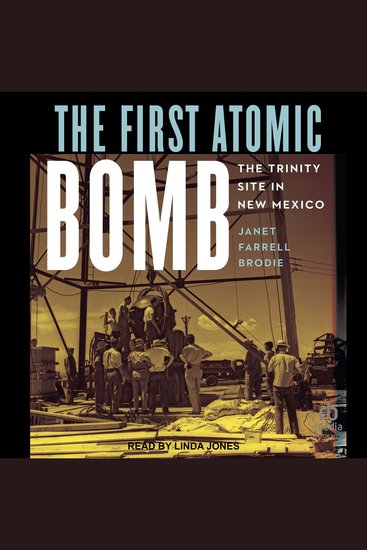
  • The First Atomic Bomb - The Trinity Site in New Mexico - cover

    The First Atomic Bomb - The...

    Janet Farrell Brodie

    • 0
    • 0
    • 0
    On July 16, 1945, just weeks before the atomic bombing of Hiroshima and Nagasaki that brought about the surrender of Japan and the end of WWII, the US unleashed the world's first atomic bomb at the Trinity testing site located in the remote Tularosa Valley in New Mexico. 


    In The First Atomic Bomb Janet Farrell Brodie explores the history of the Trinity test and those whose contributions have rarely been discussed—the men and women who constructed, served, and witnessed the first test—as well as the downwinders who suffered the consequences of radiation. Concentrating on these ordinary people, laborers, ranchers, and Indigenous peoples who lived in the region and participated in the testing, Brodie corrects the lack of coverage in existing scholarship on the essential details and everyday experiences of this globally significant event. This book also covers the environmental preservation of the Trinity test site and compares it with the wide range of atomic sites now preserved independently or as part of the new Manhattan Project National Historical Park. Although the Trinity site became a significant node for testing the new weapons of the postwar US, it is known today as an officially designated National Historic Landmark. Brodie presents a timely, important, and innovative study of an explosion that carries special historical weight in American memory.
    Show book
  • Untold Stories of Women Who Changed History - Women Who Shaped Our World - cover

    Untold Stories of Women Who...

    Alexandra Shaw

    • 0
    • 0
    • 0
    Discover the incredible lives of women who broke barriers, defied societal norms, and left an indelible mark on history. In Untold Stories of Women Who Changed History, Alexandra Shaw brings to life the inspiring journeys of scientists, artists, activists, leaders, and unsung heroes who shaped the world as we know it. 
    From the revolutionary discoveries of Marie Curie to the quiet courage of Rosa Parks, this audiobook celebrates the resilience, courage, and brilliance of women across time. Perfect for history enthusiasts, students, and anyone looking for inspiration, these stories are a testament to the power of determination and the impact of a single individual. 
    Narrated with passion and insight, this audiobook invites you to explore the hidden corners of history and uncover the extraordinary contributions of women whose stories deserve to be told.
    Show book
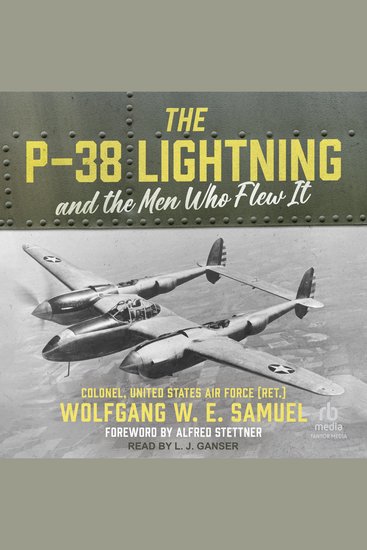
  • The P-38 Lightning and the Men Who Flew It - cover

    The P-38 Lightning and the Men...

    Colonel Wolfgang W. E. Samuel,...

    • 0
    • 0
    • 0
    The P-38 Lightning was one of the fastest operational fighters of World War II, famous for its successes in North Africa and the Pacific. In The P-38 Lightning and the Men Who Flew It, Wolfgang W. E. Samuel shares the stories of the young men who climbed into the cockpits of the P-38 to fight for freedom, and of those who created, tested, and deployed these fearsome machines. 


    The P-38 was the product of the Lockheed Corporation, the first fighter they ever built, principally conceptualized by Kelly Johnson, whose design was to meet Air Corps specifications. But it was no easy plane to fly. 


    P-38 units were formed quickly once the United States entered World War II in December 1941. Training was rushed to get pilots and planes to Europe as quickly as possible to serve as bomber escorts. Although the P-38 could fly at the high altitudes the bombers flew, it was not the right aircraft for the mission. In North Africa's warmer air, however, the P-38 came into its own. 


    This book focuses on the men who flew this challenging aircraft and the men who designed and decided how to deploy it. In the Pacific skies, the P-38, its pilots, and designers made the heroic history captured here.
    Show book
  • Gregory Peck: A short biography - 5 Minutes: Short on time – long on info! - cover

    Gregory Peck: A short biography...

    5 Minutes, 5 Minute Biographies,...

    • 0
    • 0
    • 0
    Gregory Peck, screen legend: Life and work in a short biography! Everything you need to know, brief and concise. Infotainment, education and entertainment at its best!
    Show book