Join us on a literary world trip!
Add this book to bookshelf
Grey
Write a new comment Default profile 50px
Grey
Subscribe to read the full book or read the first pages for free!
All characters reduced
The "Genius" - cover

The "Genius"

Theodore Dreiser

Publisher: DigiCat

  • 0
  • 0
  • 0

Summary

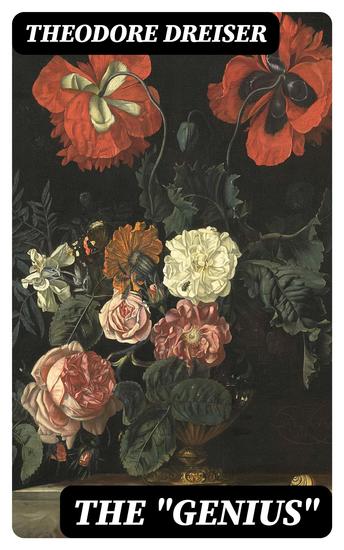
Theodore Dreiser's "The Genius" delves into the tumultuous life of a struggling artist, revealing the intricate interplay between creativity and self-destruction. Set against the backdrop of late 19th and early 20th century America, the novel adopts a naturalistic style that mirrors Dreiser's larger body of work. Through its vivid prose and psychological depth, it explores themes of ambition, altruism, and the darker facets of the human psyche. The protagonist's journey illustrates the existential conflict between societal expectations and personal desires, encapsulating the zeitgeist of an era hungry for artistic expression yet riddled with moral ambiguity. Dreiser, a pioneering figure in American literature, was deeply influenced by his experiences in the gritty industrial landscapes of Chicago and New York, as well as his encounters with the art world. His own struggles with societal norms and perceptions of success filter through the pages of "The Genius," offering readers an intimate glimpse into the mind of an artist grappling with the constraints of fame and artistic integrity. Drawing from autobiographical elements, Dreiser presents a narrative that is both deeply personal and broadly resonant. "The Genius" is essential reading for those interested in understanding the complexities of artistic ambition and the sacrifices entailed in the pursuit of greatness. Dreiser's incisive exploration of the artist's psyche will resonate with anyone who has ever felt the burden of their creative aspirations. This novel not only enriches American literary canon but also invites profound reflection on the nature of genius itself.
Available since: 06/13/2022.
Print length: 736 pages.
Other books that might interest you

  • Eugénie Grandet - cover

    Eugénie Grandet

    Honoré de Balzac

    • 0
    • 0
    • 0
    Who will win the prize of marrying Eugénie Grandet?
    Felix Grandet, having married well and become a wealthy landowner and wine-grower, is a miser who watches like a hawk the sugar lumps and the bread slices. The question of who will marry his daughter and inherit his fortune fuels endless speculation in the town of Saumur. The arrival of Eugénie’s cousin sparks feelings and a resolve that puts her on a collision course with her father’s control. As the years pass and she must navigate the self-interest of potential suitors, we see how habits manifest themselves in a new generation.
    It was while working on Eugénie Grandet that Balzac conceived his magnum opus La Comédie humaine, a huge collection of interlinked novels and stories depicting French society between 1815 and 1848. Sitting within this collection beneath the heading of ‘Scenes from Provincial Life’, Eugénie Grandet (1833) is a brilliantly woven, deeply affecting tale with the disease of avarice at its heart.
    Show book
  • The Adventure of the Golden Pince-Nez - cover

    The Adventure of the Golden...

    Arthur Conan Doyle

    • 0
    • 0
    • 0
    The Adventure of the Golden Pince-Nez, one of the 56 Sherlock Holmes short stories written by Sir Arthur Conan Doyle, is one of 13 stories in the cycle collected as The Return of Sherlock Holmes.One wretched November night, Inspector Stanley Hopkins visits Holmes at 221B Baker Street to discuss the violent death of Willoughby Smith, secretary to aged invalid Professor Coram. Coram had dismissed his previous two secretaries. The murder happened at Yoxley Old Place near Chatham, Kent, with a sealing-wax knife of the professor's as the weapon. Hopkins can identify no motive for the killing, with Smith having no enemies or trouble in his past. Smith was found by Coram's maid, who recounts his last words as "The professor; it was she."The maid further told Hopkins that prior to the murder she heard Smith leave his room and walk down to the study; she had been hanging curtains and did not see him, only recognizing his brisk step. The professor was in bed at the time. A minute later, a hoarse scream issued from the study, and the maid, hesitating briefly, inspected and found the murder. She later tells Holmes that Smith went out for a walk not long before the murder...Famous works of the author Arthur Conan Doyle: A Study in Scarlet, The Sign of the Four, The Adventures of Sherlock Holmes, The Memoirs of Sherlock Holmes, The Hound of the Baskervilles, The Return of Sherlock Holmes, The Valley of Fear, His Last Bow, The Case-Book of Sherlock Holmes, Stories of Sherlock Holmes, The Lost World.
    Show book
  • The Picture of Dorian Gray - cover

    The Picture of Dorian Gray

    Oscar Wilde

    • 0
    • 0
    • 0
    The story revolves around a portrait of Dorian Gray by Basil Hallward, an artist impressed and infatuated by Dorian's beauty. Through Basil, Dorian meets Lord Henry Wotton, and he soon is enthralled by the aristocrat's hedonistic worldview: that beauty and sensual fulfilment are the only things worth pursuing in life. Newly understanding that his beauty will fade, Dorian expresses the desire to sell his soul, to ensure that the picture, rather than he, will age and fade. The wish is granted, and Dorian pursues a libertine life of varied amoral experiences while staying young and beautiful; all the while, his portrait ages and records every one of Dorian's sins.
    Show book
  • The Second Father Brown Collection - The Incredulity of Father Brown & The Secret of Father Brown - cover

    The Second Father Brown...

    Gilbert Keith Chesterton

    • 0
    • 0
    • 0
    The Second Father Brown Collection includes two collections of short stories featuring Father Brown.
    Father Brown is a fictional Roman Catholic priest and amateur detective who is featured in 53 short stories published between 1910 and 1936 written by English novelist G.K. Chesterton. Father Brown solves mysteries and crimes using his intuition and keen understanding of human nature. Chesterton loosely based him on the Rt Rev. Msgr. John O'Connor (1870-1952), a parish priest in Bradford, who was involved in Chesterton's conversion to Catholicism in 1922.
    Included in this collection:
    1. The Incredulity of Father Brown (1926): The Resurrection of Father Brown / The Arrow of Heaven / The Oracle of the Dog / The Miracle of Moon Crescent / The Curse of the Golden Cross / The Dagger With Wings / The Doom of the Darnaways / The Ghost of Gideon Wise
    2. The Secret of Father Brown (1927): The Mirror of the Magistrate / The Man With Two Beards / The Song of the Flying Fish / The Actor and the Alibi / The Vanishing of Vaudrey / The Worst Crime in the World / The Red Moon of Meru / The Chief Mourner of Marne / The Secret of Flambeau
    Show book
  • Crime and Punishment - The Original Manuscript - cover

    Crime and Punishment - The...

    Fyodor Dostoyevsky

    • 0
    • 0
    • 0
    Crime and Punishment is the second of Fyodor Dostoyevsky's full-length novels following his return from 5 years of exile in Siberia, and is considered the first great novel of his "mature" period of writing. The novel focuses on the mental anguish and moral dilemmas of Rodion Raskolnikov, an impoverished ex-student in St. Petersburg who formulates and executes a plan to kill an unscrupulous pawnbroker for her cash. Raskolnikov, in an attempt to defend his actions, argues that with the pawnbroker's money he can perform good deeds to counterbalance the crime while ridding the world of a vermin, and to test a theory of his that some people are naturally superior and have the right to commit crimes if it is in pursuit of a higher purpose. 
    Show book
  • The Evenings - cover

    The Evenings

    Gerard Reve

    • 0
    • 0
    • 0
    Twenty-three-year-old Frits—office worker, daydreamer, teller of inappropriate jokes— finds life absurd and inexplicable. He lives with his parents, who drive him mad. He has terrible, disturbing dreams of death and destruction. Sometimes he talks to a toy rabbit. Darkly funny and mesmerising, The Evenings takes the tiny, quotidian triumphs and heartbreaks of our everyday lives and turns them into a work of brilliant wit and profound beauty.
    Show book