Join us on a literary world trip!
Add this book to bookshelf
Grey
Write a new comment Default profile 50px
Grey
Subscribe to read the full book or read the first pages for free!
All characters reduced
The slave trade : Slavery and color - cover

The slave trade : Slavery and color

Theodore D. Jervey

Publisher: Good Press

  • 0
  • 0
  • 0

Summary

In "The Slave Trade: Slavery and Color," Theodore D. Jervey presents a compelling and nuanced examination of the intersections between racial identity and the transatlantic slave trade. Delving into historical accounts, legal documents, and personal narratives, Jervey employs a critical analytical lens, weaving together a tapestry of human experience that elucidates the painful realities of slavery. Writing in a style that marries scholarly rigor with accessible prose, he encourages readers to confront the complexities of race and morality embedded in the institution of slavery, positioning the work within the growing body of literature that seeks to reconcile America's past with its present socio-political landscape. Theodore D. Jervey is a historian and cultural critic with a keen interest in the socio-political ramifications of historical injustices. His academic background and deep commitment to uncovering marginalized voices have equipped him with unique insights into the subject of slavery and its enduring legacy on contemporary society. Jervey's extensive research travels and archival work have allowed him to engage intimately with the narratives of those who suffered under the yoke of slavery, instilling his writing with both authenticity and urgency. This profound exploration not only serves as an essential resource for scholars of American history and cultural studies but also speaks to a wider audience interested in understanding the long-lasting effects of slavery on American identity. I highly recommend "The Slave Trade: Slavery and Color" for anyone seeking a thought-provoking read that challenges preconceived notions of race and history while providing a necessary context for ongoing discussions about equality and justice.
Available since: 03/02/2025.
Print length: 210 pages.


Other books that might interest you

  • Dark Psychology - Detecting Lies Spotting Manipulators and Seeing through People - cover

    Dark Psychology - Detecting Lies...

    Wesley Felt

    • 0
    • 0
    • 0
    At a certain stage in your sales process, your prospect realizes they have a need—ideally due to your exceptional selling skills. As you guide them from recognizing this need through analysis and finally to making a decision, what is on their mind? Consciously or subconsciously, buyers are always weighing the balance of performance, image, and price (PIP). These three factors are perceived differently by each individual, and perceptions can shift over time. In the current economy, it’s crucial to recognize that the relationship between these factors is undergoing significant changes. Marketing must adapt products and messages to align with these shifts, while sales teams need to adjust their presentations, ask new questions, and carefully consider the responses they receive. 
      
    So, what are these three principles, and how should they be managed? 
      
    Performance – For consumers, the concept of performance is evolving. Consider a consumer’s most significant purchase—a home. The idea that "bigger is better" is no longer valid. Consumers are less willing to endure long commutes in exchange for a large house. While the size of a family may change, the desire for a larger home has diminished. Business buyers are experiencing a similar shift. Product and service claims will be scrutinized more closely, and investments that don’t offer a quick return will be avoided. If you thought businesses were short-sighted before, expect this trend to intensify. 
      
    Image – Image remains important, but it’s constantly changing. For consumers, image is increasingly about what a product or service represents to them personally. A homebuyer might choose a smaller house closer to work, but they’ll still want it to reflect their lifestyle. Some images may even become anti-conspicuous. Businesses will also adjust their views on image.
    Show book
  • The End of Antiquity - cover

    The End of Antiquity

    Nick Holmes

    • 0
    • 0
    • 0
    How did a remote desert people change the course of world history? 
     
    In the seventh century AD, the Eastern Roman Empire collapsed—defeated by the rising power of Arabia. How did this happen? And why then? 
    In this gripping new history, Nick Holmes offers a fresh view of the end of the Ancient World and the rise of Islam—it wasn't just religion and war that shaped history, but a hidden force also played a vital role—climate change. A mysterious climatic shift—the Late Antique Little Ice Age—devastated the Roman and Persian empires while Arabia thrived. 
    The End of Antiquity brings together history, science, and religion to uncover the truth behind one of the most enigmatic centuries in history. It's the fifth book in Holmes' acclaimed series on the fall of the Roman Empire—and the most surprising yet.
    Show book
  • Until the Streetlights Come On - How a Return to Play Brightens Our Present and Prepares Kids for an Uncertain Future - cover

    Until the Streetlights Come On -...

    Ginny Yurich

    • 0
    • 0
    • 0
    FROM THE FOUNDER OF THE GLOBAL 1000 HOURS OUTSIDE MOVEMENT 
     
    The average American now spends just four to seven minutes outside each day, while we spend four to seven hours using devices with screens. Our physical, mental, emotional, and relational health has suffered--and so has that of our children.  
     
    But there is a solution: get outside!  
     
    A homeschooling mother of five and the founder of the global 1000 Hours Outside movement, Ginny Yurich explains how we got to this point--and how to get back to a healthier, more engaging relationship with the world outside.  
     
    With a mom's heart and an educator's eye, Ginny shows you 
    ● the importance of unstructured play for children 
    ● what boredom actually contributes to our brains 
    ● the value of sunlight and social play 
    ● the role of play in lifelong learning 
    ● how to make time outside more attractive than screen time 
     
    If you want your kids to grow up curious, resilient, and with a sense of adventure and community, it's essential to make outside play a priority. This book shows you why and how.
    Show book
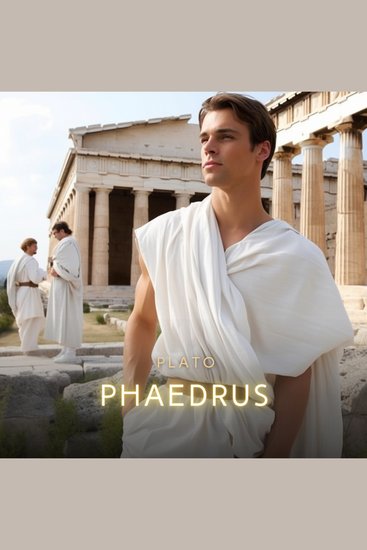
  • Phaedrus - cover

    Phaedrus

    Plato

    • 0
    • 0
    • 0
    In "Phaedrus," Plato explores the nature of love, rhetoric, and the soul. Set in a scenic Athenian countryside, Socrates engages in a profound dialogue with Phaedrus, unravelling the complexities of love and its impact on the human spirit. The discourse delves into the art of persuasion and the immortality of the soul, offering timeless insights into the human condition and philosophical inquiry. Read in English, unabridged.
    Show book
  • Nineteen Reservoirs - On Their Creation and the Promise of Water for New York City - cover

    Nineteen Reservoirs - On Their...

    Luc Sante

    • 0
    • 0
    • 0
    Without the nineteen upstate reservoirs that supply its water, New York City as we know it would not exist today. 


    From 1907 to 1967, a network of reservoirs and aqueducts was built across more than one million acres in upstate New York, including Greene, Delaware, Sullivan, and Ulster Counties. This feat of engineering served to meet New York City's ever-increasing need for water, sustaining its inhabitants and cementing it as a center of industry. West of the Hudson, it meant that twenty-six villages, with their farms, forest lands, orchards, and quarries, were bought for a fraction of their value, demolished, and submerged, profoundly altering ecosystems in ways we will never fully appreciate. 


    This paradox of victory and loss is at the heart of Nineteen Reservoirs, Lucy Sante's meticulous account of how New York City secured its seemingly limitless fresh water supply, and why it cannot be taken for granted. In inimitable form, Sante plumbs the historical record to surface forgotten archives and images, bringing lost places back to life on the page. Her immaculately calibrated sensitivity honors both perspectives on New York City's reservoir system and helps us understand the full import of its creation.
    Show book
  • I Know a Few Dogs in Heaven - cover

    I Know a Few Dogs in Heaven

    Steve Reece

    • 0
    • 0
    • 0
    Once a week, Monroe County Reporter (Georgia) columnist Steve Reece surprises thousands of readers with his insight into a wide range of subjects reflective of the culture, history and diversity of the South and America in general. A Few Dogs in Heaven captures everyday experiences of everyday people, with an eye to the complexities of life's struggles. With humor, insight and a passion for justice, this collection of columns is a must-read for those looking to delve into an honest exploration of life in the American South.
    Show book