Join us on a literary world trip!
Add this book to bookshelf
Grey
Write a new comment Default profile 50px
Grey
Subscribe to read the full book or read the first pages for free!
All characters reduced
Supernatural Patterns - cover

Supernatural Patterns

Theo Rourke

Translator A AI

Publisher: Publifye

  • 0
  • 0
  • 0

Summary

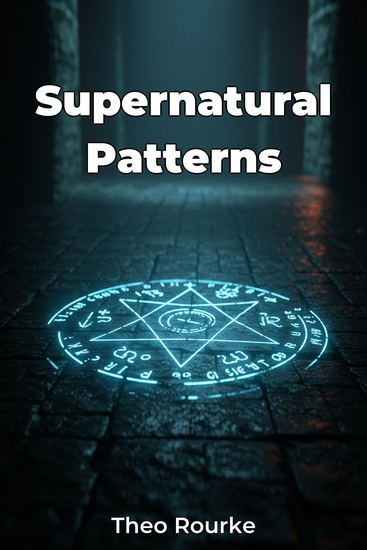
"Supernatural Patterns" explores the often-overlooked logic underpinning successful supernatural narratives in film, television, and literature. It argues that the most compelling stories aren't just about fantastical elements, but about establishing and adhering to consistent rules within their fictional worlds. This approach provides both creators and fans with a framework for analyzing and appreciating the genre. Discover how understanding narrative theory and genre analysis, authors create believable worlds where societal anxieties and beliefs find expression.

 
The book progresses by first introducing the core concept of "supernatural logic" and its function within fictional worlds. Subsequent sections then explore specific patterns and techniques employed by authors, such as establishing rules for supernatural abilities and exploring the consequences of breaking them. By examining the intersection of these rules with mundane aspects, the book ultimately demonstrates how these principles can be applied to create more compelling and believable supernatural narratives.
Available since: 05/05/2025.
Print length: 78 pages.
Other books that might interest you

  • Surviving My Birthright - cover

    Surviving My Birthright

    Casey Hammer

    • 0
    • 0
    • 0
    This is a revealing and inspirational memoir by Casey Hammer, sole granddaughter of the American billionaire, industrialist, art collector and philanthropist Armand Hammer. 
    SURVIVING MY BIRTHRIGHT is a story of hope, love, and the reclamation of empowerment. Casey's is a journey of discovery—recounting many years of blocked memories, violence, nightmares, hazardous behavior, guilt and feeling unworthy of joy or happiness. 
    By taking responsibility for her life, no longer being prepared to accept the role of victim and by facing the truth, Casey began to heal. Hopefully, her story will inspire many others to do the same.
    Show book
  • My Universities - cover

    My Universities

    Maxim Gorky

    • 0
    • 0
    • 0
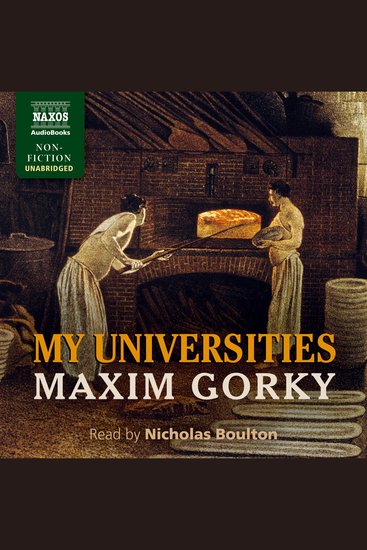
    Published in 1923, My Universities is the final instalment in the autobiographical trilogy by five-time Nobel Prize-nominee Maxim Gorky. Despite his failed attempts to enter the university at Kazan, Gorky forges an education of his own as he encounters an unusual array of characters – revolutionaries, religious fanatics, theological students and eccentric schoolteachers. Snatching cherished moments for reading books, a relief from the drudgery of his work in a bakery, Gorky comes to see the superficiality of a formal education. My Universities is a fascinating depiction of a young man trying to find his own way against the backdrop of a country in decay and close to revolution.
    Show book
  • Jim Elliot - One Great Purpose - cover

    Jim Elliot - One Great Purpose

    Janet Benge, Geoff Benge

    • 0
    • 0
    • 0
    Jim and Pete turned to see the Auca men, their deadly spears raised, running toward Nate, Ed, and Roger. Jim stood in the river, his hand on his pistol. Should he defend himself? He already knew the answer. Each man had promised the others that he would not save himself by killing those they had sought out in Jesus' name. Jim Elliot and his coworkers surrendered their lives in Ecuador's jungle, trusting that their sacrifice would not be in vain. Decades later, this dramatic event has challenged countless Christians to live with one great purpose: to bring the gospel to those who have never heard.
    Show book
  • The Real Ted Hastings - The True Story of the Copper at the Heart of Line of Duty - cover

    The Real Ted Hastings - The True...

    Robin Jarossi

    • 0
    • 0
    • 0
    Line of Duty holds its status as the defining TV crime drama of today. The conspiracy theme of the series chimes at a time when public institutions and representatives are distrusted. 
    Ted Hastings, the show's head of anti-corruption, has emerged as the beating heart of the series. This book reveals how the compelling drama reflects real crimes, events and figures, most notably that of Robert Mark and his battle against Met corruption. 
    ‘None of my people would plant evidence. They know I would throw the book at them… followed by the bookshelf’ 
    Starting with a bang – ‘I’ll put you all back in uniform’ were his first words to his team. New Met Commissioner Robert Mark – the inspiration for Ted Hastings – took on his entire corruption-riddled detective branch in his first brutal speech. The scale of the problem facing Robert Mark was institutionalised corruption in CID. 
    During his four years eleven months as commissioner, he saw 478 men leave the force following or in anticipation of criminal/disciplinary proceedings. Departures in the previous decade had averaged about 16 a year. 
    Mark's extraordinary career established the need for a dedicated team to investigate corruption that lives on today.
    Show book
  • Thirty Years A Slave - cover

    Thirty Years A Slave

    Louis Hughes

    • 0
    • 0
    • 0
    Louis Hughes was born a slave near Charlottesville, Virginia to a white father and a black slave woman. Throughout his life he worked mostly as a house servant, but was privy to the intimate details and workings of the entire McGee cotton plantation and empire.In Thirty Years A Slave Hughes provides vivid descriptions and explicit accounts of how the McGee plantation in Mississippi, and the McGee mansion in Tennessee functioned--accounts of the lives of the many slaves that lived, suffered and sometimes died under the cruel and unusual punishments meted out by Boss and his monstrously unstable and vindictive wife. He described the profane manner in which this peculiar institution dehumanized, on a daily basis, not only the black man but even more so the white man.Ultimately, Thirty Years A Slave is an expression of Hughes’s desire to accurately describe the nature of the influence that the institution of slavery had on this country during the two hundred years in which it existed here, and the influence it continues to have on the heart and soul of a post-Civil War, post-14th Amendment United States. (Introduction by James K. White)
    Show book
  • Wake Not the Dead - One of the earliest ever vampire stories this tale full of suspense and intrigue has been hugely influential - cover

    Wake Not the Dead - One of the...

    Ernest Raupach

    • 0
    • 0
    • 0
    Ernst Benjamin Salomo Raupach was born on 21st May 1784 at Straupitz in Silesia, a son of the village pastor.  
     
    After attending the gymnasium at Liegnitz, he studied theology at the university of Halle.  This led to a tutorship in St Petersburg in 1804 and occasionally some preaching in the German Lutheran church.  He was also hard at work writing his first dramatic tragedies and in 1817 he gained a professorship in German literature and history. 
     
    In 1822, after anti-German outbreaks in Russia, he left for Italy and thence to Berlin, where he would remain for the rest of his life.  In his career he wrote some 80 plays and other works which greatly influenced life and Culture in the Prussian capital across tragedies, comedies and historical dramas.  
     
    His seminal early prose vampire story ‘Wake Not the Dead’ was originally published in 1823 in Minerva Magazine.  When translated into English it was for many decades wrongly attributed to Johann Ludwig Tieck. 
     
    Ernst Raupach died in Berlin on 18th March 1852.   He was 67.
    Show book