Join us on a literary world trip!
Add this book to bookshelf
Grey
Write a new comment Default profile 50px
Grey
Subscribe to read the full book or read the first pages for free!
All characters reduced
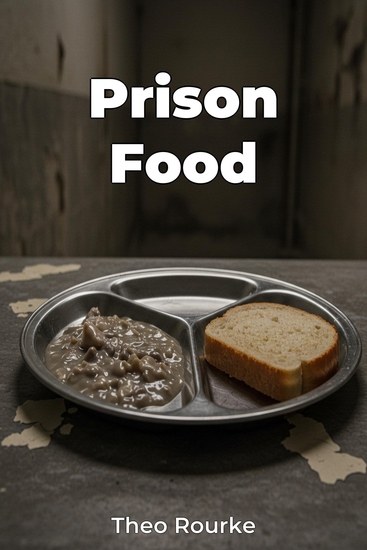
Prison Food - cover

Prison Food

Theo Rourke

Translator A AI

Publisher: Publifye

  • 0
  • 0
  • 0

Summary

Prison Food explores the often-overlooked aspect of incarceration: the meals served to inmates. This book argues that what prisoners eat reflects a society's values concerning social justice and human rights. Delving into culinary history, it reveals how penal diets have evolved and highlights the stark reality that food in prisons is more than just sustenance; it's a measure of ethical standards. Did you know that the quality of prison meals can directly impact inmate behavior and rehabilitation potential? Also, the book sheds light on how prison food intersects with broader issues of social inequality and healthcare access.

 
The book takes a holistic approach, blending historical analysis with contemporary research. It begins by outlining the basic concepts of prison food systems, then analyzes how diets have been shaped by social attitudes and economic conditions across different periods and countries, from early workhouses to modern correctional facilities. Later chapters compare prison food policies globally and examine efforts to reform these systems. By using varied sources like inmate testimonials and governmental reports, Prison Food challenges assumptions about justice and human dignity.
Available since: 03/11/2025.
Print length: 61 pages.


Other books that might interest you

  • The Human Brain - Anatomy Functions and Disorders - cover

    The Human Brain - Anatomy...

    Ava Westwood

    • 0
    • 0
    • 0
    The human brain is the command center of the body, responsible for processing information, regulating bodily functions, and enabling cognitive abilities such as thinking, memory, and emotions. As the most complex organ in the human body, the brain contains billions of neurons that communicate through intricate networks, allowing for seamless coordination of voluntary and involuntary actions. Understanding the structure and function of the brain is essential for gaining insights into neurological health, mental well-being, and the mechanisms underlying various cognitive and motor processes. 
    The brain is divided into three primary regions: the cerebrum, cerebellum, and brainstem. The cerebrum, the largest part of the brain, is responsible for higher cognitive functions such as reasoning, problem-solving, language, and sensory perception. It is further divided into four lobes—frontal, parietal, temporal, and occipital—each with distinct roles in processing information. The cerebellum, located at the back of the brain, is crucial for coordinating movement, maintaining balance, and fine motor control. The brainstem, connecting the brain to the spinal cord, regulates vital autonomic functions such as breathing, heart rate, and digestion, ensuring the body’s survival. 
    Neurons, the fundamental units of the brain, communicate through electrical and chemical signals. This intricate communication network enables the processing of sensory inputs, the initiation of motor responses, and the storage of memories. Supporting cells known as glial cells play a crucial role in maintaining brain health by providing nutrients, removing waste, and protecting neurons from damage. Neurotransmitters, chemical messengers in the brain, facilitate signal transmission between neurons and influence mood, behavior, and cognitive functions.
    Show book
  • Summary: Elon Musk - By Walter Isaacson: Key Takeaways Summary & Analysis - cover

    Summary: Elon Musk - By Walter...

    Brooks Bryant

    • 0
    • 0
    • 0
    DISCLAIMER: THIS IS NOT THE OFFICIAL BOOK. 
    This is a summary, & it does not accompany the official 
    In 'Elon Musk' by Walter Isaacson, the book explores the complex and fascinating life of Elon Musk, the visionary entrepreneur. From his troubled childhood in South Africa, where he faced both physical and emotional challenges, to his rise as the richest man on earth in 2022, Musk's journey is one of resilience and ambition. 
    Musk's father, an engineer with a charismatic yet rogue personality, left a lasting impact on his psyche. This influence shaped Musk into a tough and vulnerable individual, marked by mood swings, a high tolerance for risk, a penchant for drama, an unwavering sense of purpose, and an intense, sometimes callous, drive. 
    Isaacson, who spent two years closely shadowing Musk, presents an inside story filled with triumphs and turmoil. The book raises thought-provoking questions about whether the demons that have driven Musk are also the driving forces behind innovation and progress. It offers a revealing glimpse into the life of one of the most influential and enigmatic figures of our time.
    Show book
  • Straight White Male - A Faith-Based Guide to Deconstructing Your Privilege and Living with Integrity - cover

    Straight White Male - A...

    Chris Furr, Matthias Roberts,...

    • 0
    • 0
    • 0
    As the cultural conversation around race, gender, and sexuality has evolved, straight, white men are becoming increasingly aware of their privilege. But many may be left thinking, "OK, what am I supposed to do about it?" "We need a way forward beyond feelings of guilt, overwhelmingness, anger, and denial." "We are looking for transformative guidance that helps us be the good guys we want to be." 


    Straight, white, male pastor Chris Furr offers a guide to deconstructing that privilege in Straight White Male. With an emphasis on confession and redemption, Furr invites other privileged men to reconsider the ways they live, work, believe, and interact with others. Alongside Furr's perspective, essays from contributing writers who lack various types of privilege—straight, Black man William J. Barber II, straight, white woman Melissa Florer-Bixler, queer, nonbinary latinx Robyn Henderson-Espinoza, and gay, white man Matthias Roberts—offer insights on how particular types and combinations of privilege (and the lack thereof) shape the way we move through the world. Their combined voices offer much-needed perspective through this deconstruction and provide a vision for how straight, white men can do better for ourselves, our families, and society.
    Show book
  • The Shocking Truth about International Relations - cover

    The Shocking Truth about...

    Zoey Fraisers

    • 0
    • 0
    • 0
    International relations is a complex and ever-evolving field that shapes the global political landscape. The relationships between countries, organizations, and individuals influence everything from trade and diplomacy to security and human rights. Understanding the history, theories, and modern-day dynamics of international relations is essential for anyone seeking to grasp the intricacies of global affairs. The study of international relations has evolved from a niche academic discipline into a vital framework for analyzing global conflicts, cooperation, and power struggles. 
      
    The modern world has been profoundly shaped by the forces of globalization, which have made international relations more interconnected than ever before. Advances in communication, transportation, and technology have blurred the lines between domestic and international issues. Countries can no longer afford to operate in isolation; they must cooperate on matters of shared concern, such as climate change, terrorism, economic crises, and public health. However, the globalized world also comes with challenges. Increasingly, nations must navigate a complex web of relationships and competing interests, where power dynamics and the quest for dominance can create conflict. 
      
    Globalization has had a profound impact on international relations, but it has also revealed the limits of traditional diplomacy. In the past, diplomacy was primarily conducted between states, often in secret negotiations behind closed doors. Today, international diplomacy involves a wider range of actors, from multinational corporations and non-governmental organizations to grassroots movements and individual leaders. This shift has led to both opportunities and challenges for international cooperation, as diverse interests often clash in the pursuit of a global agenda.
    Show book
  • Sherwood Anderson and Other Famous Creoles - cover

    Sherwood Anderson and Other...

    William Faulkner, William Spratling

    • 1
    • 0
    • 0
    A treasury of literary history featuring caricatures of bohemian life in 1920s New Orleans with captions by William Faulkner.After meeting in the French Quarter, Nobel Prize–winning novelist William Faulkner and renowned silver artist William Spratling shared a house together—and collaborated on a parody volume that offered a witty portrait of the creative denizens of the city, a group that included such future icons as publisher and Broadway producer Horace Liveright, Pulitzer-winning biographer Carl Van Doren,; novelist John Dos Passos, actress and screenwriter Anita Loos, and others. This unique book provides both an enjoyable glimpse into the early lives of prominent literary and artistic figures and a snapshot of New Orleans history.
    Show book
  • Manliness & Civilization - A Cultural History of Gender and Race in the United States 1880–1917 - cover

    Manliness & Civilization - A...

    Gail Bederman

    • 0
    • 0
    • 0
    When former heavyweight champion Jim Jeffries came out of retirement on the fourth of July, 1910 to fight current black heavywight champion Jack Johnson in Reno, Nevada, he boasted that he was doing it "for the sole purpose of proving that a white man is better than a negro." Jeffries, though, was trounced. Whites everywhere rioted. The furor, Gail Bederman demonstrates, was part of two fundamental and volatile national obsessions: manhood and racial dominance. In turn-of-the-century America, cultural ideals of manhood changed profoundly, as Victorian notions of self-restrained, moral manliness were challenged by ideals of an aggressive, overtly sexualized masculinity. Bederman traces this shift in values and shows how it brought together two seemingly contradictory ideals: the unfettered virility of racially "primitive" men and the refined superiority of "civilized" white men. Focusing on the lives and works of four very different Americans—Theodore Roosevelt, educator G. Stanley Hall, Ida B. Wells, and Charlotte Perkins Gilman—she illuminates the ideological, cultural, and social interests these ideals came to serve.
    Show book