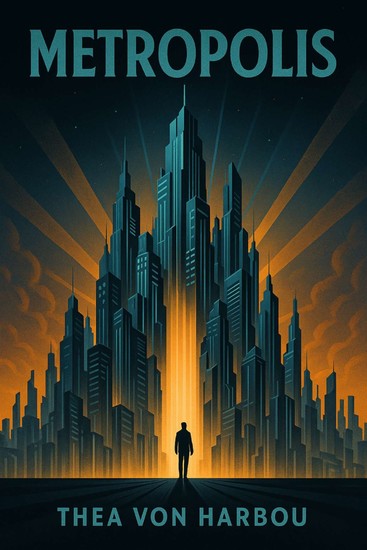
Metropolis
Thea von Harbou
Publisher: Legorreta
Summary
Metropolis is the novel that expands and deepens the narrative world of the iconic 1927 film of the same name, written by Thea von Harbou. Set in a vast futuristic city, the story portrays a sharply divided society: above ground, a privileged elite enjoys wealth, leisure, and technological advancement; below ground, an oppressed working class labors endlessly to keep the city's machines running.

The plot follows Freder, the son of Metropolis's authoritarian ruler, who becomes aware of the workers' suffering and is transformed by his encounter with Maria, a compassionate young woman who preaches reconciliation between social classes. At the same time, the scientist Rotwang creates a humanoid robot in Maria's likeness, unleashing manipulation, chaos, and social unrest.

Blending science fiction, religious symbolism, and social critique, the novel explores themes such as dehumanization through technology, the conflict between labor and capital, and the moral responsibility of leadership. Central to the story is the idea that society requires a mediator between "the head" that plans and "the hands" that work. Metropolis stands as a visionary classic of early science fiction and a powerful reflection on justice, ethics, and human dignity in the modern technological age.
Available since: 01/10/2026.
Print length: 100 pages.