Join us on a literary world trip!
Add this book to bookshelf
Grey
Write a new comment Default profile 50px
Grey
Subscribe to read the full book or read the first pages for free!
All characters reduced
The Unravelling of Mary Reddish - a powerful historical novel about a woman unjustly committed to an asylum - cover

The Unravelling of Mary Reddish - a powerful historical novel about a woman unjustly committed to an asylum

David Whitfield

Publisher: Legend Press

  • 1
  • 1
  • 0

Summary

'A fascinating and eye-opening work – intelligently written, vividly imagined, a compulsive read' Alison Moore'An impeccably researched and page-turning historical novel... A powerful debut' Jane Harris'A brilliant read... unputdownable!' G.J. Williams 
Nottingham, 1827. Mary Reddish, a young housemaid unjustly committed after defying her employer’s advances, must navigate the brutal treatments of the county asylum while trying to prove her sanity. Meanwhile, Ann and Thomas Morris, the asylum’s matron and director, struggle to uphold humane practices against outdated medical methods that haunt the institution. 
As Mary forms an unlikely alliance with a fellow patient, she finds herself at the centre of a battle between compassion and cruelty that will determine the course of her life – and the future of the asylum itself. 
Inspired by real events that took place at England’s first publicly funded asylum in Nottingham, The Unravelling of Mary Reddish shines a light on the brutal reality of mental health care in Georgian Britain. 
'A beautifully written, extensively researched novel based on true facts... a brilliant debut novel' Anne Cater, Random Things Through My Letterbox'It will appeal to anyone interested in the social history of the period or the treatment of mental health' Historical Novel Society
Available since: 05/21/2025.
Other books that might interest you

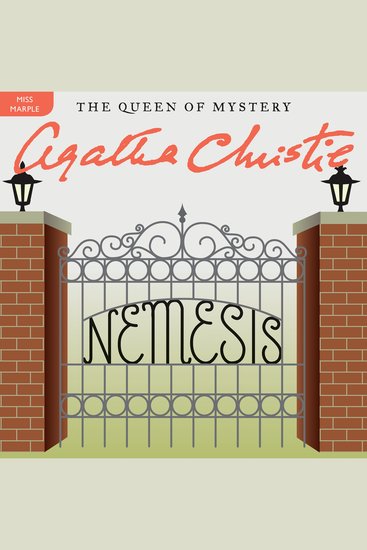
  • Nemesis - A Miss Marple Mystery - cover

    Nemesis - A Miss Marple Mystery

    Anonymous

    • 0
    • 0
    • 0
    In Agatha Christie’s baffling detective story, Nemesis, a letter from a dead man instructs Miss Marple how to conduct an investigation into a puzzlingly unspecific crime. 
    In utter disbelief, Miss Marple read the letter addressed to her from the recently deceased Mr. Rafiel—an acquaintance she had met briefly on her travels. He had left instructions for her to investigate a crime after his death. The only problem was, he had failed to tell her who was involved or where and when the crime had been committed. It was most intriguing. 
    Soon she is faced with a new crime—the ultimate crime—murder. It seems someone is adamant that past evils remained buried. . . .
    Show book
  • Attribution - A Novel - cover

    Attribution - A Novel

    Linda Moore

    • 0
    • 0
    • 0
    Art historian Cate Adamson, desperate to succeed to console her grieving parents, leaves the Midwest to complete her doctorate in New York—only to find herself assigned to an impossible sexist advisor. She struggles to impress him until she discovers a hidden painting, possibly a Baroque masterpiece. Risking her career, financial disaster, and further alienation from her family, she flees to Spain with the painting to consult art experts. 


    Antonio, an impoverished duke, meets Cate on the train to Seville, and joins her search while attempting to rescue the decaying legacy of his family. They find clues and uncover evidence that will shock the titans of art history, may destroy her prospects as an art historian, and shatter her future with Antonio. 


    Written with vivid prose, rich references to seventeenth century Spanish art, compelling characters, and a historical puzzle, Attribution is the story of one contemporary woman's journey to understand the past and unlock her future.
    Show book
  • Blues in Stereo - The Early Works of Langston Hughes - cover

    Blues in Stereo - The Early...

    Langston Hughes

    • 0
    • 0
    • 0
    Publishers Weekly’s Top Ten Fall 2024 Poetry Books From Harlem Renaissance poet Langston Hughes, a stunning collection of early works written from 1921-1927 and curated by award winning poet and National Book Award finalist, Danez Smith. Before Langston Hughes and his literary prowess became synonymous with American poetry, he was a seventeen-year-old on a train to Mexico City, seeking funds to pursue his passion. His early poems, beloved verses like “The Negro Speaks of Rivers,” were written without formal training, often on the back of napkins and envelopes, and were inspired by the sights and sounds of Black working-class people he encountered in his early life.  Blues in Stereo is a posthumous collection of these early works, in which we see Langston Hughes like we’ve never seen him before. In the intimate pages of his handwritten journals,you will travel with Hughes outside of Harlem as he ventures to the American South and Mexico, sails through the Caribbean, and becomes the only Harlem renaissance poet to visit Africa. He celebrates love as a tool of liberation in his poems and journal entries. His songs included showcase musicality of verse poetry. And the book even includes a play he co-wrote with Duke Ellington with a full score that experiments with rhythm and structure. Blues in Stereo portrays a young man coming of age in a changing world. Page by page, a young, fresh-faced Hughes contends with matters beyond his years with raw talent. National Book Award nominated poet Danez Smith offers their insight and notes on themes, challenges, and obsessions that Hughes early work contains. Blues in Stereo foreshadows a master poet that will go on to define literature for centuries to come.  
    Show book
  • Twice Told Tales - cover

    Twice Told Tales

    Nathaniel Hawthorne

    • 0
    • 0
    • 0
    Twice-Told Tales is a short story collection in two volumes by Nathaniel Hawthorne. The first was published in the spring of 1837, and the second in 1842. The stories had all been previously published in magazines and annuals, hence the name.Hawthorne was an American novelist, dark romantic, and short story writer. His works often focus on history, morality, and religion. He was born in 1804 in Salem, Massachusetts, from a family long associated with that town. Hawthorne entered Bowdoin College in 1821 and graduated in 1825. He published his first work in 1828, the novel Fanshawe; he later tried to suppress it, feeling it was not equal to the standard of his later work.[He published several short stories in periodicals, which he collected in 1837 as Twice-Told Tales. The following year, he became engaged to Sophia Peabody. He worked at the Boston Custom House and joined Brook Farm, a transcendentalist community, before marrying Peabody in 1842. The couple moved to The Old Manse in Concord, Massachusetts, later moving to Salem, the Berkshires, then to The Wayside in Concord. The Scarlet Letter was published in 1850, followed by a succession of other novels. A political appointment as consul took Hawthorne and family to Europe before their return to Concord in 1860. Hawthorne died on May 19, 1864, and was survived by his wife and their three children.
    Show book
  • The Windfall - A tale about the greater good from Spains greatest short story writer - cover

    The Windfall - A tale about the...

    Vicente Blasco Ibáñez

    • 0
    • 0
    • 0
    Vicente Blasco Ibáñez was born in Valencia, Spain on 29th January 1867.  
     
    At university, he studied law and graduated in 1888 but never felt the urgency to practice - he was more interested in politics, journalism, literature and women.   
     
    Politically he was a militant Republican partisan and, in his youth, founded a newspaper, El Pueblo (The People). The newspaper was taken to court many times and he made many enemies. In one incident he was shot and almost killed. In 1896, Ibáñez was arrested and sentenced to a few months in prison. 
     
    Despite this colourful background he found time to write novels. His first published work was ‘La Araña Negra’ (The Black Spider) in 1892, a work that he later repudiated although at the time it was a useful vehicle for him to express his anti-clerical views. 
     
    In 1894, he published ‘Arroz y Tartana’ (Airs and Graces), about a late 19th Century widow in Valencia trying to keep up appearances in order to marry her daughters well.   
     
    Ibáñez’s next sequence of books studied rural life in the farmlands of Valencia and failed to gain much of an audience.   
     
    His writing now took on a new direction with its now familiar sensational and melodramatic themes in 1908 with ‘Sangre y Arena’ (Blood and Sand), which follows the career of Juan Gallardo from his poor beginnings as a child in Seville, to his rise to becoming a famous matador in Madrid 
     
    However, his greatest success was ‘Los Cuatro Jinetes del Apocalipsis (The Four Horsemen of the Apocalypse) in 1916, which tells a tangled tale of the French and German sons-in-law of an Argentinian land-owner who find themselves fighting on opposite sides in the First World War.  It was a literary and commercial sensation and became the best-selling book of 1919.  It also propelled Rudolph Valentino to stardom in the 1921 film. 
     
    Ironically his fame in the English-speaking world has come not as a novelist but as the stories behind some of Hollywood’s greatest silent movies. 
     
    Vicente Blasco Ibáñez died in Menton, France on January 28th, 1928, the day before his 61st birthday.
    Show book
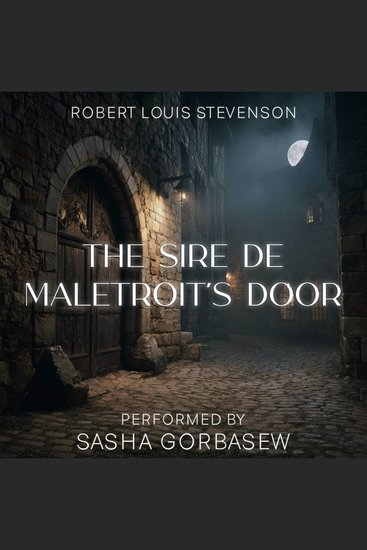
  • The Sire de Maletroit's Door - cover

    The Sire de Maletroit's Door

    Robert Louis Stevenson

    • 0
    • 0
    • 0
    “The Sire de Maletroit’s Door” by Robert Louis Stevenson is a gripping Gothic tale set in 17th-century France, weaving suspense, fate, and honor into a tightly written narrative. When a chance twist of circumstances traps a young man in a mysterious chateau, he finds himself at the mercy of its enigmatic master. Stevenson crafts a rich, atmospheric story filled with tension, old-world intrigue, and sharp psychological insight. This short story showcases Stevenson’s mastery of mood and character, making it a must-read for fans of historical fiction and classic suspense. Perfect for readers who enjoy tightly plotted narratives with a dramatic edge.
    Show book