Join us on a literary world trip!
Add this book to bookshelf
Grey
Write a new comment Default profile 50px
Grey
Subscribe to read the full book or read the first pages for free!
All characters reduced
The Old Curiosity Shop - cover

The Old Curiosity Shop

Charles Dickens

Publisher: CLXBX

  • 0
  • 0
  • 0

Summary

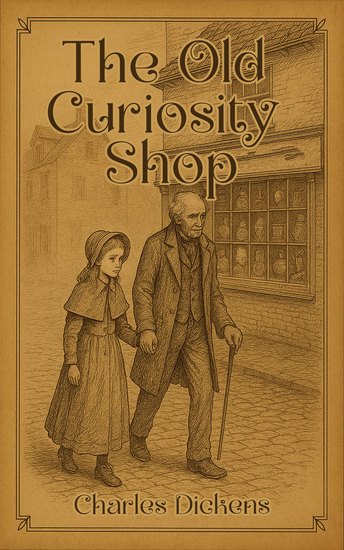
The Old Curiosity Shop is a deeply emotional and poignant novel by Charles Dickens that explores innocence, suffering, and the moral contrasts of Victorian society. Blending sentiment, adventure, and social commentary, the story remains one of Dickens's most touching and memorable works.

At the heart of the novel is Little Nell, a gentle and virtuous young girl who lives with her grandfather in a cluttered curiosity shop filled with forgotten treasures. When her grandfather's destructive gambling habits place them in grave danger, Nell and her grandfather are forced to flee London, embarking on a wandering journey across the English countryside. Along the way, they encounter a wide range of characters who reflect both the kindness and cruelty of the world.

Among these figures is the grotesque and menacing Quilp, one of Dickens's most infamous villains, whose cruelty and greed cast a dark shadow over the story. Through sharp contrasts between innocence and corruption, wealth and poverty, Dickens exposes the hardships endured by the vulnerable and the moral failures of society.

The Old Curiosity Shop is a moving meditation on love, sacrifice, and endurance in the face of suffering. Rich in atmosphere and emotional power, the novel showcases Dickens's ability to awaken deep sympathy in his readers. Tragic yet beautifully written, it remains a timeless classic that continues to resonate with readers across generations.
Available since: 02/05/2026.
Print length: 759 pages.
Other books that might interest you

  • Awakening - Booktrack Edition - cover

    Awakening - Booktrack Edition

    Kate Chopin

    • 0
    • 0
    • 0
    Listen to Awakening with a movie-style soundtrack and amplify your audiobook experience. 
    Kate Chopin's 1899 novella The Awakening is about the personal, sexual, and artistic awakening of a young wife and mother, Edna Pontellier. While on vacation at Grand Isle, an island in the Gulf of Mexico, Edna befriends the talented pianist Mlle. Reisz and the sympathetic Robert Lebrun, both of whom will influence her startling life choices. Chopin's novel created a scandal upon its original publication and effectively destroyed her writing career. Now, however, it is considered one of the finest American novels of the 19th century.
    Show book
  • The Scarlet Letter - cover

    The Scarlet Letter

    Nathaniel Hawthorne

    • 0
    • 0
    • 0
    First published in 1850, "The Scarlet Letter" is a historical fiction novel set in 17th-century Puritan Massachusetts Bay Colony. The book centers on Hester Prynne, who conceives a daughter through an extramarital affair and struggles with the repercussions in a highly religious and morally strict society. She is forced to wear a red "A" on her dress, signifying her as an "adulteress." The novel delves into themes of sin, guilt, and social judgment, and it's considered one of the cornerstones of American literature
    Show book
  • The Great Gatsby - cover

    The Great Gatsby

    F. Scott Fitzgerald

    • 0
    • 0
    • 0
    "The Great Gatsby" is a classic novel written by F. Scott Fitzgerald, first published in 1925. The story is set in the summer of 1922 and is narrated by Nick Carraway, a young man who moves to Long Island, New York, and becomes entangled in the lives of his mysterious and wealthy neighbor, Jay Gatsby, and his cousin, Daisy Buchanan.
    Show book
  • Henrik Ibsen 3 Complete Works - A Dolls House The Wild Duck Peer Gynt - cover

    Henrik Ibsen 3 Complete Works -...

    Henrik Ibsen

    • 0
    • 0
    • 0
    Henrik Ibsen, the renowned Norwegian playwright, is celebrated for his influential contributions to modern theater. Born in 1828, Ibsen's early life was marked by financial struggles and personal hardships. However, his unwavering determination and artistic talent propelled him to become one of the most prominent figures in the world of drama. Ibsen's works, including "A Doll's House," "Hedda Gabler," and "Ghosts," challenged societal conventions, delving into themes of individuality, morality, and the consequences of societal expectations. 
     
    Ibsen's legacy lies in his revolutionary approach to playwriting, which defied the norms of his time. His plays were characterized by complex characters and thought-provoking narratives that explored the human psyche. By confronting controversial subjects such as gender roles, marital relationships, and societal hypocrisy, Ibsen shattered the boundaries of Victorian drama, laying the groundwork for realism and naturalism in theater. His emphasis on psychological realism and his commitment to social critique left an indelible mark on the dramatic arts, influencing generations of playwrights and directors. 
     
    In addition to his profound impact on the theater, Ibsen's artistry extended to his skillful use of symbolism and poetic language. His plays were meticulously crafted, with each word and gesture carrying deep significance. Ibsen's ability to weave intricate layers of meaning into his works elevated them to the level of profound literature. His writings provided a lens through which audiences could examine their own lives and the world around them, encouraging critical reflection and sparking dialogue on societal issues.
    Show book
  • The Dark Ages Collection - cover

    The Dark Ages Collection

    David Hume, J. B. Bury, Edward...

    • 0
    • 0
    • 0
    Uncover the Truth of a World in Transition.
    
    Often cast in the shadow of the Renaissance, the Early Middle Ages were a time of intense struggle, profound faith, and the forging of the modern world. This collection brings together authoritative historical accounts that strip away the myths of the "Dark Ages," revealing a sophisticated era of cultural synthesis where Roman, Christian, and Germanic traditions merged to create Western Civilization.
    
    This collection explores the defining forces of the era:
    
    The Collapse of an Empire: Analyze the internal decay and external pressures that led to the fall of the Western Roman Empire and the subsequent rise of the successor kingdoms.
    
    The Age of Migrations: Trace the epic journeys of the tribes that redrew the map of Europe, from the forests of Germania to the shores of Britain and North Africa.
    
    The Rise of the Cross: Explore how the church became the central stabilizing force of the continent, preserving ancient texts and providing a unified cultural framework.
    
    Legendary Leaders and Warriors: Follow the rise of figures like Charlemagne and the seafaring Northmen, documenting the birth of the Holy Roman Empire and the expansion of the Viking world.
    
    From the illuminated manuscripts of isolated monasteries to the fierce shield-walls of the battlefield, this collection offers a panoramic view of half a millennium of human history. It is an essential addition for any student of medieval studies, world history, and the roots of Western culture.
    
    Step out of the shadows. Buy "The Dark Ages Collection" today and discover the foundation of the modern world.
    Show book
  • The Loathly Opposite - From their pens to your ears genius in every story - cover

    The Loathly Opposite - From...

    John Buchan

    • 0
    • 0
    • 0
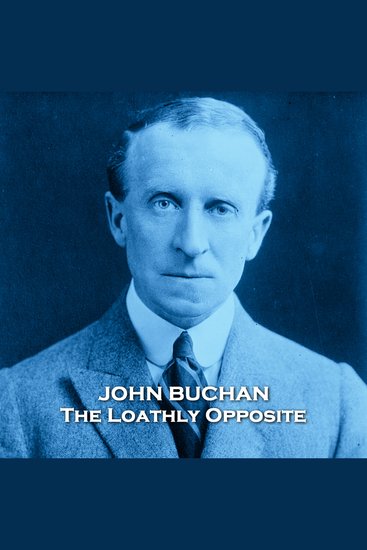
    The Scottish novelist John Buchan enjoyed a remarkable career as politician, historian and Governor General. He was born John Buchan on 26th August 1875 and later added 1st Baron Tweedsmuir PC GCMG GCVO CH to his name.  
    Buchan studied at Hutchesons’ Grammar School, Glasgow and at seventeen won a scholarship to the University of Glasgow to study classics. There he began to write poetry. In 1895 he transferred to Oxford to continue his study of Classics and in 1896 ‘Sir Quixote of the Moors’ was published followed by the non-fiction ‘Scholar-Gipsies’. His prolific literary output now hardly faltered. 
    He graduated in 1900 and became the private secretary to Alfred Milner, the High Commissioner for Southern Africa and other colonies. Buchan found the same inspiration in the African landscape as he had in the Scottish Borders, and would later set many works here. Returning to London he became a partner in a publishing house, and garnered an editorial role at The Spectator. He also completed his law studies. He was called to the bar in 1901 but never practiced.  
    On 15th July 1907 Buchan married Susan Charlotte Grosvenor, the cousin of the Duke of Westminster. In 1910 he wrote ‘Prester John’, the first of a series set in South Africa.  
    In 1911 Buchan entered politics as a Unionist candidate in the Scottish Borders advocating the support of free trade, women’s suffrage, national insurance, and reducing the power of the House of Lords.  
    The Great War saw Buchan writing for the War Propaganda Bureau and as Times correspondent in France. In 1915, he published ‘The Thirty-Nine Steps’, his most famous book and a follow-up Richard Hannay novel, ‘Greenmantle’, in 1916.  
    In 1916 Buchan enlisted in the Intelligence Corps which included writing speeches for Sir Douglas Haig. By 1917 he was Director of Information under Lord Beaverbrook. Buchan called it “the toughest job he ever took on”. He somehow found time to assist in a history of the war magazine. This was later published in 24 volumes: Nelson’s History of the War. 
    After the war his writing focused on historical studies. In 1927 Buchan became the Unionist Party Member of Parliament for the Combined Scottish Universities. In a speech to Parliament he said “I believe every Scotsman should be a Scottish nationalist. If it could be proved that a Scottish parliament were desirable… Scotsmen should support it.”  
    Over the next decade he continued to distinguish himself politically and in literature.  On the 1st June 1935 he became 1st Baron Tweedsmuir of Elsfield in the County of Oxford.  
    He was now also given the position of Governor General in Canada and resolved to travel all over Canada to gain a better insight of the country. Having crossed both length and breadth he saw the cultural shift between areas and their common ground and helped bring about a clear national Canadian identity. 
    On the 6th February 1940 he collapsed from a stroke and sustained a very serious head injury in falling. Two rounds of surgery to stabilise his condition were unsuccessful and Buchan died on the 11th February. After a state funeral in Ottawa his ashes were returned to his estate in Oxfordshire.
    Show book