Join us on a literary world trip!
Add this book to bookshelf
Grey
Write a new comment Default profile 50px
Grey
Subscribe to read the full book or read the first pages for free!
All characters reduced
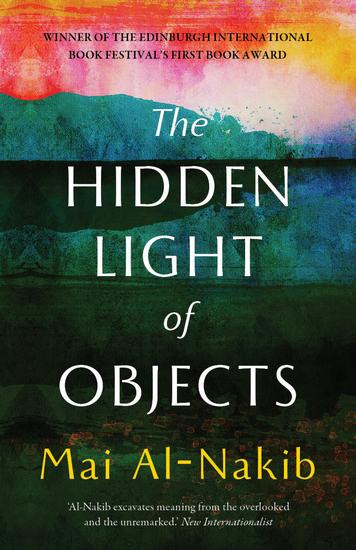
The Hidden Light of Objects - cover

The Hidden Light of Objects

Mai Al-Nakib

Publisher: Saqi Books

  • 0
  • 1
  • 0

Summary

A young girl, renamed Amerika in honour of the US role in the liberation of Kuwait, finds her name has become a barometer of her country's growing hostility towards the West. A self-conscious Palestinian teenager is drawn into a botched suicide bombing by two belligerent classmates. A middle-aged man dying from cancer looks back on his extramarital affairs and the abiding forgiveness of his wife. A Kuwaiti woman returns to her family after being held captive in Iraq for a decade.

The headlines tell of war, unrest and religious clashes. But if you look beyond them you will see life in the Middle East as it is really lived – adolescent love, the fragility of marriage, pain of the most quotidian kind. Mai Al-Nakib's luminous stories unveil the lives of ordinary people – and the power of objects to hold extraordinary memories.
Available since: 06/05/2025.
Print length: 256 pages.

Other books that might interest you

  • Bruises - cover

    Bruises

    Kurt Newton

    • 0
    • 0
    • 0
    A collection of 23 stories from Kurt Newton, including: 
    The Pit, Puppies For Sale, Bruises, Under the Bridge, Thumbin ', Something Profound, The Whittling, creak!, Angels of Mercy, Angels of Grief, Skins, The Banana Man, Dead Dogs, Trunk Story, Nature Walk, The Dog Park, B - Side, Lost Dog, Periphery, Post Mortem, The Stagnant Ponds, Thirty-Two Scenes from A Dead Hooker's Mouth, Lump and The Golden Door. 
    “For dark and cerebral writing, read Kurt Newton, a purveyor of tragedies of both the human condition and of the supernatural; to wit, his latest—a collection that is not just 23 short stories, but 23 sharp and shocking BRUISES to the psyche!”—Eric J. Guignard, multiple award-winning author and editor, including That Which Grows Wild and Doorways to the Deadeye
    Show book
  • The Hunger - cover

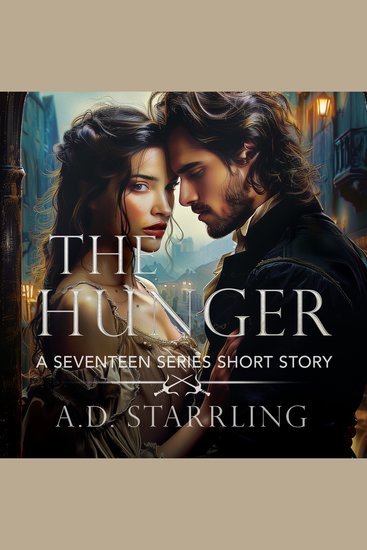
    The Hunger

    A.D. Starrling

    • 0
    • 0
    • 0
    Discover the origin of the love story behind Empire.  
    1695. Spanish Netherlands.  
    The war between King Louis XIV and the League of Augsberg reaches a pivotal moment at the Siege of Namur.  
    When the besieged French army starts to mount an increasingly fierce resistance, Bastian immortal Conrad Greene and his company of elite intelligence operatives are sent to Liège to track down the traitor supplying the enemy with stocks of a new, powerful gunpowder.  
    Frustrated at every turn, an unexpected visit from Conrad’s superior results in a surprising addition to his team. Can the captain resist his all-consuming attraction for immortal Laura Hartwell long enough to solve the mystery of the gunpowder plot?  
    The Hunger is a short story set in the riveting world of A.D. Starrling’s award-winning supernatural thriller series Seventeen.
    Show book
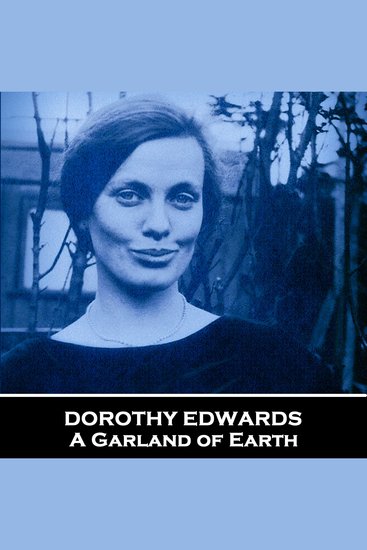
  • A Garland of Earth - From their pens to your ears genius in every story - cover

    A Garland of Earth - From their...

    Dorothy Edwards

    • 0
    • 0
    • 0
    Amelia Ann Blanford Edwards was born on 7th June 1831 in Islington, London.  She was educated at home by her mother and showed early promise as a writer, publishing her first poem at the age of 7 and her first story at 12.  Thereafter several popular periodicals published her poetry, stories and articles. 
    In addition she also illustrated some of her own writings and painted scenes from books she had read.  This talent was not supported by her parents, who saw an artist’s life as scandalous.  Undeterred Amelia took up composing and performing music until a bout of typhus caused throat damage.  Other interests soon followed until, early in the 1850s, Amelia focused exclusively on writing.  Her early novels were well received, and with ‘Barbara's History’ in 1864, a work revolving around bigamy, her reputation was established.  
    Amelia’s pen was also the purveyor of ghost stories for magazines and are still anthologized as classic tales to this day. 
    In January 1851, Amelia became engaged, apparently to please her parents, but she quickly broke it off.  In reality her emotional attachments were almost exclusively with women.  From the early 1860s she lived with Ellen Drew Braysher, a widow 27 years her senior, until both women died in early 1892.  During this relationship other women also entered and left her life.  Her frequent travelling companion, Lucy Renshaw, accompanied her to Egypt in the winter of 1873 and there she found a life-changing interest in Egyptology.  Aware of increasing threats from tourism and modern development she became an advocate for their research and preservation.  
    To advance the work Amelia largely abandoned much of her writing in favour of Egyptology and even took on strenuous lecture tours to raise funds. 
    After catching influenza, Amelia Edwards, ‘the Godmother of Egyptology’ died on 15th April 1892 at Weston-super-Mare.  She was 60.
    Show book
  • A Journey of Little Profit - From their pens to your ears genius in every story - cover

    A Journey of Little Profit -...

    John Buchan

    • 0
    • 0
    • 0
    The Scottish novelist John Buchan enjoyed a remarkable career as politician, historian and Governor General. He was born John Buchan on 26th August 1875 and later added 1st Baron Tweedsmuir PC GCMG GCVO CH to his name.  
    Buchan studied at Hutchesons’ Grammar School, Glasgow and at seventeen won a scholarship to the University of Glasgow to study classics. There he began to write poetry. In 1895 he transferred to Oxford to continue his study of Classics and in 1896 ‘Sir Quixote of the Moors’ was published followed by the non-fiction ‘Scholar-Gipsies’. His prolific literary output now hardly faltered. 
    He graduated in 1900 and became the private secretary to Alfred Milner, the High Commissioner for Southern Africa and other colonies. Buchan found the same inspiration in the African landscape as he had in the Scottish Borders, and would later set many works here. Returning to London he became a partner in a publishing house, and garnered an editorial role at The Spectator. He also completed his law studies. He was called to the bar in 1901 but never practiced.  
    On 15th July 1907 Buchan married Susan Charlotte Grosvenor, the cousin of the Duke of Westminster. In 1910 he wrote ‘Prester John’, the first of a series set in South Africa.  
    In 1911 Buchan entered politics as a Unionist candidate in the Scottish Borders advocating the support of free trade, women’s suffrage, national insurance, and reducing the power of the House of Lords.  
    The Great War saw Buchan writing for the War Propaganda Bureau and as Times correspondent in France. In 1915, he published ‘The Thirty-Nine Steps’, his most famous book and a follow-up Richard Hannay novel, ‘Greenmantle’, in 1916.  
    In 1916 Buchan enlisted in the Intelligence Corps which included writing speeches for Sir Douglas Haig. By 1917 he was Director of Information under Lord Beaverbrook. Buchan called it “the toughest job he ever took on”. He somehow found time to assist in a history of the war magazine. This was later published in 24 volumes: Nelson’s History of the War. 
    After the war his writing focused on historical studies. In 1927 Buchan became the Unionist Party Member of Parliament for the Combined Scottish Universities. In a speech to Parliament he said “I believe every Scotsman should be a Scottish nationalist. If it could be proved that a Scottish parliament were desirable… Scotsmen should support it.”  
    Over the next decade he continued to distinguish himself politically and in literature.  On the 1st June 1935 he became 1st Baron Tweedsmuir of Elsfield in the County of Oxford.  
    He was now also given the position of Governor General in Canada and resolved to travel all over Canada to gain a better insight of the country. Having crossed both length and breadth he saw the cultural shift between areas and their common ground and helped bring about a clear national Canadian identity. 
    On the 6th February 1940 he collapsed from a stroke and sustained a very serious head injury in falling. Two rounds of surgery to stabilise his condition were unsuccessful and Buchan died on the 11th February. After a state funeral in Ottawa his ashes were returned to his estate in Oxfordshire.
    Show book
  • Reflections: More Tales from Tipperary - cover

    Reflections: More Tales from...

    Edward Forde Hickey

    • 0
    • 0
    • 0
    This series of tales was compiled during the recent pandemic lockdown and they include colourful incidents in the lives of bonesetters, matchmakers, youthful lovers, newcomers from beyond the mountains, a reformed villain's wedding, celebrated by the whole community for days thereafter, and lots more.  
    This is the second volume and has been written once more in a lyrical language similar to that of past storytellers such as Mark Twain - enthralling and unbelievable at times. 
    Reflections should certainly appeal to those not only with an interest in Ireland's social history but to fans of the author's earlier novels.  
    'An effortless evocation of an almost-forgotten world . . . wonderfully personable narration and endlessly charming characterisation.' Addison & Cole
    Show book
  • As the Crow Flies - From their pens to your ears genius in every story - cover

    As the Crow Flies - From their...

    John Davys Beresford

    • 0
    • 0
    • 0
    John Davys Beresford was born on 17th March 1873.  His life was blighted by infantile paralysis which left him partially disabled. 
    After an education at Oundle school he trained to be an architect.  However, he quickly decided that his life was to be centred on a literary career.  His first offerings were in drama and as a journalist. 
    As well as being a book reviewer for the Manchester Guardian he contributed to New Statesman, The Spectator, Westminster Gazette, and the Theosophist magazine The Aryan Path.   
    His spiritual journey in early adulthood had claimed him as an agnostic, in defiance of his clergyman father.  This view he later abandoned in preference to describing himself as a Theosophist and a pacifist. 
    As well as many novels, many themed with spiritual and philosophical elements.  Beresford was also a gifted short story writer particularly across the science-fiction, horror and ghost genres. 
    All of these elements helped him to obtain a prominent place in Edwardian Literary London. 
    John Davys Beresford died on the 2nd February 1947. He was 73.
    Show book