Join us on a literary world trip!
Add this book to bookshelf
Grey
Write a new comment Default profile 50px
Grey
Subscribe to read the full book or read the first pages for free!
All characters reduced
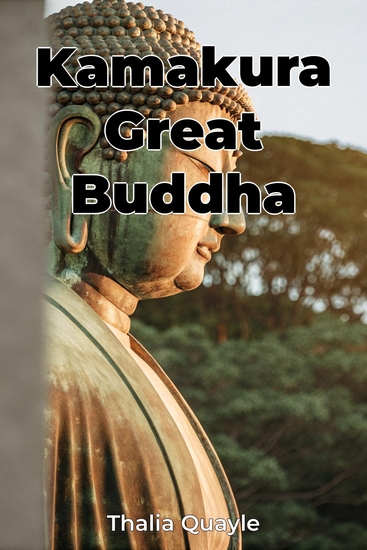
Kamakura Great Buddha - cover

Kamakura Great Buddha

Thalia Quayle

Translator A AI

Publisher: Publifye

  • 0
  • 0
  • 0

Summary

The "Kamakura Great Buddha" explores the rich history and significance of this iconic bronze statue in Japan. It delves into its artistic construction, religious symbolism within Japanese Buddhism, and its historical context during the Kamakura period. The book highlights how the Daibutsu embodies both artistic ingenuity and the spiritual aspirations of a nation undergoing transformation. The statue's representation of Amida Buddha, central to Pure Land Buddhism, promising salvation, adds to its profound importance. The book examines the Daibutsu's artistic features, like its proportions and posture, in relation to Buddhist iconography. It also investigates the statue's evolving role, from its initial connection with Pure Land practices to its integration into Zen meditation. Unfolding in three sections, the book first introduces the statue's construction history, then explores its artistry, and finally discusses its role in Japanese Buddhism. This comprehensive approach makes it valuable for anyone interested in Japanese art, Buddhist studies, or cultural history.
Available since: 02/14/2025.
Print length: 53 pages.


Other books that might interest you

  • Summer and Smoke - cover

    Summer and Smoke

    Tennessee Williams

    • 0
    • 0
    • 0
    Alma Winemiller is a shy, religious young woman who grew up pining for the boy next door, John Buchanan. He’s grown up to become a doctor with a penchant for sexual conquest, so when he returns to their Mississippi town to start a medical practice, their strange attraction sets them on a path of turmoil and heartbreak.


    Recorded before a live audience at the Skirball Cultural Center in June 2008.


    Directed by Michael Hackett
     
    Producing Director: Susan Albert Loewenberg


    An L.A. Theatre Works full-cast recording, starring:


    Ann Gee Byrd as Mrs. Winemiller and Rosemary
     
    Kristen Frazier as Nellie
     
    Mark Kudisch as John Buchanan Jr.
     
    Carlos Lacamara as Papa Gonzalez
     
    Gabriel Olds as Dusty, Vernon, and Archi Kramer
     
    Tina Sánchez as Rosa Gonzalez
     
    David Selby as Dr. Buchanan Senior
     
    Tegan West as Roger Doremus 
     
    Armin Shimerman as the Reverend Winemiller
     
    Kitty Swink as Mrs. Bassett
     
    Sarah Zimmerman as Alma Winemiller


    Recording, editing and mixing engineer: Mark Holden
     
    Live Sound Effects by Eddie Mills
     
    Music Supervisor: Scott Willis


    Original music by Gareth S. Brown
    Show book
  • Duran Duran's Rio - cover

    Duran Duran's Rio

    Annie Zaleski

    • 0
    • 0
    • 0
    In the '80s, the Birmingham, England, band Duran Duran became closely associated with new wave, an idiosyncratic genre that dominated the decade's music and culture. No album represented this rip-it-up-and-start-again movement better than the act's breakthrough 1982 LP, Rio. A cohesive album with a retro-futuristic sound—influences include danceable disco, tangy funk, swaggering glam, and Roxy Music's art-rock—the full-length sold millions and spawned smashes such as ""Hungry Like the Wolf"" and the title track.However, Rio wasn't a success everywhere at first; in fact, the LP had to be buffed-up with remixes and reissued before it found an audience in America. The album was further buoyed by colorful music videos, which established Duran Duran as leaders of an MTV-driven second British Invasion, and the group's cutting-edge visual aesthetic. Via extensive new interviews with band members and other figures who helped Rio succeed, this book explores how and why Rio became a landmark pop-rock album, and examines how the LP was both a musical inspiration—and a reflection of a musical, cultural, and technology zeitgeist.
    Show book
  • Pandya Empire - Tamil Kingdoms in the Shadow of Rome - cover

    Pandya Empire - Tamil Kingdoms...

    Rolf Hedger

    • 0
    • 0
    • 0
    The Pandya dynasty was one of the most ancient and influential Tamil kingdoms of South India, with origins deeply rooted in both history and legend. The earliest references to the Pandyas appear in Tamil Sangam literature, which dates back over two thousand years. These texts describe the Pandyas as powerful rulers of Madurai, a city that would become the cultural and political heart of their kingdom. The dynasty’s history is intertwined with mythology, particularly in Tamil literary traditions that claim the Pandyas descended from the gods. Some legends suggest that the first Pandya king was Kulasekara Pandya, a ruler said to be divinely blessed by Lord Shiva himself. 
    Historically, the Pandyas are believed to have established their rule as early as the 6th century BCE, although their presence likely predates this period. The Sangam Age, which spanned from roughly 300 BCE to 300 CE, marks the first well-documented era of Pandya rule. During this time, the kingdom flourished due to its strong trade networks, military strength, and patronage of Tamil poets and scholars. The Pandyas ruled alongside the Chola and Chera dynasties, forming a triad of powerful Tamil polities that competed for dominance in South India. These three kingdoms frequently engaged in alliances, conflicts, and shifting power dynamics that shaped the region’s history. 
    The early Pandyas built their capital in Korkai, an important port city known for its pearl fisheries and maritime trade. However, as their kingdom expanded, Madurai became the political and cultural center of their rule. The Pandyas were known for their patronage of literature and arts, particularly the Tamil Sangam assemblies, where poets and scholars composed some of the most revered works in Tamil history. This period saw the flourishing of Tamil culture, with kings promoting literary works that detailed heroism, love, and governance.
    Show book
  • Through a Crooked Lens - cover

    Through a Crooked Lens

    Monte Dwyer

    • 0
    • 0
    • 0
    “He views life with a Jack Nicholson like, quizzical overview, a Why is this thus? disdain.” Ted Egan 
    Entertaining account of Monte struggling to come to grips with Sunrise, technology and a newly-acquired 4WD bus determined to kill him. 
    Monte’s amusing transition from mainstream television to freelance multimedia something-or-other; stories edgier and more chaotic than the first book, a touch of restrained madness here.
    Show book
  • Renaissance Saga The: Unraveling Secrets of a World Transformed - "Elevate your listening experience with The Renaissance Saga: Unraveling Secrets and unlock a transformed world!" - cover

    Renaissance Saga The: Unraveling...

    Barrett Winthrope

    • 0
    • 0
    • 0
    The Renaissance Saga: Unraveling Secrets of a World Transformed 
    ⭐⭐ Simplified Guide & Explanations Included⭐⭐ 
    Are you eager to enhance your career and solidify your knowledge by unlocking wisdom, embracing change, and igniting your journey? 
    Searching for a thorough resource that covers all the essential elements for your transformational path? 
    Your quest ends here! 
    This guide is your ultimate companion for deepening your insights, applying your newfound skills, and engaging in practical exercises. With this, you’re set for success. 
    Updated for the 2025 transformational journey. 
    Key features of this comprehensive guide: 
    - In-depth insights about the transformative path for 2025 
    - Detailed exploration of unlocking wisdom and embracing change 
    - Effective strategies for preparation and overcoming challenges 
    Our guide stands out with its extensive coverage, crucial for your success. Concepts are not just touched upon; they are explored in detail and with accuracy. 
    Please note that this guide operates independently and is not associated with any official endorsement. 
    Crafted with a clear structure and straightforward language, our guide ensures seamless transitions between topics. Bid farewell to complex jargon, and welcome clear, accurate, and technically sound content. 
    So, why hesitate? Click the BUY NOW button, secure your guide, and start your journey towards success in 2025! 
    Embark on your transformative journey today!
    Show book
  • Meiji Era - Modernization Westernization and the Fall of the Shogunate - cover

    Meiji Era - Modernization...

    Rolf Hedger

    • 0
    • 0
    • 0
    The Tokugawa Shogunate, which had ruled Japan for over two centuries, faced a gradual but inevitable decline in the mid-19th century. Although the regime had maintained stability and peace through strict social hierarchy and isolationist policies, internal weaknesses and external pressures ultimately led to its downfall. The combination of economic struggles, social unrest, and increasing foreign intervention exposed the shogunate’s vulnerabilities, setting the stage for a dramatic political transformation. 
    One of the major factors behind the decline was Japan’s rigid economic system. The Tokugawa rulers relied heavily on a feudal structure in which the daimyo, or regional lords, maintained their own domains under the authority of the shogun. However, the economy began to shift from an agrarian-based system to one influenced by commerce and trade. The samurai class, who traditionally depended on fixed stipends from their lords, found themselves in financial hardship as inflation and economic instability grew. Meanwhile, wealthy merchants gained power, disrupting the established social order and creating tensions between classes. 
    In addition to economic issues, political dissatisfaction increased within Japan. Many daimyo and samurai resented the centralized control of the shogunate, believing it had become ineffective in governing the country. Corruption and inefficiency within the government further weakened public trust. While some reform-minded leaders proposed changes, the rigid nature of the Tokugawa system made meaningful reform difficult to achieve. This frustration contributed to the rise of movements advocating for a return to imperial rule under Emperor Meiji.
    Show book