Join us on a literary world trip!
Add this book to bookshelf
Grey
Write a new comment Default profile 50px
Grey
Subscribe to read the full book or read the first pages for free!
All characters reduced
Vegan History - cover

Vegan History

Tessa Kwan

Translator A AI

Publisher: Publifye

  • 0
  • 0
  • 0

Summary

Vegan History reveals that plant-based diets have a rich and often overlooked history, challenging the notion that veganism is merely a modern trend. The book explores the cultural significance of abstaining from animal products across various societies and eras. It highlights how ethical, religious, and economic factors drove these historical dietary choices.

 
The book examines specific instances of vegan or vegetarian practices through chapters focusing on different periods and regions, such as Ancient Roots: Plant-Based Diets in Antiquity and Medieval Minimalism: Vegetarianism in Religious Orders. From ancient civilizations to religious orders, Vegan History showcases that plant-based living has been interwoven with cultural values and beliefs for centuries.

 
This historical perspective provides valuable insights into sustainable living, health, and animal ethics, demonstrating that these concerns predate contemporary movements. By drawing upon diverse sources and connecting dietary choices to social structures and environmental sustainability, Vegan History offers a multifaceted view.

 
The book progresses chronologically, starting with ancient examples and culminating in a discussion of modern veganism and its potential lessons for today. This approach provides a refreshing perspective on the long-standing relationship between humans and plant-based foods.
Available since: 03/11/2025.
Print length: 68 pages.

Other books that might interest you

  • Life Earth and Politics - Ideas for the Next 400 Years - cover

    Life Earth and Politics - Ideas...

    Sherman Lewis

    • 0
    • 0
    • 0
    Science, not speculative philosophy, is the only guide, however imperfect, to the nature of existence. Science culture uses and supports science. The social brain experiences free will and needs religious faith. Empathy is a choice based on intuition. We need a better scientific understanding of dogma and chauvinism, and this book explores these issues. It also describes the Crisis of the Anthropocene, described in under a hundred pages, is a wakeup that needs to overcome ignorance and naïve optimism, and reach our deepest emotions. Topics include climate change, biodiversity, pollutants, population, and political causes behind the collapse. This book also presents data from Internationalcomparisons.org that demonstrates that the US is neither advanced nor a democracy and has failed to deal with guns, reproductive rights, taxation, social welfare, fiscal discipline, and other issues. Even with these already significant problems Americans must face, there is even more: Trumpism and Putinism are existential threats to American freedom and democracy. This book presents a framework for others to act in the time of these issues.
    Show book
  • The Prison of Perspective - cover

    The Prison of Perspective

    Rudolph Bader

    • 0
    • 0
    • 0
    A chance encounter, a road accident, an air crash, a hold-up at a bank:How do such events connect people?How do people see the situations from their different perspectives?Three narrative strands follow the lives of three individuals – Peter, Cathy and Ivan – through the second half of the 20th century, from post-war austerity and mediocrity in the 1950s and 1960s to the fast-moving life-style of the present decade, whereby the plot is embedded in real events of the period. The three biographies intersect at crucial points, which reveals their internal landscapes and the different ways of understanding reality. Things are not always what they seem, and we do not always know the whole truth.Playing with various time-levels, this novel of the mind deals primarily with potential fallacies of perception, sexual awakening, emotional exploitation and the proximity of death.How do we store the memorable events in our lives?And how do we cope with these memories as we grow older?
    Show book
  • In the Company of Radical Women Writers - cover

    In the Company of Radical Women...

    Rosemary Hennessy

    • 0
    • 0
    • 0
    In the Company of Radical Women Writers rediscovers the political commitments and passionate advocacy of seven writers who as young women turned to communism around the Great Depression and, over decades of national crisis, spoke to issues of labor, land, and love in ways that provide thought-provoking guidance for today. Rosemary Hennessy spotlights the courageous lives of women who confronted similar challenges to those we still face: exhausting and unfair labor practices, unrelenting racial injustice, and environmental devastation. 


    As Hennessy shows, the documentary journalism and creative and biographical writings of Marvel Cooke, Louise Thompson Patterson, Claudia Jones, Alice Childress, Josephine Herbst, Meridel Le Sueur, and Muriel Rukeyser recognized that life is sustained across a web of dependencies that we each have a duty to maintain. Their work brought into sharp focus the value and dignity of Black women's domestic work, confronted the destructive myths of land exploitation and white supremacy, and explored ways of knowing attuned to a life-giving erotic energy that spans bodies and relations. In doing so, they expanded the scope of American communism. 


    In the Company of Radical Women Writers reveals their groundbreaking reconceptions of the political and provides bracing inspiration in the ongoing fight for justice.
    Show book
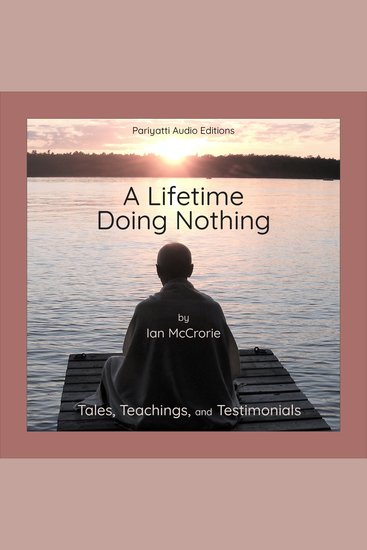
  • A Lifetime Doing Nothing - Tales Teachings and Testimonials - cover

    A Lifetime Doing Nothing - Tales...

    Ian McCrorie

    • 0
    • 0
    • 0
    This book is a compilation of teachings told in short stories about the author's attempts to undo the done. He offers this little book as a more ardent, and hopefully lucid, attempt to explain the paramount importance of doing nothing as a way to undo oneself. 
     
    ----------------------------- 
     
    "In my experience, all our problems do indeed stem from this hyperactive and delusional thinking we have acquired over time. 
     
    There is a way to eradicate the light-speed, blind reactions and the habitual confusion. The way is very simple. It boils down to just two words: do nothing. That s it. Do nothing. Sit quietly in a room alone and do nothing. Watch the monkey mind and do not try to fix it or eliminate it or drown it out or engage it. 
     
    This is doing non-doing. Observe the mind, on autopilot as usual, screaming editorial comments from the sidelines like some frenzied play-by-play announcer and do nothing about it. Don't turn the monologue into a dialogue. Do nothing. 'Nothing to see here, folks. Let s keep it moving.'" 
     
    —Ian McCrorie
    Show book
  • How to Analyze People with Dark Psychology - Master The Art of Using Body Language Non-Verbal Cues and Verbal Communication to Detect Deception & Manipulation Communicate Effectively - cover

    How to Analyze People with Dark...

    Charles Cummings

    • 0
    • 0
    • 0
    Are you sick and tired of always being manipulated and controlled in situations? Do you find yourself always being at a disadvantage because people seem to have a stronger personality than yours? Would you like to make use of informative, advanced, and easy-to-read resources that will put an end to this destructive cycle?If you answered "yes" to any of the questions above, then keep reading! 
    By learning how to analyze people effectively, the goal here is to help you create stronger connections with the people around you, be able to empathize better with them, and make you a better leader and team member. 
    How to Analyze People with Dark Psychology: Master the Art of Using Body Language, Non-Verbal Cues, and Verbal Communication to Detect Deception & Manipulation, Communicate Effectively, and Get What You Want Out of People is a comprehensive book that includes everything you need to know to thrive. You will learn the techniques for deciphering common body language and learning how the eyes can give us a perspective of non-verbal communication. This book also explores how to understand the self and the importance of context.This book was specifically written to help you handle difficult situations. You will learn new skills, how to handle your emotions, and how to protect yourself and the people around you. It will change your body posture, the way you speak, and the adjectives you use.  
    No more being manipulated, falling for narcissist's tactics, or allowing yourself to be gaslit.Don't waste another minute, scroll up and hit "BUY NOW" to start today!
    Show book
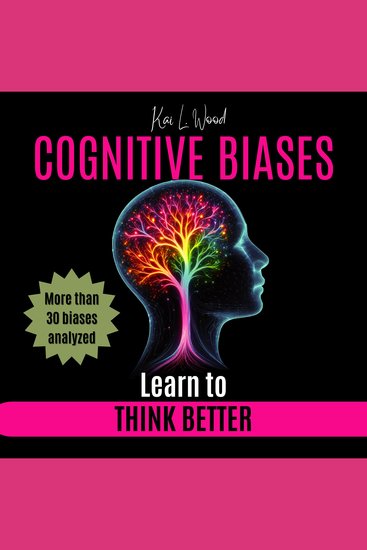
  • COGNITIVE BIASES - Learn to Think Better - cover

    COGNITIVE BIASES - Learn to...

    Kai L. Wood

    • 0
    • 0
    • 0
    Discover the importance of cognitive biases for better thinking! 
    Immerse yourself in the fascinating world of cognitive biases through this clear, direct and simple book. A book that will allow you to understand how cognitive biases affect us in an increasingly complex world. Through different examples and studies, you will be able, in an easy and accessible way, to learn how to make better decisions and transform your life. Here, you will find a practical roadmap:Discover and learn about more than 30 cognitive biases.Learn how to make better decisions.Improve your mental processes in a changing world.Develop a new way of looking at life. 
    A must-have book for all those who seek a more elaborate and efficient way of thinking. 
    READ THIS BOOK NOW AND LEARN TO THINK BETTER!
    Show book