Join us on a literary world trip!
Add this book to bookshelf
Grey
Write a new comment Default profile 50px
Grey
Subscribe to read the full book or read the first pages for free!
All characters reduced
Solar Cooking - cover

Solar Cooking

Tessa Kwan

Translator A AI

Publisher: Publifye

  • 0
  • 0
  • 0

Summary

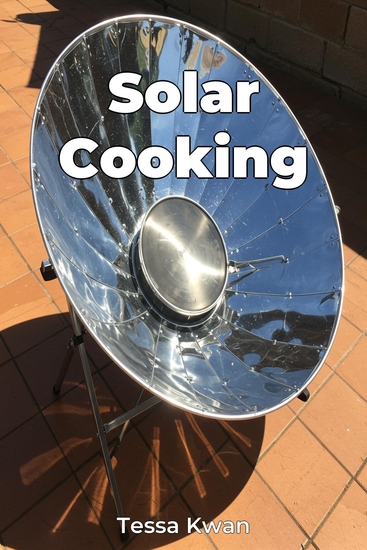
Solar Cooking introduces an energy-free cooking method, exploring sun-powered ovens as a sustainable alternative. The book delves into the technology behind solar cooking, explaining how solar ovens capture and concentrate solar energy, and details various designs like panel, box, and parabolic cookers, each suited for different climates and cooking needs. Did you know solar cooking can help mitigate deforestation and reduce carbon emissions, especially in developing countries? This approach challenges conventional energy-intensive cooking, aligning with the growing need for environmentally responsible practices.

 
The book progresses from the history and evolution of solar cooking to the scientific principles of solar energy absorption and heat retention. It then gives step-by-step instructions for building solar ovens using readily available materials, accompanied by diagrams and a collection of solar cooking recipes. Finally, it examines the social and economic impacts of solar cooking initiatives worldwide.

 
The book uniquely empowers readers to reduce their environmental impact and improve food security through DIY solar oven construction and the adoption of alternative cooking methods.
Available since: 03/11/2025.
Print length: 104 pages.
Other books that might interest you

  • Invisibility - The History and Science of How Not to Be Seen - cover

    Invisibility - The History and...

    Gregory J. Gbur

    • 0
    • 0
    • 0
    A lively exploration of how invisibility has gone from science fiction to fact 


    Is it possible for something or someone to be made invisible? This question, which has intrigued authors of science fiction for over a century, has become a headline-grabbing topic of scientific research. 


    In this book, science writer and optical physicist Gregory J. Gbur traces the science of invisibility from its sci-fi origins in the nineteenth-century writings of authors such as H. G. Wells and Fitz James O'Brien to modern stealth technology, invisibility cloaks, and metamaterials. He explores the history of invisibility and its science and technology connections, including the discovery of the electromagnetic spectrum, the development of the atomic model, and quantum theory. He shows how invisibility has moved from fiction to reality, and he questions the hidden paths that lie ahead for researchers. 


    This is not only the story of invisibility but also the story of humankind's understanding of the nature of light itself, and of the many fascinating figures whose discoveries advanced this knowledge.
    Show book
  • Human Upgrade Book The - Version 40 - Biohacking Your Biology for Peak Performance and Longevity - cover

    Human Upgrade Book The - Version...

    John Navarro

    • 0
    • 0
    • 0
    This audiobook is narrated by an AI Voice. Embark on a voyage through the human body's potential, where science and clarity blend to illuminate the path to wellness. This guide reveals the genetic orchestration of life, offering insights into biohacking and functional medicine, and taking readers from survival to peak performance. Discover the regenerative secrets of sleep, the enlightening power of psychedelics, and the electric language of your being. It's a masterful exploration of health, connecting us with our elemental roots under the sun's life-giving dance. This tome is a beacon, lighting the way to an optimized body, a life amplified, and an invigorated spirit, encouraging a symbiotic embrace with the nurturing cosmos.
    Show book
  • AI And The Future of Education - Teaching in the age of Artificial Intelligence - cover

    AI And The Future of Education -...

    Priten Shah

    • 0
    • 0
    • 0
    Among teachers, there is a cloud of rumors, confusion, and fear surrounding the rise of artificial intelligence. This book is a timely response to this general state of panic, showing you that AI is a tool to leverage, not a threat to teaching and learning. By understanding what AI is, what it does, and how it can be used to enhance education, you can let go of anxiety and uncertainty, and learn to embrace it. 


    Along with tremendous opportunities, AI presents some challenges for the field of education. In this book, Priten Shah, a Harvard MEd with a robust background in educational innovation, helps you face these challenges, so you can gain the skills you need to use AI effectively in your classroom. Thanks to this thorough consideration of ethical considerations and practical approaches, you can develop your own strategy for leveraging AI in administrative tasks, lesson design, professional development, and beyond. 


    This book will teach you to: understand what AI and machine learning are, and learn about new developments like ChatGPT; discover strategies for engaging students more fully using AI; automate administrative tasks, grading and feedback, and assessments; use AI in innovative ways to promote higher-order thinking skills; and examine ethical considerations of AI, including the achievement gap, privacy concerns, and bias.
    Show book
  • What We Can Do - A Climate Optimist's Guide to Sustainable Living - cover

    What We Can Do - A Climate...

    Charlie Sellars

    • 0
    • 0
    • 0
    In this radically optimistic climate change book, find yourself empowered to achieve sustainable living across every facet of your life—the personal, the professional, and the political. 
      
    “Never has decisive action on climate and environment been more important. This book will help citizens understand that while no one can do everything, everyone can do something—and offers a myriad of ways they can get started too.” —Dr. Trista Patterson, Time100 Climate Leader, 2023, and co-founder of Playing for the Planet 
      
    Charlie Sellars pulls insight from his experience as a director of sustainability at Microsoft, which has underlined its commitment to be a green business with a pledge to become carbon negative, water positive, and zero waste by 2030 while protecting ecosystems. He also serves on the governing body of the iMasons Climate Accord, an industry coalition united to decarbonize digital infrastructure. 
      
    Inside this sustainable living book, you will learn how to: 
     - Harness environmental science to make more sustainable decisions using the “Make It, Move It, Lose It, Use It” impact framework. 
     - Turn your job into a sustainability job, no matter what you do for a living. 
     - Unleash the power of your voice at the ballot box and in your local community. 
      
    This refreshingly optimistic environmental book for adults and recent graduates makes for a great climate change gift, like Hannah Ritchie’s Not the End of the World and Katharine Hayhoe’s Saving Us. 
       
    Nobody can do everything, but everybody can do something. It’s not too late to defeat the climate crisis, and What We Can Do will show you how. 
    “What We Can Do brings cutting-edge sustainability techniques used by chief sustainability officers into the hands and context of everyday individuals. The result? A book that finally empowers readers to maximize their impact across every facet of their lives” —Ann Tracy, chief sustainability officer, Colgate-Palmolive
    Show book
  • The Truth About Sleep You Were Never Told - cover

    The Truth About Sleep You Were...

    Elena Cross

    • 0
    • 0
    • 0
    This audiobook is narrated by an AI Voice. Discover the critical importance of sleep that modern culture systematically ignores while undermining the rest your body desperately requires for health, cognition, and longevity. This essential audiobook presents the neuroscience and health research revealing sleep as the foundation of all other biological functions rather than optional downtime to be minimized. Learn why sleep deprivation produces effects comparable to intoxication while society celebrates exhaustion as proof of dedication and productivity. The narrator reveals how inadequate sleep causes weight gain, immune dysfunction, cognitive impairment, emotional instability, and increased mortality that accumulate silently until catastrophic failure. Discover the specific biological processes occurring during sleep that cannot happen while awake and why no amount of stimulants can substitute for actual rest. Understand how artificial lighting, screens, shift work, and always-on culture have created an epidemic of sleep deprivation with consequences rarely attributed to their actual cause. This audiobook examines sleep disorders, circadian biology, and the environmental factors destroying sleep quality for millions who never recognize why they feel perpetually depleted. Learn evidence-based strategies for improving sleep quality and quantity that address root causes rather than symptoms. Essential listening for anyone feeling chronically tired, experiencing health problems with mysterious origins, or seeking to understand why rest matters far more than productivity culture admits.
    Show book
  • Voices of Famous Inventors - cover

    Voices of Famous Inventors

    Thomas Eidson, Thomas Watson,...

    • 0
    • 0
    • 0
    Thomas Alva Edison (February 11, 1847 – October 18, 1931) was an American inventor and businessman. He developed many devices that greatly influenced life around the world, including the phonograph, motion picture camera, and a long-lasting, practical electric light bulb. Dubbed "The Wizard of Menlo Park", he was one of the first inventors to apply the principles of mass production and large-scale teamwork to the process of invention, and because of that, he is often credited with the creation of the first industrial research laboratory. The following, from 1908, is a commemoration at the New York Electrical Show of the 50th anniversary of the first Atlantic cable. Thomas Augustus Watson (January 18, 1854 – December 13, 1934) was as a bookkeeper and a carpenter before becoming an assistant to Alexander Graham Bell, aiding in the the invention of the telephone in 1876. He is best known because his name was one of the first words spoken over the telephone. "Mr. Watson, come here, I want to see you," were the first words Bell said using the new invention, according to Bell's laboratory notebook. Guglielmo Marconi (25 April 1874 – 20 July 1937) was an Italian inventor, known for his pioneering work on long distance radio transmission and radio telegraph system. Marconi shared the 1909 Nobel Prize in Physics with Karl Ferdinand Braun "in recognition of their contributions to the development of wireless telegraphy". As an entrepreneur, businessman, and founder of the The Wireless Telegraph & Signal Company in Britain in 1897, Marconi succeeded in making a commercial success of radio by innovating and building on the work of previous experimenters and physicists. The following is from a talk he gave in 1935 about how he received the first transatlantic message by wireless telegraphy.
    Show book