Join us on a literary world trip!
Add this book to bookshelf
Grey
Write a new comment Default profile 50px
Grey
Subscribe to read the full book or read the first pages for free!
All characters reduced
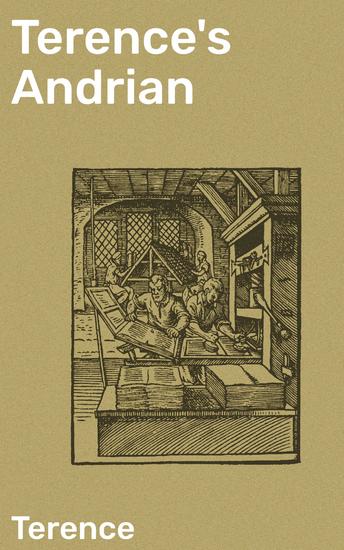
Terence's Andrian - A comedy in five acts (Translated into English prose with critical and explanatory notes) - cover

Terence's Andrian - A comedy in five acts (Translated into English prose with critical and explanatory notes)

Terence

Publisher: Good Press

  • 0
  • 0
  • 0

Summary

In Terence's "Andrian," the playwright masterfully intertwines humor and poignant social commentary, presenting a comedic yet insightful exploration of love, identity, and societal norms in the Roman world. Written in the 2nd century BCE, this work exemplifies the advantages of Roman New Comedy, characterized by its sophisticated dialogue and vibrant characterizations. The plot revolves around the romantic entanglements of young lovers, deftly navigated by the cunning servant character, underscoring themes of deception, desire, and the quest for personal autonomy within the constraints of societal expectations. Terence, a freed slave of North African descent, became one of the most esteemed figures in Roman literature. His unique background fueled his understanding of human experience, as he often portrayed characters from diverse social standings. This personal perspective granted him a distinctive voice; his works, including "Andrian," reflect his belief in the shared humanity that transcends social classes. Terence's approach to storytelling, marked by a blend of realism and clever wit, resonates with audiences seeking deeper insights into the human condition. "Andrian" is a vital contribution to the canon of classical literature, revealing timeless themes that remain relevant today. Readers interested in the interplay of humor and societal critique will find this work captivating and thought-provoking. Terence's nuanced portrayal of complex characters masks deeper philosophical reflections, making it essential reading for anyone wishing to engage with the foundations of Western comedy and drama.
Available since: 03/02/2025.
Print length: 210 pages.

Other books that might interest you

  • The Faerie Queene - cover

    The Faerie Queene

    Edmund Spenser

    • 0
    • 0
    • 0
    A land of enchanted forests. Knights sworn to impossible quests. Virtues tested in a world where every shadow hides a symbol—and every triumph reveals a deeper truth.
    In The Faerie Queene, Edmund Spenser weaves one of the greatest epic poems in English literature: a sweeping allegory of heroism, beauty, faith, and moral struggle. Through battles with sorcerers, dragons, temptresses, and shape-shifting foes, noble knights pursue not only victory but the virtues that define the human spirit.
    
    Praised as "a masterpiece of imagination and moral vision," this epic blends chivalric romance, rich symbolism, and breathtaking fantasy. Readers treasure its lyrical beauty, mythic storytelling, and the timeless journey into a realm where courage and virtue guide the way.
    
    If you love epic adventures, classical allegory, and poetry that opens new worlds with every stanza, this monumental work awaits you.
    
    Begin your quest—step into Faerie Land and discover an epic unlike any other.
    Show book
  • Rhyme A Dozen A - 12 Poets 12 Poems 1 Topic ― Birthdays - 12 Poets 12 Poems 1 Topic - cover

    Rhyme A Dozen A - 12 Poets 12...

    Christina Rossetti, Lucretia...

    • 0
    • 0
    • 0
    ‘A dime a dozen’ as known in America, is perhaps equal to the English ‘cheap as chips’ but whatever the lingua franca of your choice in this series we hereby submit ‘A Rhyme a Dozen’ as 12 poems on many given subjects that are a well-rounded gathering, maybe even an essential guide, from the knowing pens of classic poets and their beautifully spoken verse to the comfort of your ears. 
     
    1 - A Rhyme A Dozen - 12 Poems, 12 Poets, 1 Topic - Birthdays - An Introduction 
    2 - A Birthday by Christina Rossetti 
    3 - On My Mother's Fiftieth Birthday by Lucretia Maria Davidson 
    4 - On My Thirty Third Birthday, January 22nd 1821 by Lord Byron 
    5 - To My Father on His Birthday by Elizabeth Barrett Browning 
    6 - Song of the Democratic Review of it's Birthday, October the 1st 1857 by William Ross Wallace 
    7 - Stella's Birthday, March 13th 1727 by Jonathan Swift 
    8 - On Tea by Edmund Waller 
    9 - To H W L on His Birthday 27th February 1867 by James Russell Lowell 
    10 - To Mrs Jane Forster, On Her Birthday, August 4th 1724 by Henry Baker 
    11 - To the Memory of Mrs Lefroy Who Died December 16 My Birthday by Jane Austen 
    12 - Shakespeare. An Ode for His Three-Hundreth Birthday by Martin Farquhar Tupper 
    13 - On the Morning of Christs Nativity by John Milton
    Show book
  • Ten Bridges I've Burnt - A Memoir in Verse - cover

    Ten Bridges I've Burnt - A...

    Brontez Purnell

    • 0
    • 0
    • 0
    In Ten Bridges I've Burnt, Brontez Purnell—the bard of the underloved and overlooked—turns his gaze inward. A storyteller with a musical eye for the absurdity of his own existence, he is peerless in his ability to find the levity within the stormiest of crises. Here, in his first collection of genre-defying verse, Purnell reflects on his peripatetic life, whose ups and downs have nothing on the turmoil within. "The most high-risk homosexual behavior I engage in," Purnell writes, "is simply existing." 


    The thirty-eight autobiographical pieces pulsing in Ten Bridges I've Burnt find Purnell at his no-holds-barred best. He remembers a vicious brawl he participated in at a poetry conference and reckons with packaging his trauma for TV writers' rooms; wrestles with the curses, and gifts, passed down from generations of family members; and chronicles, with breathless verve, a list of hell-raising misadventures and sexcapades. Through it all, he muses on everything from love and loneliness to capitalism and Blackness to jogging and the ethics of art, always with unpredictable clarity and movement. 


    With the same balance of wit and wisdom that made 100 Boyfriends a sensation, Purnell unleashes another collection of boundary-pushing writing with Ten Bridges I've Burnt, a book as original and thrilling as the author himself.
    Show book
  • Heartbreak agony & pain - poetry and prose - cover

    Heartbreak agony & pain - poetry...

    D. R. Nguyen

    • 0
    • 0
    • 0
    heartbreak agony & painis a collection of poetry and prose that takes the reader on an odyssey of heartache, grief, agony, and pain coping with the aftermath of a breakup.
    Show book
  • Accessioning - cover

    Accessioning

    Charlotte Wetton

    • 0
    • 0
    • 0
    Through poems about fossilised fruit seeds and the sofa where Emily Brontë died, Wetton questions how we curate the lives of those living and dead in a pamphlet about looking, processing, and memorialising. Whether considering preserved wedding-cakes, a non-existent art exhibition or a human scream, these poems speak to the impossibility of containment and question our ability to map and categorise.
    This is a pamphlet of poems about the stories that we tell ourselves, the memories that we construct, and the ways that we value and devalue people, animals and objects alike.
    Show book
  • The Imaginary Invalid - cover

    The Imaginary Invalid

    Molière Moliere

    • 0
    • 0
    • 0
    Molière's brilliant comedy, The Imaginary Invalid, is a timeless exploration of human folly, obsession, and the absurdities of societal norms. Written in the 17th century, this play masterfully blends humor with sharp social commentary, making it as entertaining today as it was centuries ago.
    
    At the center of the story is Argan, a wealthy hypochondriac whose life is dominated by an obsession with his health and an overreliance on doctors. He is so consumed by his imagined illnesses that he neglects the true joys of life, including love, family, and friendship. Argan's comical paranoia and excessive medical treatments set the stage for a series of misunderstandings, clever deceptions, and humorous situations that expose both personal and societal absurdities.
    
    Molière uses Argan's obsessive behavior to satirize the medical profession, social pretensions, and human weakness, highlighting the tension between rational thought and irrational fears. Through witty dialogue, farcical situations, and unforgettable characters, the play examines themes of greed, manipulation, love, and the human tendency to prioritize appearance over reality.
    
    The Imaginary Invalid is not only a comedy—it is a mirror reflecting the quirks, vanities, and contradictions of human nature. Molière's insightful humor and timeless observations make this work a must-read for lovers of classic literature, theatre, and sharp social critique.
    
    Whether you are discovering Molière for the first time or revisiting this masterpiece, The Imaginary Invalid offers laughter, wisdom, and a vivid glimpse into the human condition, proving that great comedy transcends centuries.
    Show book