Join us on a literary world trip!
Add this book to bookshelf
Grey
Write a new comment Default profile 50px
Grey
Subscribe to read the full book or read the first pages for free!
All characters reduced
Can't Say No - Girl Time Surprise - cover

Can't Say No - Girl Time Surprise

Tawny Day

Publisher: Spicy Cocktail Press

  • 0
  • 0
  • 0

Summary

A sexy chance encounter she never saw coming!
 
Twenty-two year old Kelly loves her job, but sometimes it gets hot and sweaty. After a long day at work, she decides to use the shower in the women’s bathroom. She’s not worried about being interrupted since she’s the only girl who works there. When she steps out of the shower all clean and damp, she’s shocked to see another woman standing there. Kelly isn’t sure what to do when her towel drops to the floor in surprise - but the woman sure as hell does. Now she’s getting the workout of her life from a gorgeous stranger who knows all the tricks!
 
*Explicit* *Erotic* *Hot*
 
Can't Say No: Girl Time Surprise is a stand-alone erotic short story in the Can’t Say No series about Kelly. Read them in order to enjoy the full experience!
Available since: 01/17/2023.
Print length: 31 pages.


Other books that might interest you

  • Living in the Future - Utopianism and the Long Civil Rights Movement - cover

    Living in the Future -...

    Victoria W. Wolcott

    • 0
    • 0
    • 0
    Living in the Future reveals the unexplored impact of utopian thought on the major figures of the Civil Rights Movement. 
      
    Utopian thinking is often dismissed as unrealistic, overly idealized, and flat-out impractical—in short, wholly divorced from the urgent conditions of daily life. This is perhaps especially true when the utopian ideal in question is reforming and repairing the United States’ bitter history of racial injustice. But as Victoria W. Wolcott provocatively argues, utopianism is actually the foundation of a rich and visionary worldview, one that specifically inspired the major figures of the Civil Rights Movement in ways that haven’t yet been fully understood or appreciated. 
     
    Wolcott makes clear that the idealism and pragmatism of the Civil Rights Movement were grounded in nothing less than an intensely utopian yearning. Key figures of the time, from Martin Luther King Jr. and Pauli Murray to Father Divine and Howard Thurman, all shared a belief in a radical pacificism that was both specifically utopian and deeply engaged in changing the current conditions of the existing world. Living in the Future recasts the various strains of mid-twentieth-century civil rights activism in a utopian light, revealing the power of dreaming in a profound and concrete fashion, one that can be emulated in other times that are desperate for change, like today.
    Show book
  • Utopia - cover

    Utopia

    Thomas Moore

    • 0
    • 0
    • 0
    Utopia by Thomas More is a seminal work of literature that has long been regarded as one of the most influential pieces of philosophical and political writing in history. In this text, More sets out to create an idealized version of a commonwealth in order to explore the most desirable forms of government and social organization. Through his vivid imagery, he creates a vision of a utopian society that is based upon the socio-economic principles of communal ownership, religious tolerance, and gender equality. Read in English, unabridged.
    Show book
  • Tairona Civilization - The Goldsmiths and Sacred Cities of Colombia - cover

    Tairona Civilization - The...

    Rolf Hedger

    • 0
    • 0
    • 0
    The Tairona civilization emerged in the Sierra Nevada de Santa Marta, a mountainous region in present-day northern Colombia. This environment, with its dense forests, rivers, and proximity to the Caribbean coast, provided the resources necessary for the development of a complex society. The origins of the Tairona can be traced back to around 200 CE, when early communities began establishing settlements in the highlands and along the coast. These groups developed distinct cultural traditions that set them apart from other indigenous societies in the region. 
    Archaeological evidence suggests that the Tairona were part of the broader Chibchan linguistic and cultural family, which included other groups in Central America and northern South America. Their language and customs connected them to a vast network of indigenous peoples, yet they developed a unique identity characterized by their architectural achievements, goldsmithing skills, and intricate social structures. Unlike nomadic tribes, the Tairona built permanent settlements that evolved into thriving city-states. These cities were connected by a network of stone-paved roads, stairways, and terraces, showcasing an advanced understanding of engineering and urban planning. 
    The natural landscape played a crucial role in shaping the early Tairona civilization. The Sierra Nevada de Santa Marta provided fertile land for agriculture, allowing them to cultivate maize, beans, and cassava. The coastal regions, on the other hand, gave them access to an abundance of marine resources, including fish and shellfish. This diversity of food sources enabled population growth and the expansion of settlements. Over time, the Tairona developed irrigation systems and terraced farming techniques to maximize agricultural production, ensuring food security for their communities.
    Show book
  • The Poems Of Enheduanna - cover

    The Poems Of Enheduanna

    Priestess Enheduanna

    • 0
    • 0
    • 0
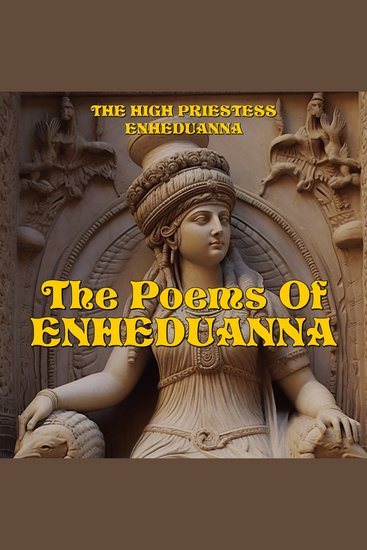
    Enheduanna, also known as En-hedu-ana or Enheduana, is widely regarded as the world's first known author and poet, as well as one of the earliest recorded female figures in history. She lived in ancient Mesopotamia during the 23rd century BCE and held the esteemed position of high priestess in the city of Ur, which was a thriving center of Sumerian civilization. Enheduanna's literary works and religious contributions have left an indelible mark on the cultural and literary landscape of ancient Mesopotamia. Enheduanna was born in the city of Ur, located in what is now southern Iraq, around 2285 BCE. She was the daughter of King Sargon of Akkad, who established the Akkadian Empire, and Queen Tashlultum. Being born into a royal family, Enheduanna enjoyed a privileged upbringing and received an exceptional education in literature, religion, and politics. At a young age, Enheduanna's intelligence, eloquence, and spiritual devotion were recognized, leading to her appointment as the high priestess of the moon god Nanna at the renowned temple in Ur. This position bestowed upon her significant religious authority and influence within the society, making her a powerful figure in both the political and spiritual realms. Enheduanna's most significant contributions are her literary works, which include a collection of hymns, poems, and prayers dedicated to various deities. These compositions were written in the Sumerian language, the oldest known written language in human history. Through her writings, Enheduanna expressed her deep reverence for the gods and sought to establish a personal connection between the divine and humanity.
    Show book
  • Awakening to Justice - Faithful Voices from the Abolitionist Past - cover

    Awakening to Justice - Faithful...

    Estrelda Y. Alexander,...

    • 0
    • 0
    • 0
    "O where are the sympathies of Christians for the slave and where are their exertions for their liberation? . . . It seems as if the church were asleep."
    David Ingraham, 1839
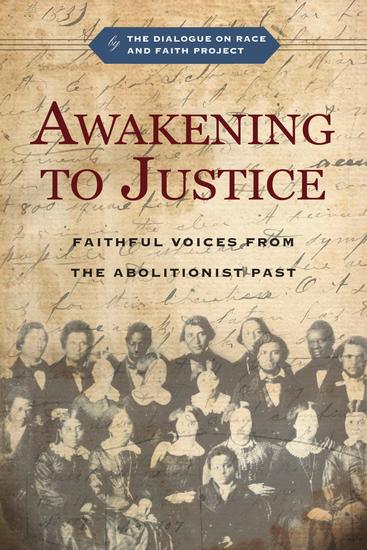
    In 2015, the historian Chris Momany helped discover a manuscript that had been forgotten in a storage closet at Adrian College in Michigan. He identified it as the journal of a nineteenth-century Christian abolitionist and missionary, David Ingraham. As Momany and a fellow historian Doug Strong pored over the diary, they realized that studying this document could open new conversations for twenty-first-century Christians to address the reality of racism today. They invited a multiracial team of fourteen scholars to join in, thus launching the Dialogue on Race and Faith Project.
    Awakening to Justice presents the groundbreaking work of these scholars. In addition to reflecting on Ingraham's journal, chapters also explore the life and writings of two of Ingraham's Black colleagues, James Bradley and Nancy Prince. Appendixes feature writings by all three abolitionists so readers can engage the primary sources directly.
    Through considering connections between the revivalist, holiness, and abolitionist movements; the experiences of enslaved and freed people; abolitionists' spiritual practices; various tactics used by abolitionists; and other themes, the authors offer insight and hope for Christians concerned about racial justice. They highlight how Christians associated with Charles Finney's style of revivalism formed intentional, countercultural communities such as Oberlin College to be exemplars of interracial cooperation and equality.
    Christians have all too often compromised with racism throughout history, but that's not the whole story. Hearing the prophetic witness of revivalist social justice efforts in the nineteenth century can provide a fresh approach to today's conversations about race and faith in the church.
    Show book
  • Riding Jane Crow - African American Women on the American Railroad - cover

    Riding Jane Crow - African...

    Miriam Thaggert

    • 0
    • 0
    • 0
    Miriam Thaggert illuminates the stories of African American women as passengers and as workers on the nineteenth- and early-twentieth-century railroad. As Jim Crow laws became more prevalent and forced Black Americans to "ride Jim Crow" on the rails, the train compartment became a contested space of leisure and work. Riding Jane Crow examines four instances of Black female railroad travel: the travel narratives of Black female intellectuals such as Anna Julia Cooper and Mary Church Terrell; Black middle-class women who sued to ride in first class "ladies' cars"; Black women railroad food vendors; and Black maids on Pullman trains. Thaggert argues that the railroad represented a technological advancement that was entwined with African American attempts to secure social progress. Black women's experiences on or near the railroad illustrate how American technological progress has often meant their ejection or displacement; thus, it is the Black woman who most fully measures the success of American freedom and privilege, or "progress," through her travel experiences.
    Show book