Join us on a literary world trip!
Add this book to bookshelf
Grey
Write a new comment Default profile 50px
Grey
Subscribe to read the full book or read the first pages for free!
All characters reduced
Tarot in Other Words - An Essential Anthology by Leading Queer Tarot Writers - cover

Tarot in Other Words - An Essential Anthology by Leading Queer Tarot Writers

Cassandra Snow

Publisher: Weiser Books

  • 0
  • 1
  • 0

Summary

This must-have anthology presents a collection of alternative approaches to reading the tarot for those looking to gain new and deeper insight—especially for marginalized folk who don’t see themselves reflected in traditional presentations of the tarot.   Cassandra Snow’s groundbreaking book Queering the Tarot helped change the shape of tarot discourse for scores of new readers to reclaim this ancient practice in their own way. Tarot in Other Words opens doors for these brilliant tarotists, offering unique insights and concepts for tarot readers of all levels.   The anthology, presented in two parts—(1) Finding Ourselves in the Tarot and (2) Finding the Tarot in Ourselves—comprises ten essays that shine a light on the tarot from multiple queer perspectives. Understanding queerness—and why it matters in tarot—can teach all of us so much about not just gender and sexuality but also how and why we should liberate ourselves in the first place. These essays on queerness show us that who we are is right, beautiful, and sacred. Tarot in Other Words is a necessary and overdue addition to the tarot canon that allows a number of queer voices to come together to share their tarot views and help fledgling and intermediate tarot readers discover their own voice in the process.  Contributors include: Asali Earthwork, Charlie Claire Burgess, Maria the Arcane, Maria Minnis, Junauda Petrus, Siri Vincent Plouff, Rebecca Scolnick, Cassandra Snow, Taylor Ursula, Meg Jones Wall
Available since: 05/05/2025.
Print length: 208 pages.
Other books that might interest you

  • Know Thyself - Catholic Classical Education and the Discovery of Self - cover

    Know Thyself - Catholic...

    Andrew Youngblood

    • 0
    • 0
    • 0
    Across the United States and around the world, there has been an ongoing resurgence in classical education, including among Catholics. The classical model, rooted in the ancient Socratic method, is flourishing, and classical Catholic schools continue to multiply and grow. But classical education also has its detractors. Some parents and teachers worry that it is impractical, outdated, or, worse, judgmental.       In Know Thyself, Andrew Youngblood, an educator with decades of experience in classical learning as both a student and teacher, introduces readers to this exciting education alternative and its intellectual and spiritual benefits. Youngblood defines the essence of classical Catholic education, explores its integrated and narrative approach to learning, and presents its transformative power and beauty.       Through brief vignettes, personal anecdotes from students and teachers, and examples from the classroom, Know Thyself makes a positive case for an education journey that teaches students to see themselves through God’s eyes—and to truly know themselves and who they are called to be. 
    Show book
  • Great Lakes for Sale - From Whitecaps to Bottlecaps - cover

    Great Lakes for Sale - From...

    Dave Dempsey

    • 0
    • 0
    • 0
    “Lake Michigan may be coming to Idaho.” 
    That’s what an Idaho radio commentator said in June 2021. Holding approximately 20% of the world’s surface freshwater, the Great Lakes are once again a target for the drought-ridden West, which is facing climate change, massive fires, and shrinking water supplies. And in a potentially far bigger threat, Wall Street is creating markets that could lead to the trading of freshwaters as a commodity like corn or oil. The Great Lakes are in danger of becoming privately exploited on a large scale by those who have priorities other than stewardship. 
    In the updated edition of Great Lakes for Sale, author Dave Dempsey offers surprising, even controversial, ideas on how to prevent the fulfillment of this nightmare scenario. They include attacking water commercialization, curbing abuse of the Great Lakes Compact, and devising plans for limited sharing of the Great Lakes to forestall humanitarian disasters. If the Great Lakes are to remain great, new thinking and action will be required.
    Show book
  • Socialism: Book Summary & Analysis - cover

    Socialism: Book Summary & Analysis

    Briefly Summaries

    • 0
    • 0
    • 0
    This is a concise summary and analysis of Socialism, by Ludwig von Mises.
     
    It is not the original book and is not affiliated with or endorsed by Ludwig von Mises.
    Ideal those seeking a quick and insightful overview.
     
    "Socialism" delivers a profound critique of socialist economic systems, challenging the viability of central planning and collectivist ideologies. With a clear and methodical approach, the book explores the implications of socialism on human freedom, economic efficiency, and societal progress. It delves into the mechanics of market economies, the role of private property, and the intricate dynamics of supply and demand, presenting a compelling argument for the superiority of capitalism as a framework for prosperity and individual liberty. A foundational text in economic theory and political philosophy, this book is an essential read for anyone seeking to understand the ideological and practical challenges of socialism.
    Show book
  • Jews and Booze - Alcoholism Addiction and Denial in the Jewish World - cover

    Jews and Booze - Alcoholism...

    Michael Levine

    • 0
    • 0
    • 0
    We Jews wrongly believe we're immune to alcoholism and addiction—instead, individuals, families, and communities are suffering because of the stigmas surrounding addiction and recovery in the Jewish world. 


    "Is the 12 step program suitable for Jews? In this book Michael Levin shows with learning, sensitivity and wisdom why the answer is a resounding 'Yes.'" —Rabbi David Wolpe 


    "Shikkur is a goy." This Yiddish phrase means "Only Gentiles can be alcoholics," but it's not true. Jews suffer from alcoholism and addiction at the same rate as everyone else in society. Due to the stigma surrounding addiction in our community, people are dying unnecessarily . . . because they believe they can't get help. Jews and Booze attacks the stigmas surrounding addiction and recovery in our world.
    Show book
  • Overcoming rejection Be yourself coaching & meditation course - let go what others think be authentic stay centred raise your awareness love yourself enough you deserve the best transformation - cover

    Overcoming rejection Be yourself...

    Shining Mind

    • 0
    • 0
    • 0
    Do you often find yourself feeling rejected and sidelined, grappling to establish sincere connections with others as well as with yourself? This constant barrage of rejection can sap your emotional vitality, making any form of genuine intimacy appear distant and often leading to profound loneliness and dissatisfaction in your personal and social spheres. 
    If you're ready to transcend the shadows of rejection and cultivate a vibrant connection with both yourself and those around you, our "Overcoming Rejection: Be Yourself Coaching & Meditation Course" is designed to guide you through this restorative journey. 
    In this audiobook, we will:Serve as your dedicated coach, delivering support and insights specifically designed to bolster your confidence and self-acceptance.Introduce thoughtful exercises that challenge your habitual responses to rejection and foster healthier, more rewarding interactions.Guide you through specialized meditation techniques aimed at fortifying your self-esteem and understanding of your intrinsic value.Promote an ongoing transformation that empowers you to engage purely and confidently in all your relationships. 
    "Overcoming Rejection: Be Yourself Coaching & Meditation Course" will lead you step-by-step in developing an unwavering belief in yourself and cultivating meaningful, resilient relationships. You’ll learn to handle rejection with grace, express your true self with courage, and build a foundation of trust and mutual respect. Embark on this path to personal empowerment and discover the joy and fulfilment of living unapologetically. Step into a life filled with self-love, resilience, and enriching connections. It's time to reject rejection and connect authentically like never before.
    Show book
  • Sasanian Empire - Ancient Mysteries of the Persians Made Known - cover

    Sasanian Empire - Ancient...

    Kelly Mass

    • 0
    • 0
    • 0
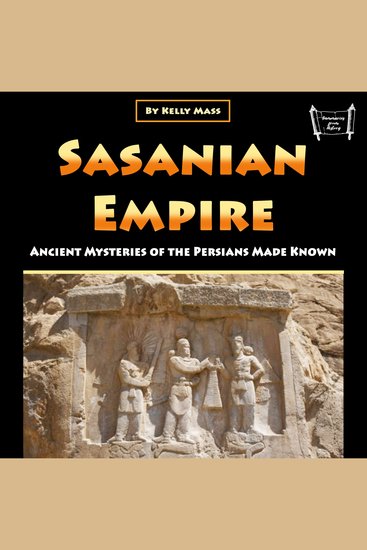
    The Sasanian Empire, often referred to by historians as the Neo-Persian Empire, was the last significant Iranian empire before the Muslim invasions of the 7th and 8th centuries AD. Named after the House of Sasan, this empire lasted nearly four centuries, from 224 to 651 AD, making it the longest-lived Persian imperial dynasty. The Sasanian Empire emerged during late antiquity, succeeding the Parthian Empire and re-establishing Persian prominence in the region, rivaling the Roman Empire (later known as the Byzantine Empire after 395 AD). 
    Ardashir I, an Iranian prince, founded the Sasanian Empire following the decline of Parthia, which was weakened by internal strife and pressures from Rome. After defeating the last Parthian king, Artabanus IV, at the Battle of Hormozdgan in 224, Ardashir set out to restore the glory of the Achaemenid Empire by expanding Iran's territories. Under the Sasanian rule, the empire stretched from the eastern Mediterranean, including Anatolia and Egypt, to parts of modern-day Pakistan. It also extended across southern Arabia, the Caucasus, and Central Asia. According to mythology, the Derafsh Kaviani served as the vexilloid of the Sasanian Empire. 
    The Sasanian period was marked by significant advancements in culture, architecture, and religion. Zoroastrianism became the state religion, shaping the empire's identity and influencing its governance. The Sasanians promoted a rich cultural life, characterized by advancements in art, science, and philosophy. They established grand cities with impressive architecture, including palaces, fire temples, and public spaces that highlighted their achievements.
    Show book