Join us on a literary world trip!
Add this book to bookshelf
Grey
Write a new comment Default profile 50px
Grey
Subscribe to read the full book or read the first pages for free!
All characters reduced
Policy Summit Advantages - cover

Policy Summit Advantages

Tamsin Ambrose

Translator A AI

Publisher: Publifye

  • 0
  • 0
  • 0

Summary

Policy Summit Advantages explores how international security conferences subtly yet significantly mold global geopolitics. These summits serve as critical, often overlooked, arenas where nations negotiate norms, solidify alliances, and engage in delicate diplomatic maneuvers.

 
 The book argues that these gatherings are not mere symbolic events, but influential platforms where agreements and partnerships shape international law and military cooperation. For example, agreements made can influence military spending and defense strategies.

 
 This study delves into international law by examining how summit agreements generate "soft law" and impact formal legal frameworks. It further investigates diplomatic relations cultivated during summits, demonstrating how sideline meetings can alter international negotiations. Understanding these dynamics is crucial in the context of evolving global governance and security policy.

 
 The book progresses from theoretical frameworks to case studies of major security conferences like the Munich Security Conference and NATO summits. By analyzing policy papers, agreements, and shifts in international law, it offers a tangible, evidence-based assessment of these gatherings' impacts. It provides a new model for assessing security conferences' role in global governance and international peace and offers practical insights for policymakers, diplomats, and anyone interested in international relations.
Available since: 02/17/2025.
Print length: 77 pages.
Other books that might interest you

  • The True Name of God & The Hidden Agenda - cover

    The True Name of God & The...

    Kamille Jordan

    • 0
    • 0
    • 0
    What if everything you thought you knew about God... was incomplete? 
    Go on a journey beyond the boundaries of traditional religion into a thrilling investigation that uncovers a divine truth long buried by the sands of time—and perhaps deliberately hidden by those in power. From ancient scrolls and forbidden texts to encrypted messages hidden in plain sight, this groundbreaking book uncovers the true name of God—an identity too powerful, too revealing, and too dangerous for the world to know. 
    But why the secrecy? 
    Digging deep into historical records and classified documents, this book connects the dots between theology, ancient prophecy, and modern political agendas. Discover how the U.S. government—under the guise of national security—may be part of a much larger, darker plan to suppress spiritual awakening and control the masses. 
    Is this conspiracy theory… or divine truth? 
    This book is not just a revelation. It’s a warning—and a call to those seeking real answers in an age of deception. 
    *Perfect for readers of religious mystery thrillers, and spiritual truth seekers 
    *Packed with gripping research, jaw-dropping connections, and bold revelations 
    *Prepare to question everything—and discover what was meant to be known all along! 
    Unlock the SECRET. Speak the NAME. Expose the AGENDA!
    Show book
  • This American Planet - cover

    This American Planet

    Joe King

    • 0
    • 0
    • 0
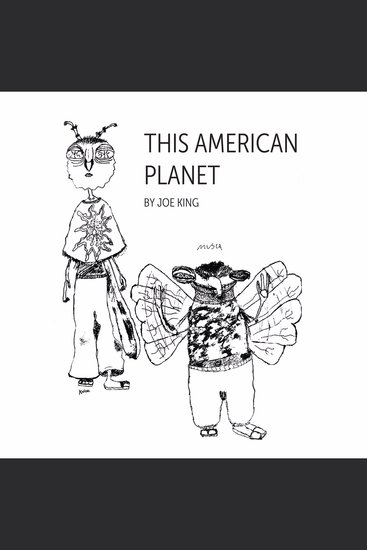
    In This American Planet, Joe King transports readers to a dystopian world where the boundary between humans and insects fades into a chaotic blur. The story follows Greg, an ancient cockroach wizard burdened by his knowledge of forgotten magic, and Curtis, a streetwise housefly drug runner caught in a web of political intrigue. As their fates intertwine, they must navigate a crumbling society dominated by ruthless factions and corrupt overlords, each seeking power at any cost.
    Show book
  • Andrew Jackson - Old Hickory in Christian America - cover

    Andrew Jackson - Old Hickory in...

    Jonathan M. Atkins

    • 0
    • 0
    • 0
    Although Andrew Jackson gained notoriety as a rakish young man, religion's influence on him ebbed and flowed as he established himself as part of the South's planter elite. With his devout wife, Rachel, he attended church and knew his Bible and religious subjects well, and while his determination to preserve his reputation involved him in numerous personal conflicts—including a duel that led to his killing a rival—he blended the principles of the antebellum South's honor-based culture with his belief in a traditional, orthodox version of Christianity. Likewise, he easily reconciled his religion with his ownership of slaves and his advocacy of Native American removal, and while he equated his enemies with the forces of evil, he always attributed his military and political accomplishments to the blessings of Providence. As he aged, Jackson became more devout, but he never experienced a dramatic conversion—contradicting the expectations of the leading revivalists of his era's Second Great Awakening—and he consistently promoted religious liberty and separation of church and state as core republican principles. Ultimately, Jackson's faith reflected a version of Christianity widespread in his era, and his frequent appeals for divine guidance and for God's blessing on his nation further encouraged the development of an American civil religion.
    Show book
  • Developing Scholars - Race Politics and the Pursuit of Higher Education - cover

    Developing Scholars - Race...

    Domingo Morel

    • 0
    • 0
    • 0
    Over the past fifty years, debates concerning race and college admissions have focused primarily on the policy of affirmative action at elite institutions of higher education. But a less well-known approach to affirmative action also emerged in the 1960s in response to urban unrest and Black and Latino political mobilization. The programs that emerged in response to community demands offered a more radical view of college access: admitting and supporting students who do not meet regular admissions requirements and come from families who are unable to afford college tuition, fees, and other expenses. This approach is based on a logic of developing scholars who can be supported at their local public institutions of higher education. 


    In Developing Scholars, Domingo Morel explores the history and political factors that led to the creation of college access programs for students of color in the 1960s. Through a case study of an existing community-centered affirmative action program, Talent Development, Morel shows how protest, including violent protest, has been instrumental in the maintenance of college access programs. Developing Scholars argues that the origin, history, and purpose of these programs reveal gaps in our understanding of college access expansion in the US that challenge conventional wisdom of American politics.
    Show book
  • The Mysteries of Atlantis – Myth or Reality? - Exploring the Lost City Ancient Legends and Scientific Theories - cover

    The Mysteries of Atlantis – Myth...

    Nathan Holmes

    • 0
    • 0
    • 0
    For centuries, Atlantis has captured the imagination of explorers, historians, and conspiracy theorists alike. First described by Plato, this legendary lost civilization is said to have vanished beneath the waves in a single day and night. But did it ever really exist? 
    This audiobook takes you on a journey through myth, history, and science, examining ancient texts, archaeological discoveries, and modern theories that attempt to uncover the truth. Was Atlantis an advanced civilization lost to time? A metaphor for human hubris? Or simply a legend with no basis in reality? 
    The Mysteries of Atlantis – Myth or Reality? is a captivating exploration of one of history’s greatest enigmas. Perfect for history buffs, mythology lovers, and those intrigued by lost civilizations.
    Show book
  • 444 Days - The American Hostages in Iran and the Fall of Diplomacy - cover

    444 Days - The American Hostages...

    Davis Truman

    • 0
    • 0
    • 0
    It is an explosive true story of survival, betrayal, and the moment America lost its grip on the Middle East. 
    On November 4, 1979, 52 Americans were taken hostage inside the U.S. Embassy in Tehran, an act that stunned the world and sparked a 444-day standoff that shattered U.S. diplomacy and changed global politics forever. 
    In this pulse-pounding narrative, acclaimed historian Davis Truman pulls back the curtain on the backroom deals, psychological torment, and international missteps that defined one of the longest hostage crises in modern history. Drawing from declassified documents, secret cables, and firsthand interviews, 444 Days brings to life the human drama at the heart of a geopolitical disaster. 
    When diplomacy fails, what remains: bluster, betrayal, or a better way forward? 
     
    Show book