Join us on a literary world trip!
Add this book to bookshelf
Grey
Write a new comment Default profile 50px
Grey
Subscribe to read the full book or read the first pages for free!
All characters reduced
The Virgin of the World - cover

The Virgin of the World

Tallapragada Subba Row

Publisher: Edizioni Aurora Boreale

  • 0
  • 0
  • 0

Summary

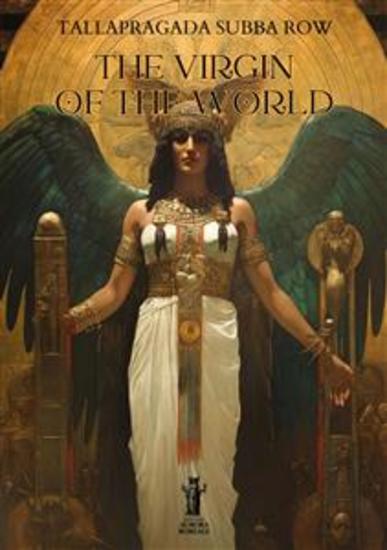
Tallapragada Subba Row (July 6, 1856 - June 24, 1890) was a mystic and a Theosophist from a Hindu background.
In 1882, he invited Helena Petrovna Blavatsky and Henry Steel Olcott to Madras (now Chennai), where he convinced them to make Adyar the permanent headquarters for the Theosophical Society. Upon this meeting and thereafter, Subba Row became able to recite whatever passage was so requested of him from the Bhagavad Gita, Upanishads, and many other sacred texts of India. He had, apparently, never studied these things prior to the fateful meeting, and it is stated that when meeting Blavatsky and Damodar K. Mavalankar, all knowledge from his previous lives came flooding back.
Among the many memorable works he left to humanity, they include his commentaries on the Bhagavad Gita, Esoteric Writings, and his Collected Writings in two volumes.
The short essay The Virgin of the World, that we propose to our readers today, was included in the Subba Row’s Collection of Esoteric Writings, published for the Bombay Theosophical Publication Fund by Rajaram Tookaram in Bombay in 1910.
Available since: 04/10/2024.

Other books that might interest you

  • Rethinking Suicide - Why Prevention Fails and How We Can Do Better - cover

    Rethinking Suicide - Why...

    Craig J. Bryan

    • 0
    • 0
    • 0
    An examination of how suicide prevention efforts largely fail due to the mistaken assumption that greater mental health awareness is the key to saving lives. 


    Rethinking Suicide is a critical examination of what we think we know about suicide, with particular focus on the assumed role of mental illness. Craig J. Bryan, a leading expert on suicide prevention, argues that most prevention efforts have failed because they disproportionately emphasize mental health-focused solutions such as access to treatment and crisis services. Instead of classifying suicide as a mental health issue, careful analysis of research findings suggest it should instead be seen as a highly complex problem with many risk factors—from personal decision-making styles, to the availability of lethal means, to financial uncertainty. As such suicide rates will not be curtailed by conventional solution-oriented thinking; rather, we need process-based thinking that may, in some cases, defy or contradict many of our long-held assumptions about suicide. Rethinking Suicide interweaves the author's firsthand experiences with explanations of scientific findings to reveal the limitations of widely-used practices and to introduce new perspectives that may trigger a paradigm shift in how we understand and prevent suicide.
    Show book
  • Fishes Insects Animals Reptiles and Birds - cover

    Fishes Insects Animals Reptiles...

    Manly Palmer Hall

    • 0
    • 0
    • 0
    The creatures inhabiting the water, air, and earth were held in veneration by all races of antiquity. Realizing that visible bodies are only symbols of invisible forces, the ancients worshiped the Divine Power through the lower kingdoms of Nature, because those less evolved and more simply constituted creatures responded most readily to the creative impulses of the gods. The sages of old studied living things to a point of realization that God is most perfectly understood through a knowledge of His supreme handiwork--animate and inanimate Nature. 
    Every existing creature manifests some aspect of the intelligence or power of the Eternal One, who can never be known save through a study and appreciation of His numbered but inconceivable parts. When a creature is chosen, therefore, to symbolize to the concrete human mind some concealed abstract principle it is because its characteristics demonstrate this invisible principle in visible action. Fishes, insects, animals, reptiles, and birds appear in the religious symbolism of nearly all nations, because the forms and habits of these creatures and the media in which they exist closely relate them to the various generative and germinative powers of Nature, which were considered as prima-facie evidence of divine omnipresence.
    Show book
  • The Pilgrim - SAS Who Dares Wins - cover

    The Pilgrim - SAS Who Dares Wins

    Colin Maclachlan

    • 0
    • 0
    • 0
    The Pilgrim is the book the MOD tried to ban. It is a rollercoaster of an autobiography of Colin Maclachlan, known for his appearances on shows like Channel 4's SAS: Who Dares Wins and Channel 5's Secrets of the SAS.His autobiography starts with his troubled childhood and escape to the military where, as a fifteen year-old boy, he grows up and matures into the SAS soldier we now recognise. Early chapters describe physical, mental and sexual abuse and Colin could easily have ended up in a home but despite the odds and with the help of both the Children's Panels, NSPCC and some diligent schoolteachers, Colin escaped to the army. Colin had to get special permission to join the army at only fifteen years of age and goes from being a young vulnerable and damaged boy to a capable soldier through preparation for the first Gulf War and joining the oldest and most senior infantry regiment in the British Army, The Royal Scots. From operations in Northern Ireland to being the Queen's Butcher to Colin's first TV cameos on Soldier Soldier and Gladiators, Colin's stories and anecdotes are both exhilarating and hilarious.Colin then describes the arduous SAS selection process, the hardest and most gruelling military selection process in the world. Colin describes in some detail what most have never even heard in this secretive world where Colin goes from a course of what seemed hundreds down to only six percent in six months! The reader is then taken on a never seen before description of life as an SAS operator. Daily life in an operational squadron and the operations, missions and training involved all described in detail. Colin was part of Mountain Troop, D Squadron who were to be involved in some of the most high-profile and dangerous missions in SAS history.
    Show book
  • Repeat - A Warning from History - cover

    Repeat - A Warning from History

    Dennis Glover

    • 0
    • 0
    • 0
    Are we seeing history repeat itself?
    An urgent, surprising and altogether persuasive read, Repeat: A Warning from History will open your eyes.
    We live in an age that seems eerily familiar. A time of dictators, populists, organised lying, European wars, grabs for territory, ideological extremism and antisemitism. A time when things are falling apart and the centre is struggling to hold. The insurrection on the Capitol in January 2021 evoked chilling memories of the calamity of Hitler in the 1920s and 30s. The world needs to learn the lessons of these decades, and fast. Dennis Glover retells the story of the interwar years in a series of lessons drawn from unfolding events and the unheeded omens of those who spoke out but were ignored.
    Show book
  • War Without Mercy - A Pocket Essential History of the Spanish Civil War 1936-1939 - cover

    War Without Mercy - A Pocket...

    Gordon Kerr

    • 0
    • 0
    • 0
    More than eighty-five years after it ended in defeat for the Republicans and victory for the Nationalists headed by General Francisco Franco, the Spanish Civil War remains a subject of debate and contention. We live in a time of political polarization, with opposing sides holding entrenched and unalterable positions and War Without Mercy sheds light on the consequences of such circumstances. It also presents a detailed but concise picture of this turbulent and pivotal moment in European history.
    The Spanish Civil War was a war of firsts: the first in which civilians were targeted, through the bombing of cities. It was also the first 'photogenic' war in history, the growth in photo-journalism bringing images of the fighting and of the huge number of refugees that were created by the conflict to the newspapers and newsreels of other European countries. New weapons, technologies and strategies were tried out, rehearsing for the increasingly inevitable war on European soil.
    War Without Mercy examines the origins of this deadly conflagration which date back to the nineteenth century and which finds its causes in the issues of mass suffrage, social welfare reform, and land reform, as well as in the increasing tensions between urbanism and rural tradition. The course of the war is laid out, including descriptions of the major battles and incidents, incorporating details of the bombing of major cities, most harrowingly, of course, the bombing of civilians at Guernica, famously depicted in Pablo Picasso's painting of the atrocity. The reaction of the other nations of Europe is also examined - the 'non-intervention' promulgated by Great Britain and France, and the direct intervention of the fascist nations, Germany and Italy, in support of the Nationalist cause, support that took the form of troops, planes and armaments.
    Show book
  • Central American Shifts - Politics Markets and the People (3 in 1) - cover

    Central American Shifts -...

    Anya Solace

    • 0
    • 0
    • 0
    Central American Shifts explores the dynamic and often volatile economic and political history of the region through the lens of Puerto Rico, El Salvador, and Mexico. This 3-in-1 volume examines the deep impact of colonization, independence, globalization, and internal strife, revealing how each country has faced unique challenges and opportunities in shaping their modern identities. 
    The story of Puerto Rico is one of colonialism, statehood debates, and economic reliance on the U.S., as it struggles to balance autonomy with its political relationship with its larger neighbor. El Salvador's economic and social history highlights the legacies of civil war, neoliberal reforms, and the push for development amid violence and inequality. Mexico's economic history offers a rich narrative of revolution, industrialization, trade agreements, and modern challenges, illustrating how the country has navigated the complex balance of tradition and progress. 
    This book provides a deep dive into the intertwined relationships between politics, markets, and the people of Central America, offering essential context for understanding the region's development, its struggles, and its growth.
    Show book