Join us on a literary world trip!
Add this book to bookshelf
Grey
Write a new comment Default profile 50px
Grey
Subscribe to read the full book or read the first pages for free!
All characters reduced
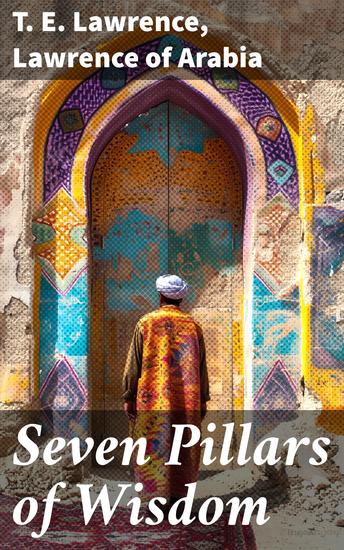
Seven Pillars of Wisdom - The History of the Arab Revolution - cover

Seven Pillars of Wisdom - The History of the Arab Revolution

T. E. Lawrence, Lawrence of Arabia

Publisher: Good Press

  • 0
  • 0
  • 0

Summary

In "Seven Pillars of Wisdom," readers are transported through the desert landscapes and intricate political tapestries of the Arab Revolt. This anthology of writings, drawn from the insightful observations and reflections of those involved in the remarkable historical episode, weaves a narrative that is both a personal confession and a profound cultural commentary. The collection successfully captures the tumultuous era through a blend of memoir, historical analysis, and vivid descriptive prose, creating a tapestry rich in emotional and intellectual depth. It challenges the conventional heroic narrative, introducing pieces that delve into the complexities of loyalty, identity, and cultural exchange. The contributors to this collection include not only strategists and soldiers but also thinkers and visionaries who played crucial roles in the unfolding of these events. Their writings resonate with the spirit of adventure and the poignant introspection that characterizes the early 20th-century exploration of identity and empire. By bringing together voices from different backgrounds united by a common cause, "Seven Pillars of Wisdom" echoes the broader literary movements of the time, which emphasized a breaking away from traditional imperial narratives and embraced a more nuanced dialogue between cultures. For scholars, historians, and those fascinated by the dynamics of cross-cultural encounters, this anthology offers a profound journey into the heart of a pivotal historical moment. The diversity within the pages allows for an appreciation of the varied perspectives and encourages readers to consider the multiplicity of experiences that define history. This collection is not only a testament to the enduring power of narrative but also an invitation to engage with the enduring questions of identity, allegiance, and wisdom itself.
Available since: 12/23/2023.
Print length: 820 pages.
Other books that might interest you

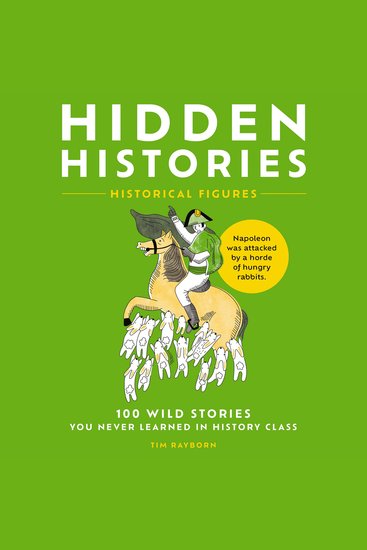
  • Hidden Histories - 100 Wild Stories You Never Learned in History Class - cover

    Hidden Histories - 100 Wild...

    Tim Rayborn

    • 0
    • 0
    • 0
    Discover the little known facts about some of the world’s greatest historical icons. 
    We all know what was written in the history books. There are some stories we’ve heard a hundred times—but often our understanding of these events and people is narrow. Have you ever wondered about the lesser known details that influenced major events and figures behind-the-scenes? This hilarious compendium of fascinating facts and dizzying what-ifs will delight and shock history buffs and trivia lovers alike. From Abraham Lincoln’s wrestling champ background to the day Napoleon was attacked by a horde of hungry rabbits, this book will give you a new perspective. Including:Walt Disney gave his housekeeper Disney stock every year on her birthday and Christmas. By the time she retired, she was a multi-millionaire.Charlie Chaplin entered a lookalike contest as a joke…and got 20th place.Henry Ford, the founder of Ford Motor Company, convinced Thomas Edison’s son to collect Edison’s last breath in a test tube. It is on display at The Henry Ford Museum in Detroit.Before Galileo Galilei was buried, three of his fingers and a tooth were removed from his body by his admirers. The body parts are on display at the Museo Galileo in Florence, Italy. 
      
    From ancient civilization to modern times, history is full of mysterious and downright bizarre circumstances. With these crazy and compelling facts, Hidden Histories will change your view of history
    Show book
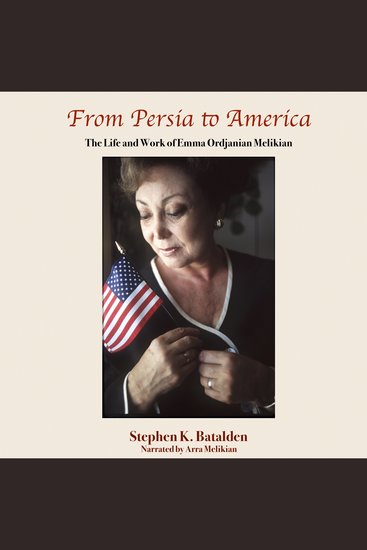
  • From Persia to America - The Life and Work of Emma Ordjanian Melikian - cover

    From Persia to America - The...

    Stephen K. Batalden

    • 0
    • 0
    • 0
    Set within the contexts of American immigration history and women's philanthropy, From Persia to America recounts the remarkable journey of a prominent Persian-Armenian immigrant and her commitment to a life of generosity in her adopted American homeland. Emma Ordjanian Melikian was born in Teheran into a family that, having earlier faced imprisonment in Russia following the Revolution of 1917, fled to Persia where the Ordjanian family had longstanding roots. The account traces Emma's family life in Teheran and the move to New York where she completes her schooling, marries, has four children, and begins charitable work within the Armenian community of metropolitan New York. The biography concludes with her years in Phoenix where her civic leadership and philanthropy included the founding of the non-profit organization, "Thank you America," and the endowment of The Melikian Center at Arizona State University. From Persia to America draws upon extended first-person interviews with Emma Ordjanian Melikian who remains deeply engaged and discerning in her tenth decade.
    Show book
  • Places I've Taken My Body - cover

    Places I've Taken My Body

    Molly McCully Brown

    • 0
    • 0
    • 0
    In seventeen intimate essays, poet Molly McCully Brown explores living within and beyond the limits of a body--in her case, one shaped since birth by cerebral palsy, a permanent and often painful movement disorder.  
     
    In spite of--indeed, in response to--physical constraints, Brown leads a peripatetic life: the essays comprise a vivid travelogue set throughout the United States and Europe, ranging from the rural American South of her childhood to the cobblestoned streets of Bologna, Italy. Moving between these locales and others, Brown constellates the subjects that define her inside and out: a disabled and conspicuous body, a religious conversion, a missing twin, a life in poetry. As she does, she depicts vividly for us not only her own life but a striking array of sites and topics, among them Mary Shelley's Frankenstein and the world's oldest anatomical theatre, the American Eugenics movement, and Jerry Falwell's Liberty University. Throughout, Brown offers us the gift of her exquisite sentences, woven together in consideration, always, of what it means to be human--flawed, potent, feeling.  
    ‘These remarkable essays invite us to look long and hard at our own interior landscapes, and to negotiate exterior ones with as much grace and gratitude as we can muster’ Eliza Griswold 
     
    'Urgent, compelling and lyrically, luminously beautiful.' Psychologies Magazine 
     
    Molly McCully Brown received her MFA from the University of Mississippi, and is a graduate of Stanford University and Simon's Rock of Bard College. She has published poems in Gulf Coast, Image, Kenyon Review, and elsewhere.
    Show book
  • The Olive Harvest - A Memoir of Love Old Trees and Olive Oil in the South of France - cover

    The Olive Harvest - A Memoir of...

    Carol Drinkwater

    • 0
    • 0
    • 0
    The story of life on a French olive farm continues with this moving memoir of hard work, hard luck, and waiting for the return of happiness. Carol Drinkwater and her husband, Michel, arrive at their villa in Provence in anticipation of another glorious summer. Unfortunately, they find the farm unkempt and suffering from lack of rainfall. When their gardener, Monsieur Quashia, finally shows up, he cheerfully explains the shed-building project he’s working on as a surprise for them—a surprise that will send their expenses skyrocketing. But there are bigger problems to come than wild boars tearing through fences and other everyday challenges of farming. After a terrifying accident in Monte Carlo and a hospital stay, Michel is barely functional, and Carol soon realizes she must fend for herself. Burdened with problems from a financial reversal to the threat of nearby wildfires, she will experience firsthand the uncertainties that have plagued farmers since the dawn of agriculture—and hold on to hope that in the end, nature will provide. “A storyteller of great economy and deftness.” —The Telegraph
    Show book
  • The Eye of the Camera - From their pens to your ears genius in every story - cover

    The Eye of the Camera - From...

    Fred M. White

    • 0
    • 0
    • 0
    Richard Bernard Heldmann was born on 12th October 1857, in St Johns Wood, North London.  
    By his early 20’s Heldmann began publishing fiction for the myriad magazine publications that had sprung up and were eager for good well-written content.  
    In October 1882, Heldmann was promoted to co-editor of Union Jack, a popular magazine, but his association with the publication ended suddenly in June 1883.  It appears Heldman was prone to issuing forged cheques to finance his lifestyle.  In April 1884 he was sentenced to 18 months hard labour. 
    In order to be well away from the scandal and the damage that this had caused to his reputation Heldmann adopted a pseudonym on his release from jail.  Shortly thereafter the name ‘Richard Marsh’ began to appear in the literary periodicals.  The use of his mother’s maiden name as part of it seems both a release and a lifeline. 
    A stroke of very good fortune arrived with his novel ‘The Beetle’ published in 1897.  This would turn out to be his greatest commercial success and added some much-needed gravitas to his literary reputation.   
    Marsh was a prolific writer and wrote almost 80 volumes of fiction as well as many short stories, across many genres from horror and crime to romance and humour.   His unusual characters, plotting devices and other literary developments have identified his legacy as one of the best British writers of his time.   
    Richard Marsh died from heart disease in Haywards Heath in Sussex on 9th August 1915.  He was 57.
    Show book
  • In Bayswater - One family is home to many secrets in this classic modernist short story - cover

    In Bayswater - One family is...

    Mary Butts

    • 0
    • 0
    • 0
    Mary Frances Butts was born on 13th December 1890 in Poole, Dorset. 
     
    Her early years were spent at Salterns, an 18th-century house overlooking Poole Harbour.  Sadly in 1905 her father died, and she was sent for boarding at St Leonard's school for girls in St Andrews. 
     
    Her mother remarried and, from 1909, Mary studied at Westfield College in London, and here, first became aware of her bisexual feelings.  She was sent down for organising a trip to Epsom races and only completed her degree in 1914 when she graduated from the London School of Economics.  By then Mary had become an admirer of the occultist Aleister Crowley and she was given a co-authorship credit on his ‘Magick (Book 4)’. 
     
    In 1916, she began the diary which would now detail her future life and be a constant reference point for her observations and her absorbing experiences. 
     
    During World War I, she was doing social work for the London County Council in Hackney Wick, and involved in a lesbian relationship.  Life changed after meeting the modernist poet, John Rodker and they married in 1918. 
     
    In 1921 she spent 3 months at Aleister Crowley's Abbey of Thelema in Sicily; she found the practices dreadful and also acquired a drug habit.  Mary now spent time writing in Dorset, including her celebrated book of short stories ‘Speed the Plough’ which saw fully develop her unique Modernist prose style. 
     
    Europe now beckoned and several years were spent in Paris befriending many artists and writing further extraordinary stories.   
     
    She was continually sought after by literary magazines and also published several short story collections as books. Although a Modernist writer she worked in other genres but is essentially only known for her short stories.  Mary was deeply committed to nature conservation and wrote several pamphlets attacking the growing pollution of the countryside. 
     
    In 1927, she divorced and the following year her novel ‘Armed with Madness’ was published.  A further marriage followed in 1930 and time was spent attempting to settle in London and Newcastle before setting up home on the western tip of Cornwall.  By 1934 the marriage had failed. 
     
    Mary Butts died on 5th March 1937, at the West Cornwall Hospital, Penzance, after an operation for a perforated gastric ulcer. She was 46. 
     
    Her story ‘In Bayswater’ grippingly describes a man’s friendship with a dysfunctional family he rents a room from.  As each facet reveals itself his opinion and decisions change, back and forth, this way and that….
    Show book