Join us on a literary world trip!
Add this book to bookshelf
Grey
Write a new comment Default profile 50px
Grey
Subscribe to read the full book or read the first pages for free!
All characters reduced
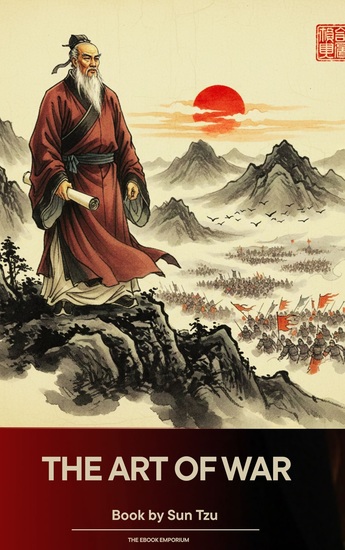
The Art of War - cover

The Art of War

Sun Tzu

Translator Lionel Giles

Publisher: The Ebook Emporium

  • 0
  • 0
  • 0

Summary

"The supreme art of war is to subdue the enemy without fighting."

Written over two thousand years ago, Sun Tzu's insights remain as sharp and relevant today as they were in ancient China. The Art of War is not merely a book about military maneuvers; it is a profound philosophical study of human nature and the mechanics of conflict. Across thirteen concise chapters, Sun Tzu teaches the importance of intelligence, the value of flexibility, and the necessity of knowing both yourself and your opponent. It is a guide to achieving victory through the path of least resistance, emphasizing that the most successful "warrior" is the one who understands how to outmaneuver the competition before the first blow is even struck.

The Five Essentials for Victory: Sun Tzu identifies five critical factors that determine the outcome of any engagement: The Moral Law (Purpose), Heaven (Timing), Earth (Terrain), Command (Leadership), and Method (Organization). By mastering these variables, a leader can predict the outcome of a conflict with startling accuracy.

Victory Through Deception and Adaptability: "All warfare is based on deception." Sun Tzu argues that a successful strategist must be like water—shapeless, flowing around obstacles, and striking only where the enemy is weak. This focus on psychological warfare and environmental awareness makes the text a masterclass in high-stakes decision-making.

Why It Is a Global Icon: The Art of War has transcended its origins to become a universal manual for survival and success. Whether you are navigating a corporate merger, coaching a sports team, or seeking personal discipline, Sun Tzu's aphorisms provide a framework for clear thinking under pressure. It is the ultimate toolkit for anyone who wishes to turn obstacles into opportunities.

Master the mind of the strategist. Purchase "The Art of War" today.
Available since: 01/19/2026.
Print length: 31 pages.

Other books that might interest you

  • How To Burn This Book - cover

    How To Burn This Book

    Evan Witmer

    • 0
    • 0
    • 0
    Step one of burning a book is finding a disagreeable premise within. To simplify this process, each story is followed by a reason it should be immolated, opined by the author’s critics. 
    "Lucky Girl Noir" is about a cop solving the murder of a ‘Lucky Girl,’ a woman born with probability consistently in her favor. Burning this story would be a win against plagiarism. 
    "Three Days West" is an acid-Western about cowboys exploiting their otherworldly connection in frontier Colorado. This story deserves burning for ruining pulp heroes. 
    "Zantar" is Tarzan with aliens and raccoons. Burning seems appropriate, as it continues the author’s insatiable bloodlust. 
    "Sea Creatures" is a sapphic love story between a siren and a mermaid. The story deserves burning for suggesting bras are an art form. 
    "Lizard People Take Orlando" tells the story of Zaffre Davis, a student running for mayor while keeping his life as a scalie secret. Burning should be considered due to its depictions of furries as Democrats. 
    "The Spirit Realm" is about the survivor of a mass poisoning who wakes up to find he can talk to alcohol. No character represents absinthe, a crime best punished by burning. 
    "The Pimp That Slapped the Ripper" is about the fall of Jack the Ripper at the hands of a procurer who will protect her property at any cost. The author’s softness has robbed the story of graphic detail; their omission begets burning. 
    "Washed" is the story of a man who loses his memory when he showers. Burn this one to eliminate the author’s ugly past. 
    "An American Weekend" is about a boy visited by the human embodiments of Friday, Saturday, and Sunday, who guide him out of his funk. Turn it to ashes; this interpretation of the weekend reeks of privilege. 
    "Roadwork" is about a lemurtologist, an exorcist for the DMV who removes ghosts from road accidents. Tossing this story in the fire could wound a hateful author, smudging the name of the DMV.
    Show book
  • Lord Peter Wimsey Collection The: Books 1-5 - cover

    Lord Peter Wimsey Collection...

    Dorothy L. Sayers

    • 0
    • 0
    • 0
    Explore the brilliant and captivating mysteries of Lord Peter Wimsey, one of literature's most iconic detectives, in this collection of Dorothy L. Sayers' first five novels. With wit, intellect, and a flair for solving crimes, Wimsey navigates through high society and dark secrets in these classic tales.Included in this Collection:Book 1 - Whose Body? Track 1-13Lord Peter Wimsey investigates the appearance of a naked body in a bathtub, while a prominent financier goes missing. With his sharp mind and keen observational skills, Wimsey untangles a web of deception to uncover the truth behind these perplexing events.Book 2 - Clouds of Witness. Track 14-33When Lord Peter's brother, the Duke of Denver, is accused of murder, Wimsey steps in to prove his innocence. Set against the backdrop of English aristocracy, this case delves into family secrets and unexpected twists.Book 3 - Unnatural Death. Track 34-57A seemingly natural death sparks Wimsey's suspicion, leading to an investigation of greed and foul play. With sharp deductions, Wimsey exposes the dark motives behind a quiet murder in a rural setting.Book 4- Lord Peter Views the Body. Track 58-73A collection of short stories featuring Lord Peter Wimsey solving a variety of intricate cases, from missing heirlooms to puzzling murders. Each tale showcases Wimsey's wit and ingenuity.Book 5 - The Unpleasantness at the Bellona Club. Track 74-97Lord Peter is called upon to investigate the mysterious death of General Fentiman at his club. As Wimsey uncovers long-hidden family rivalries, the case turns into a complex and thrilling pursuit of justice.
    Show book
  • Her Last Time in Dothan - A Good Women Story - cover

    Her Last Time in Dothan - A Good...

    Halle Hill

    • 0
    • 0
    • 0
    A seventh-grade girl travels to south Alabama where her grandmother is being cared for by incapable extended family members. The mother is overwhelmed with grief. But the girl, busy with her own relationship troubles, witnesses something else disturbing.  Her Last Time in Dothan is a short story from Halle Hill’s Good Women, which delves into the lives of twelve Black women across the Appalachian South. Darkly funny and deeply human, Good Women observes how place, blood ties, generational trauma, obsession, and boundaries―or lack thereof―influence how we navigate our small worlds, and how those worlds so often collide in ways we don’t expect.
    Show book
  • A Profitable Weakness - From their pens to your ears genius in every story - cover

    A Profitable Weakness - From...

    George Gissing

    • 0
    • 0
    • 0
    George Robert Gissing was born on November 22nd, 1857 in Wakefield, Yorkshire.  
    He was educated at Back Lane School in Wakefield. Gissing loved school. He was enthusiastic with a thirst for learning and always diligent.  By the age of ten he was reading Dickens, a lifelong hero. 
    In 1872 Gissing won a scholarship to Owens College. Whilst there Gissing worked hard but remained solitary. Unfortunately, he had run short of funds and stole from his fellow students. He was arrested, prosecuted, found guilty, expelled and sentenced to a month's hard labour in 1876. 
    On release he decided to start over.  In September 1876 he travelled to the United States. Here he wrote short stories for the Chicago Tribune and other newspapers. On his return home he was ready for novels. 
    Gissing self-published his first novel but it failed to sell.  His second was acquired but never published. His writing career was static.  Something had to change.  And it did. 
    By 1884 The Unclassed was published.  Now everything he wrote was published. Both Isabel Clarendon and Demos appeared in 1886. He mined the lives of the working class as diligently as any capitalist. 
    In 1889 Gissing used the proceeds from the sale of The Nether World to go to Italy. This trip formed the basis for his 1890 work The Emancipated. 
    Gissing's works began to command higher payments. New Grub Street (1891) brought a fee of £250.  
    Short stories followed and in 1895, three novellas were published; Eve's Ransom, The Paying Guest and Sleeping Fires. Gissing was careful to keep up with the changing attitudes of his audience.  
    Unfortunately, he was also diagnosed as suffering from emphysema. The last years of his life were spent as a semi-invalid in France but he continued to write. 1899; The Crown of Life. Our Friend the Charlatan appeared in 1901, followed two years later by The Private Papers of Henry Ryecroft. 
    George Robert Gissing died aged 46 on December 28th, 1903 after catching a chill on a winter walk.
    Show book
  • A Diagnosis of Death - From their pens to your ears genius in every story - cover

    A Diagnosis of Death - From...

    Ambrose Bierce

    • 0
    • 0
    • 0
    Ambrose Gwinnett Bierce was born on 24th June 1842 at Horse Cave Creek in Meigs County, Ohio. His parents were poor but they introduced him to literature at an early age, instilling in him a deep appreciation of books, the written word and the elegance of language.  
    Growing up in Koscuisko County, Indiana poverty and religion were defining features of his childhood, and he would later describe his parents as “unwashed savages” and fanatically religious, showing him little affection but always quick to punish. He came to resent religion, and his introduction to literature appears to be their only positive effect. 
    At age 15 Bierce left home to become a printer’s devil, mixing ink and fetching type at The Northern Indian, a small Ohio paper. Falsely accused of theft he returned to his farm and spent time sending out work in the hopes of being published. 
    His Uncle Lucius advised he be sent to the Kentucky Military Institute. A year later he was commissioned as an Officer.  As the Civil War started Bierce enlisted in the 9th Indiana Infantry Regiment.  
    In April 1862 Bierce fought at the Battle of Shiloh, an experience which, though terrifying, became the source of several short stories. Two years later he sustained a serious head wound and was off duty for several months. He was discharged in early 1865.  
    A later expedition to inspect military outposts across the Great Plains took him all the way to San Francisco. He remained there to become involved with publishing and editing and to marry, Mary Ellen on Christmas Day 1871.  They had a child, Day, the following year.  
    In 1872 the family moved to England for 3 years where he wrote for Fun magazine. His son, Leigh, was born, and first book, ‘The Fiend’s Delight’, was published.  
    They returned to San Francisco and to work for a number of papers where he gained admiration for his crime reporting. In 1887 he began a column at the William Randolph Hearst’s San Francisco Examiner.  
    Bierce’s marriage fell apart when he discovered compromising letters to his wife from a secret admirer. The following year, 1889 his son Day committed suicide, depressed by romantic rejection. 
    In 1891 Bierce wrote and published the collection of 26 short stories which included ‘An Occurrence at Owl Creek Bridge’.  Success and further works including poetry followed.  
    Bierce with Hearst’s resources helped uncover a financial plot by a railroad to turn 130 million dollars of loans into a handout. Confronted by the railroad and asked to name his price Bierce answered “my price is $130 million dollars. If, when you are ready to pay, I happen to be out of town, you may hand it over to my friend, the Treasurer of the United States”.  
    He now began his first foray as a fabulist, publishing ‘Fantastic Fables’ in 1899.  But tragedy again struck two years later when his second son Leigh died of pneumonia relating to his alcoholism.  
    He continued to write short stories and poetry and also published ‘The Devil’s Dictionary’.  
    At the age of 71, in 1913 Bierce departed from Washington, D.C., for a tour of the battlefields where he had fought during the civil war. At the city of Chihuahua he wrote his last known communication, a letter to a friend. It’s closing words were “as to me, I leave here tomorrow for an unknown destination,” Ambrose Bierce then vanished without trace.
    Show book
  • A Legend of Old Egypt - From their pens to your ears genius in every story - cover

    A Legend of Old Egypt - From...

    Boleslaw Prus

    • 0
    • 0
    • 0
    Aleksander Głowacki who wrote under the nom de plume Boleslaw Prus was born on 20th August 1847 at Hrubieszów in the Kingdom of Poland, at that time, controlled by the Russian Empire. 
    At three his mother died and then at nine his father.  Female relatives helped raise him but at 15 he joined the Polish uprising against the might of Imperial Russia.  Wounded on the battlefield, arrested and imprisoned, he was later released into the care of a relative and resumed secondary school and then Warsaw University but poverty forced him to leave after two years.  At some point he developed agoraphobia which often caused problems. 
    In 1869, he enrolled in the Forestry Department at Puławy but was soon sacked and so he began a system of self-education that led to work as a newspaper columnist on a wide-ranging series of topics that eventually became the ‘Weekly Chronicles’ and spanned 40 years. 
    With his finances now stabilized he married and then adopted his late brother-in-law’s son.  
    It seems he had doubts as to the scale of his talents and early on adopted the name ‘Boleslaw Prus’ for both his journalistic and literary offerings. 
    His work as a short-story writer met with much acclaim. He wrote several dozen of them, originally published in newspapers and ranging in length from micro-story to novella. His keen observation of everyday life and sense of humor are evident in them.  
    During his career he also wrote novels. After ‘Pharoah’, in 1895, he embarked on a four-month journey taking in Berlin, Dresden, Nuremberg, Rapperswil in Switzerland, where he stayed for two months, and his final destination, Paris.  Here his agoraphobia was so bad he couldn’t cross the Seine.  
    However, his writing continued and in 1911 his novel ‘Changes’, though uncompleted, began to be serialised.  It was never finished. 
    Boleslaw Prus died on 19th May 1912, at his Warsaw apartment.  He was 64.  A National Hero, thousands attended both his funeral service and interment.
    Show book