Join us on a literary world trip!
Add this book to bookshelf
Grey
Write a new comment Default profile 50px
Grey
Subscribe to read the full book or read the first pages for free!
All characters reduced
The Art of War - cover

The Art of War

Sun Tzu

Publisher: HB Classics

  • 0
  • 0
  • 0

Summary

Contains Active Table of Contents (HTML)
The world's most influential treatise on strategy

The Art of War' is an ancient Chinese military treatise dating from the 5th century BC and is attributed to the ancient Chinese military strategist Sun Tzu. The text is composed of 13 chapters, each of which is devoted to one aspect of warfare and it is commonly thought of as a definitive work on military strategy and tactics. It was placed at the head of China's Seven Military Classics upon the collection's creation in 1080 by Emperor Shenzong of Song, and has long been the most influential strategy text in East Asia. It has had an influence on Eastern and Western military thinking, business tactics, legal strategy and beyond.
Available since: 12/04/2022.
Print length: 2000 pages.

Other books that might interest you

  • The Pain We Carry - Healing from Complex PTSD for People of Color - cover

    The Pain We Carry - Healing from...

    LMFT Natalie Y. Gutiérrez, PsyD...

    • 0
    • 0
    • 0
    If you are a person of color who has experienced repeated trauma—such as discrimination, race-related verbal assault, racial stigmatization, poverty, sexual trauma, or interpersonal violence—you may struggle with intense feelings of anger, mistrust, or shame. You may feel unsafe or uncomfortable in your own body, or struggle with building and keeping close relationships. Sometimes you may feel very alone in your pain. But you are not alone. This groundbreaking work illuminates the phenomena of complex post-traumatic stress disorder (C-PTSD) as it is uniquely experienced by people of color, and provides a much-needed path to health and wholeness. 


    In The Pain We Carry, you'll find powerful tools to help you understand and begin healing from repeated trauma. You'll discover ways to feel safer in your body, build self-compassion and resilience, and reclaim your health and wellness by reconnecting with your sense of self and your ancestral wisdom. You'll learn how trauma is connected to grief, how it can affect both the mind and the body, and how it can persist from one generation to the next. Most importantly, you'll find the validation you need to begin mending your heart, and the skills you need to live a life of intention—even in the midst of an oppressive system.
    Show book
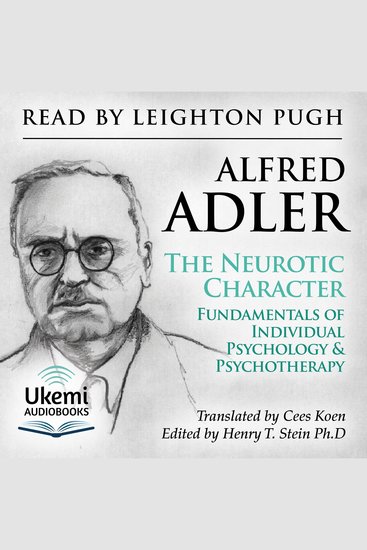
  • The Neurotic Character - Fundamentals of a Comparative Individual Psychology and Psychotherapy - cover

    The Neurotic Character -...

    Alfred Adler

    • 0
    • 0
    • 0
    As the 20th century drew to a close, the Austrian psychologist Alfred Adler (1870-1937) was perhaps the least known of the prominent figures of his time - in particular Sigmund Freud and Carl Gustav Jung - and yet he continues to be a figure of influence in the 21st century. His school of ‘individual psychology’ involved a holistic approach to the study of the individual, with a key focus on the way each person viewed the world, especially regarding their concerns of inferiority. This applied to both men and women in their different ways. The Neurotic Character is, as the editor of this modern translation states, 'Adler’s magnum opus - complex, profound and brilliant in its crystallised capture of the human soul gone astray.' 
     
    Written in 1911, Adler continued to expand and develop his ideas over the following decades as he assimilated experience gained from his practice. It opens with the Theoretical Part, in which he introduces ‘The Origin and Development of the Inferiority Feeling and Its Effects', as well as ‘Psychic Compensation and Its Preparation’ and ‘The Accentuated Fiction as Guiding Idea in the Neurosis’. 
     
    The second, major part of his work follows - the Practical Part. In this, Adler examines a wide range of issues, from ‘Greed and Distrust’, to the sexual causes and effects of inferiority. In the succeeding sections, he considers how suppressing everyday feelings and habits experienced by men and women in the course of their lives - issues such as impatience and dissatisfaction, cruelty, self-reproach - can all have profound effects on the individual. 
     
    The writing is clear and supported by case studies providing a strong perspective of reality. It is not surprising that, as a result, it can be seen how strongly Adlerian ideas and views have influenced the practice of psychotherapy today. And that for all the apparent dominance of Freudian and Jungian doctrine in psychological and academic circles, the work of Alfred Adler should not be underestimated. This recording presents the new translation of The Neurotic Character, commissioned and edited by the Adlerian psychotherapist, Henry Stein, who provides a useful appendix - an introduction to classical Adlerian theory and practice.
    Show book

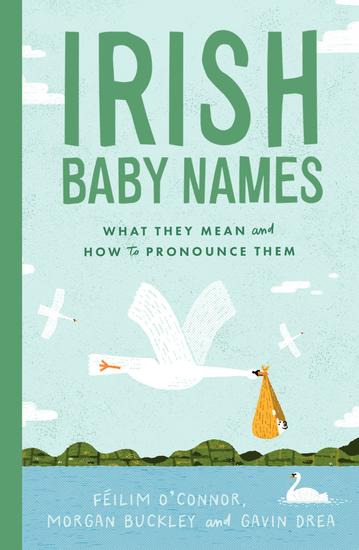
  • Irish Baby Names - What they mean and how to pronounce them - cover

    Irish Baby Names - What they...

    Féilim O'Connor, Morgan Buckley,...

    • 0
    • 0
    • 0
    Discover the magical origins and meanings behind over 200 Irish names.
    It might seem like the classic Irish names are Mary and Joseph, but those are about as Irish as the Pope! Get ready to go back, way back, before Christianity came to these shores. Rediscover names like CÁIT (a fairy creature), FERDIA (a friend of Cú Chulainn), MACHA (an ancient war goddess) and RÉALTÍN (little star) – names from an ancient Ireland of mystery, magic and mythos.
    An Irish name is the greatest first gift you can give a child. Here you will be sure to find a name you and your family will love forever.
    Show book
  • The Prince - cover

    The Prince

    Nicoló Machiavelli

    • 0
    • 0
    • 0
    The lion cannot guard himself from the toils, nor the fox from wolves. A Prince must therefore be a fox to discern toils, and a lion to drive off wolves. The modern-day term “Machiavellian” is used to describe deception, dishonesty, and cruelty to meet a goal. The Prince by Niccolò Machiavelli was written as a guide for autocrats on how to govern using means that were meant to deceive and manipulate a government’s constituency—to the extent of advocating the use of evil for political expediency. In this classic work, the end justifies the means reigns paramount to Machiavelli’s system of government.
    Show book
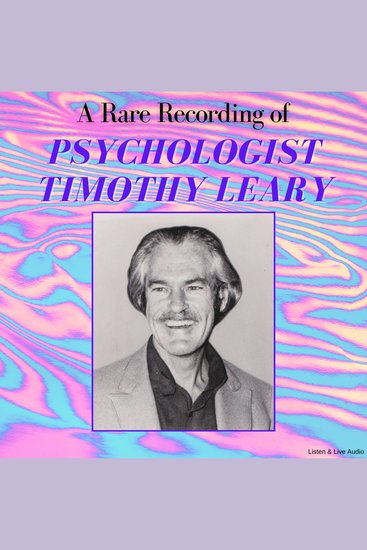
  • A Rare Recording of Psychologist Timothy Leary - cover

    A Rare Recording of Psychologist...

    Timothy Leary

    • 0
    • 0
    • 0
    Timothy Francis Leary (October 22, 1920 - May 31, 1996) was an American psychologist and author known for his strong advocacy of psychedelic drugs, particularly LSD. Evaluations of Leary are polarized, ranging from "bold oracle" to "publicity hound". According to poet Allen Ginsberg, he was "a hero of American consciousness", and writer Tom Robbins called him a "brave neuronaut". President Richard Nixon called him "the most dangerous man in America". During the 1960s and 1970s, at the height of the counterculture movement, Leary was arrested 36 times. The following recording was made in 1992.
    Show book
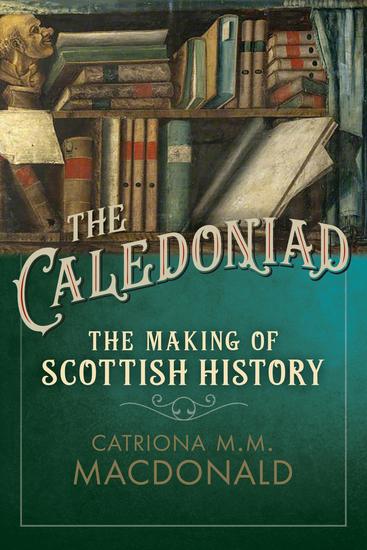
  • The Caledoniad - The Making of Scottish History - cover

    The Caledoniad - The Making of...

    Catriona M.M. MacDonald

    • 0
    • 0
    • 0
    Winner of the 2025 Frank Watson Book Prize
    Why did Scots in the nineteenth and twentieth centuries know so little about their past and even less about those who controlled their history? Is the historical narrative the only legitimate medium through which the past can be made known? Are novelists and historians as far apart as convention has it? In an age when history grounds any claims to national status, these are important questions and they have implications for how Scottish history has evolved, and how Scottish identity has been understood up to the present day.
    Scottish history is not simply the distillation of Scotland's past: authors shape what we know and how we judge our forebears. This book investigates who decided which Scottish voices of the past would be heard in history's pages and which would ultimately be silenced. It sketches a picture of a narrow and privileged cultural elite that responded belatedly to a more democratic age and only slowly embraced women writers and the interests of 'average' Scots. Integrating historical fiction and popular histories in its appreciation of the Scottish historical imaginary, it most importantly tells the story of why, despite the interests of politicians and others, a truly British history has never emerged.
    'A brilliant, scholarly yet highly readable work which enlarges our understanding of what Scottish history is, and reinforces why it really matters' - James Robertson
    Show book