Join us on a literary world trip!
Add this book to bookshelf
Grey
Write a new comment Default profile 50px
Grey
Subscribe to read the full book or read the first pages for free!
All characters reduced
Best of Story Writing - cover

Best of Story Writing

Subhradeep Sarkar

Publisher: BookRix

  • 0
  • 0
  • 0

Summary

This guide will quickly and clearly teach you how to master written language. You’ll learn: 
 
How to write concisely, to be easily understood 
 
How to vary your structure and vocabulary, to keep readers engaged 
 
How to use advanced language appropriately 
 
How to edit your work, and adapt it for different subjects 
 
…and much more! 
 
In Advanced Writing Skills for Students of English, writing tips are presented with a focus on why different styles and techniques work. You’ll not only learn what makes writing most effective, you’ll discover the reasoning behind it, making it easier to remember and apply. As well as covering general writing tips, across all subjects, this book also offers guidance on specific areas of writing, including business, academic and creative writing.
Available since: 12/22/2023.
Print length: 68 pages.

Other books that might interest you

  • Flipping Houses for Profit: A Step-by-Step Guide - cover

    Flipping Houses for Profit: A...

    AHMED MUSA

    • 0
    • 0
    • 0
    real investment. profit making.
    Show book
  • Summary: Stop Overthinking - 23 Techniques to Relieve Stress Stop Negative Spirals Declutter Your Mind and Focus on the Present by Nick Trenton and Russell Newton - cover

    Summary: Stop Overthinking - 23...

    Brooks Bryant

    • 0
    • 0
    • 0
    Disclaimer: This is NOT the Official Book, but a Summary Book. This Does NOT Accompany the Official Book! 
    Liberate yourself from the chains of overthinking and embrace a worry-free life with "Stop Overthinking." This insightful guide by renowned author Nick Trenton provides proven techniques to rewire your brain, alter your thought patterns, and break free from your self-induced mental confines. 
    Overthinking often leads to unhappiness, traps us in endless thought loops, and distracts us from what truly matters. But, with Trenton's scientifically backed methods, you can transform your mindset, gain control over your thoughts, and eradicate negative thinking habits. 
    Discover powerful ways to combat rumination and negative thoughts, recognize your inner anxieties, maintain focus on relaxation and action, and master techniques to handle stress attacks. Learn to declutter your mind, uncover your unlimited potential, and start truly living.
    Show book
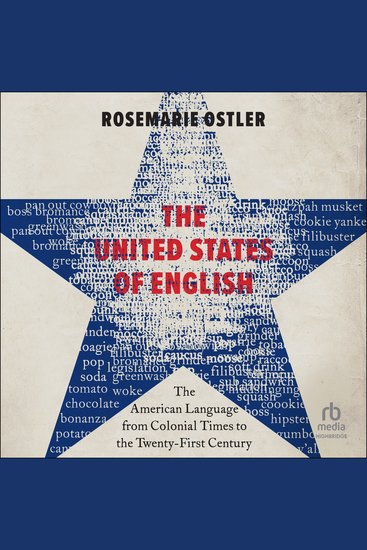
  • The United States of English - The American Language from Colonial Times to the Twenty-First Century - cover

    The United States of English -...

    Rosemarie Ostler

    • 0
    • 0
    • 0
    The story of how English became American—and how it became Southern, Bostonian, Californian, African American, Chicano, elite, working-class, urban, rural, and everything in between 


    By the time of the Revolution, the English that Americans spoke was recognizably different from the British variety. Americans added dozens of new words to the language, either borrowed from Native Americans (raccoon, persimmon, caucus) or created from repurposed English (backwoods, cane brake, salt lick). Americans had their own pronunciations (bath rhymed with hat, not hot) and their own spelling (honor, not honour), not to mention a host of new expressions that grew out of the American landscape and culture (blaze a trail, back track, pull up stakes). Americans even invented their own slang, like stiff as a ringbolt to mean drunk. American English has continued to grow and change ever since. 


    The United States of English tells the engrossing tale of how the American language evolved over four hundred years, explaining both how and why it changed and which parts of the "mother tongue" it preserved (I guess was heard in the British countryside long before it became a typical Americanism). Plentiful examples of the American vernacular, past and present, bring the language to life and make for an engaging as well as enlightening listen.
    Show book
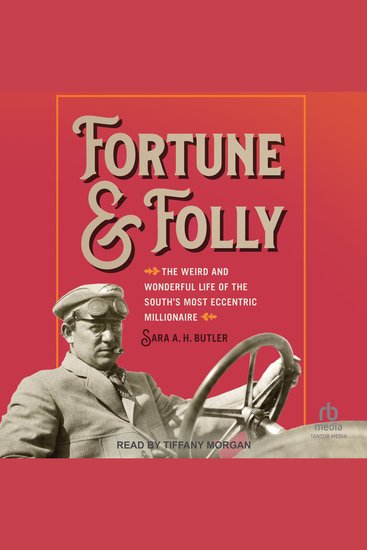
  • Fortune and Folly - The Weird and Wonderful Life of the South's Most Eccentric Millionaire - cover

    Fortune and Folly - The Weird...

    Sara A. H. Butler

    • 0
    • 0
    • 0
    Briarcliff Mansion and the land it occupies are owned by Emory University, which refers to it as its "Briarcliff Campus." Fortune and Folly, in part, illuminates the largely lost story of how the mansion, and the entire surrounding neighborhood, got its name. But in order to understand the mansion, we have to understand the man who built it. 


    Briarcliff Mansion once belonged to a man named Asa Candler, Jr.—also known as Buddie. The second son and namesake of Coca-Cola founder Asa Griggs Candler, Buddie was a wealthy real estate developer of great successes and greater failures. A man of big vision and bigger adventures, and a socialite whose boisterous, unapologetic personality made him both beloved and reviled in the Atlanta community. But after he passed away in 1953, his stories faded from memory, either tangled up with or overshadowed by his father. 


    It's no mystery why Briarcliff garners attention. It's self-consciously grandiose, built to display maximum grandeur to the neighborhood. It towers over the landscape, set far back from the road behind a filled-in, overgrown pool. Its face is stitched together where a music hall was added two years after the main house was completed, and the bricks don't quite match up. This book offers a deep-dive into the life of Asa Candler, Jr. to excavate a piece—and place—of Atlanta history.
    Show book
  • POWER OF STOICISM THE - Mastering the Art of Inner Strength for Modern Living (2024 Beginner Guide) - cover

    POWER OF STOICISM THE -...

    Eva Schmidt

    • 0
    • 0
    • 0
    "The Power of Stoicism" is your gateway to discovering and harnessing the transformative principles of Stoic philosophy for a resilient and purposeful life in the contemporary world. This insightful guide delves into the profound teachings of Stoicism, offering practical wisdom and actionable strategies to cultivate inner strength, navigate challenges, and lead a life aligned with virtue.Stoic Principles for Modern Living: Uncover the timeless virtues of Stoicism and their relevance in today's fast-paced world.Mindful Resilience: Learn how Stoicism equips you with the tools to face adversity with a calm and composed mind.Practical Stoic Exercises: Incorporate daily practices to integrate Stoic wisdom into your routine.Embracing Change: Discover how Stoicism empowers you to adapt to change and find opportunity in challenges.Cultivating Emotional Well-Being: Explore Stoic techniques for managing emotions and fostering mental resilience.Balancing Inner Harmony: Implement Stoic principles to achieve a harmonious and purposeful life.Living Virtuously: Embrace the Stoic path to lead a life of virtue, integrity, and fulfillment. 
    And Much More!... 
    🚀 Ready to embark on a journey of inner strength and resilience? Immerse yourself in "The Power of Stoicism" and unlock the ancient secrets to mastering the art of a purposeful and resilient life. Transform challenges into triumphs and begin your journey of enduring strength today! 🚀 
     
    Show book
  • Spare the Rod - Punishment and the Moral Community of Schools - cover

    Spare the Rod - Punishment and...

    Campbell F. Scribner, Bryan R....

    • 0
    • 0
    • 0
    Spare the Rod traces the history of discipline in schools and its ever-increasing integration with prison and policing, ultimately arguing for an approach to discipline that aligns with the moral community that schools could and should be. 
     
    In Spare the Rod, historian Campbell F. Scribner and philosopher Bryan R. Warnick investigate the history and philosophy of America’s punishment and discipline practices in schools. To delve into this controversial subject, they first ask questions of meaning. How have concepts of discipline and punishment in schools changed over time? What purposes are they supposed to serve? And what can they tell us about our assumptions about education? They then explore the justifications. Are public school educators ever justified in punishing or disciplining students? Are discipline and punishment necessary for students’ moral education, or do they fundamentally have no place in education at all? If some form of punishment is justified in schools, what ethical guidelines should be followed?  
     
    The authors argue that as schools have grown increasingly bureaucratic over the last century, formalizing disciplinary systems and shifting from physical punishments to forms of spatial or structural punishment such as in-school suspension, school discipline has not only come to resemble the operation of prisons or policing, but has grown increasingly integrated with those institutions. These changes and structures are responsible for the school-to-prison pipeline. They show that these shifts disregard the unique status of schools as spaces of moral growth and community oversight and are incompatible with the developmental environment of education. What we need, they argue, is an approach to discipline and punishment that fits with the sort of moral community that schools could and should be. 
    Show book