Join us on a literary world trip!
Add this book to bookshelf
Grey
Write a new comment Default profile 50px
Grey
Subscribe to read the full book or read the first pages for free!
All characters reduced
复数语法范畴的跨语言对比与习得研究(英文) - cover

复数语法范畴的跨语言对比与习得研究(英文)

苏画弦

Publisher: 外研社/SJPUBLISH

  • 0
  • 0
  • 0

Summary

内容简介:
《复数语法范畴的跨语言对比与习得研究》在生成语法框架内分析了复数语法范畴在汉语、英语、韩语中的共性和差异,并考察了英语母语者和韩语母语者对汉语复数语法范畴的习得情况。其中,跨语言对比研究以最简方案(Chomsky 2000, 2001; Pesetsky & Torrego 2007)的特征核查机制为理论基础,分析了汉语"们"、英语复数标记-s、韩语复数标记-tul的句法和语义异同,同时也分析了汉语量词重叠的复数义及其句法推导过程。依据特征重组假说(Lardiere 2009),二语学习者需对母语复数表征所涉及的特征集合进行拆分,进而重组出二语复数表征所需的特征集合。本书通过实证研究验证了这一假说,并深入分析了复数语法范畴习得中特征重组的方式和过程。本研究的理论意义在于深度分析了复数语法范畴在量词语言和非量词语言中的表征异同,尤其是在最简方案框架内对复数标记以及与之相关的量词和指示代词的句法推导进行了统一分析,并将理论分析所得出的特征及其组合方式应用于二语习得实证研究中,使母语迁移的内容、方式和结果更加简明清晰。实证研究结果扩展了对量词语言中复数语法范畴习得的认识,深化了对特征重组的方式和过程的了解。
作者简介:
苏佳佳,语言学博士,毕业于加拿大麦吉尔大学McGill University语言学系,现为北京外国语大学中国外语与教育研究中心专职研究员。从事二语习得、汉外语言对比、语音学与音系学等方面的研究。在Second Language Research,Linguistic Approaches to Bilingualism,《外语教学与研究》等国内外学术期刊上发表论文多篇。主持省部级重点课题、参与国家级课题多项。
Available since: 01/16/2025.
Print length: 689 pages.

Other books that might interest you

  • Gaza Faces History - cover

    Gaza Faces History

    Enzo Traverso

    • 0
    • 0
    • 0
    Is the destruction of Gaza only a consequence of the October 7, 2023 attack, or is it also the outcome of a long process of dispossession and eradication? Do Palestinians have the right to resist the occupation? Is talking about genocide anti-Semitism? Enzo Traverso goes to the root of the Israeli–Palestinian conflict by calling history into question and offers a critical interpretation that overturns the one-sided perspective from which we have become accustomed to observing what is happening in Gaza. 


    Israel is usually described as a democratic island in the middle of an obscurantist ocean, and Hamas as a movement inspired by bloodthirsty fanaticism. The destruction of Gaza is reminiscent of the golden age of colonialism, when the West perpetrated genocides in Asia and Africa in the name of its civilizing mission. But if a genocidal war is unleashed in the name of fighting anti-Semitism, it is our own ethical values and political norms that are tarnished: the assumptions of our moral conscience risk being turned upside down. The October 7 attack was terrifying, but it must be analyzed and not just condemned. And we must do so by summoning all the critical tools of historical research. In that case, neither American weapons nor Western media, nor the distorted and outraged memory of the Holocaust will be able to redeem it.
    Show book
  • Cicero - Biography of a Roman Lawyer Writer and Statesman - cover

    Cicero - Biography of a Roman...

    Kelly Mass

    • 0
    • 0
    • 0
    Marcus Tullius Cicero was a Roman statesman, lawyer, scholar, philosopher, and Academic skeptic who became a prominent figure in the political and intellectual life of the late Roman Republic. He is best remembered for his eloquence and his staunch defense of ethical ideals in the face of political turmoil, a period that ultimately led to the rise of the Roman Empire. Cicero’s influence extended far beyond his time as he became one of Rome's most revered orators and prose stylists, producing an extensive body of work encompassing treatises on rhetoric, philosophy, and politics. His works remain fundamental to the study of Latin and Western philosophy today. 
    Cicero was born into a wealthy municipal family within the Roman equestrian order and held the esteemed office of consul in 63 BC, a significant achievement in his career. His oratorical prowess was unrivaled, and his skill in public speaking earned him a reputation that endured through the centuries. His publications spanned a broad range of subjects, from the theoretical aspects of rhetoric to the practical concerns of governance and philosophy. Cicero’s mastery of the Latin language was profound—he is said to have written over three-quarters of all surviving Latin literature from his time. His works, characterized by their clarity and depth, formed the foundation for subsequent Latin prose, influencing European languages and thinkers well into the 19th century.
    Show book
  • Special Operations Executive and the Office of Strategic Services The: The History of the British and American Intelligence Agencies during World War II - cover

    Special Operations Executive and...

    Editors Charles River

    • 0
    • 0
    • 0
    When people think about the Second World War, they seldom think in terms of silence and small acts. This was a war in which the industry of entire nations was rearranged to feed fighting, and it was fought on a scale in which battles could include hundreds of thousands of combatants. Whole cities and populations were destroyed, with millions of casualties occurring at places like Leningrad. 
    But World War II was also a conflict in which modern covert operations first hit their stride. From the jungles of Burma to the streets of Paris, spies, saboteurs, and commandos carried out missions built on secrecy and cunning. Precise, self-contained operations could be as important to the outcome of the war as acts of massive destruction, whether it involved targeted assassinations, sabotaging key logistics, or counterintelligence to break up the enemy’s own rings. At the time, most of these operations were hidden from the public since that was the only way they could be successfully carried out, but in the years since, stories about various missions have emerged. They paint a picture of incredible courage and ingenuity, whether in war zones, enemy territory, or far from the front lines. 
    Though it might be hard to believe, the Americans did not have a covert operations organization when they joined the war, and like the British, it took them some time to realize it could be a powerful tool. In time, all the hard work led to the growth of the OSS into an organization with over 13,000 staff and 40 offices scattered across the world. Its purposes were initially similar to that of Britain’s Special Operations Executive, including espionage, sabotage, and intelligence assessments, but with time and experience, it expanded to include economic, psychological, and guerrilla warfare, as well as counter-intelligence work. And of course, it would all chart a path for the early days of America’s most famous intelligence agency, the CIA. 
    Show book
  • A Legacy of Discrimination - The Essential Constitutionality of Affirmative Action - cover

    A Legacy of Discrimination - The...

    Lee C. Bollinger, Geoffrey R. Stone

    • 0
    • 0
    • 0
    A timely defense of affirmative action policies that offers a more nuanced understanding of how centuries of invidious racism, discrimination, and segregation in the United States led to and justifies such policies from both a moral and constitutional perspective. 


    In A Legacy of Discrimination, leading constitutional scholars Lee C. Bollinger and Geoffrey R. Stone trace affirmative action's history and the legal challenges it has faced over the decades. They argue that in order to fully comprehend affirmative action's original intent and impact, we must reacquaint ourselves with the era in which it arose, beginning with the most important Supreme Court decision of the twentieth century, 1954's Brown v. Board of Education of Topeka, Kansas. Assessing this history, Bollinger and Stone introduce subsequent, and evolving, affirmative-action case law that had the intent and effect of constraining social, educational, and economic progress for Black people and other minority groups. They demonstrate how and why affirmative action policies stand on firm legal ground and must remain protected. Further, they explain why Americans must view affirmative action as a long-term moral commitment to secure justice, especially for Black Americans, after three and a half centuries of grave injustice that violates the most essential aspirations of our nation.
    Show book
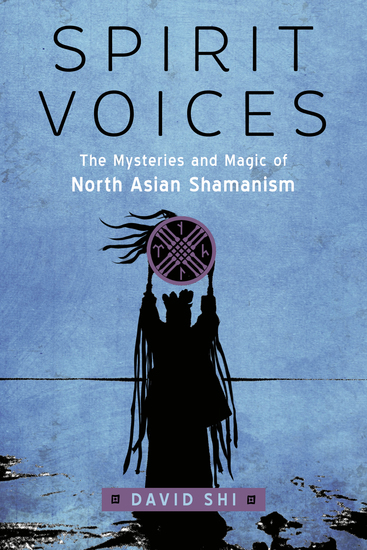
  • Spirit Voices - The Mysteries and Magic of North Asian Shamanism - cover

    Spirit Voices - The Mysteries...

    David J. Shi

    • 0
    • 0
    • 0
    Provides a clear and accessible guide to the many different North Asian shamanic traditions, past and present.What is shamanism? Where is it from? How does one become a shaman? What are the requirements to become one? Anthropologists tell us that the word shaman derives from the Tungus language and traditions, but few people understand the full scope of what that means. In his groundbreaking book, Spirit Voices, David Shi answers all these questions and more.Drawing upon his own ancestral traditions, Shi explores the history and practice of shamanism. He guides readers through what may be the unfamiliar landscapes of North Asia—the place where shamanism was born—as well as the largely hidden and unfamiliar traditions of Turkic, Mongolic, and Tungus shamanism, exploring the subtle and unique aspects of each tradition. Shi provides a clear and accessible guide that explores the many different North Asian shamanic traditions.So, what exactly is shamanism? David Shi suggests that the most accurate definition derives from shamanologist Nicholas Breeze Wood, who writes, “A shaman is someone chosen by the spirits [typically at or before birth] and who can go into a controlled and repeatable deliberate trance state, during which they A) experience ‘spirit flight,’ where they go to the spirit worlds and meet spirits, who they either fight with, negotiate with, or trick, in order to create change in this physical world, or B) are often taken over/possessed by the spirits (normally ancestral shaman spirits, or local land spirits) while in this physical world—the spirits using the shaman’s voice and body to heal, or give advice to members of the shaman’s community. Without the spirits and their blessing, a shaman cannot exist or function. Without the trance state, it is not shamanism.”Featuring history, firsthand experiential reports, mythology, and folklore, Spirit Voices explores the spirits, spirituality, tools, and practices of true shamanism, past and present. Shi also provides practical information for those readers seeking to implement shamanic practices, including those that are appropriate to noninitiates and outsiders to the culture. As the author points out, “the purpose of shamanism can be summed up in two words: coexistence and balance—coexistence with our spirits and our communities, and the balance that must be preserved between all of us and within ourselves.”
    Show book

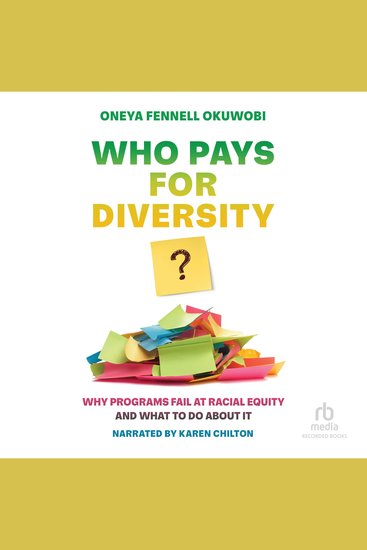
  • Who Pays for Diversity? - Why Programs Fail at Racial Equity and What to Do about It - cover

    Who Pays for Diversity? - Why...

    Oneya Fennell Okuwobi

    • 0
    • 0
    • 0
    How diversity initiatives harm employees of color by turning them into workplace commodities. 
      
    Diversity programs are under attack. Should those interested in racial justice fight to keep them, or might there be another way forward? Who Pays for Diversity? reveals the costs that employees of color pay under current programs by having their racial identities commodified to benefit white people and institutions. Oneya Fennell Okuwobi proposes fresh and thoughtful ways to reorient these initiatives, move beyond tokenism, and authentically center marginalized employees. 
      
    Drawing on accounts of employees from across the workplace spectrum, from corporations to churches to universities, Who Pays for Diversity? details how the optics of diversity programs undermine employees' competence while diminishing their well-being and workplace productivity. Okuwobi argues that diversity programs have been a costly detour on the path to racial justice, and getting back on track requires solutions that provide equity, dignity, and agency to all employees, instead of defending the status quo.  
      
    "Oneya Fennell Okuwobi brilliantly uncovers the hidden costs of diversity initiatives, challenging the superficiality of such programs and the burdens they place on people of color within so-called 'diverse' environments with a powerful, evidence-backed critique. This book is an essential read for anyone committed to creating genuine racial equity in workplaces and institutions."—Mary Murphy, Herman B. Wells Endowed Professor, Indiana University
    Show book