Join us on a literary world trip!
Add this book to bookshelf
Grey
Write a new comment Default profile 50px
Grey
Subscribe to read the full book or read the first pages for free!
All characters reduced
复数语法范畴的跨语言对比与习得研究(英文) - cover

复数语法范畴的跨语言对比与习得研究(英文)

苏二花

Publisher: 外研社/SJPUBLISH

  • 0
  • 0
  • 0

Summary

内容简介:
《复数语法范畴的跨语言对比与习得研究》在生成语法框架内分析了复数语法范畴在汉语、英语、韩语中的共性和差异,并考察了英语母语者和韩语母语者对汉语复数语法范畴的习得情况。其中,跨语言对比研究以最简方案(Chomsky 2000, 2001; Pesetsky & Torrego 2007)的特征核查机制为理论基础,分析了汉语"们"、英语复数标记-s、韩语复数标记-tul的句法和语义异同,同时也分析了汉语量词重叠的复数义及其句法推导过程。依据特征重组假说(Lardiere 2009),二语学习者需对母语复数表征所涉及的特征集合进行拆分,进而重组出二语复数表征所需的特征集合。本书通过实证研究验证了这一假说,并深入分析了复数语法范畴习得中特征重组的方式和过程。本研究的理论意义在于深度分析了复数语法范畴在量词语言和非量词语言中的表征异同,尤其是在最简方案框架内对复数标记以及与之相关的量词和指示代词的句法推导进行了统一分析,并将理论分析所得出的特征及其组合方式应用于二语习得实证研究中,使母语迁移的内容、方式和结果更加简明清晰。实证研究结果扩展了对量词语言中复数语法范畴习得的认识,深化了对特征重组的方式和过程的了解。
作者简介:
苏佳佳,语言学博士,毕业于加拿大麦吉尔大学McGill University语言学系,现为北京外国语大学中国外语与教育研究中心专职研究员。从事二语习得、汉外语言对比、语音学与音系学等方面的研究。在Second Language Research,Linguistic Approaches to Bilingualism,《外语教学与研究》等国内外学术期刊上发表论文多篇。主持省部级重点课题、参与国家级课题多项。
Available since: 01/16/2025.
Print length: 689 pages.

Other books that might interest you

  • A Rare Recording of Dr Royal R Rife - cover

    A Rare Recording of Dr Royal R Rife

    Dr. Royal R. Rife

    • 0
    • 0
    • 0
    Dr. Royal R. Rife (May 16, 1888-August 5, 1971) was a prolific American inventor and early promoter of high-magnification time-lapse cinemicrography. In the 1930s, he claimed that by using his specially designed optical microscope, he could observe microbes that were too small to view with the current technology. Rife also invented a "beam ray" device that could potentially weaken or destroy cancer cells.  
     
    Rife still has a strong following among the wellness and holistic health communities, who believe that his anticancer technologies have been suppressed and should be given a thorough review. Royal Raymond Rife's devices are now being manufactured by independent electronics companies.
    Show book
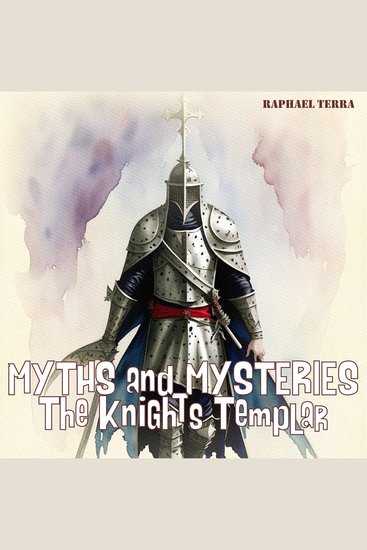
  • Myths and Mysteries: The Knights Templar - cover

    Myths and Mysteries: The Knights...

    Raphael Terra

    • 0
    • 0
    • 0
    This audiobook has been recorded using Text to speech (TTS). 
     
    The Knights Templar, an enigmatic and revered medieval order, hold a significant place in history and captivate the imagination of many. Their story is one of mystery, power, and religious devotion.  
     
    In this book, we delve into the historical background of the Knights Templar, exploring their origins, rise to prominence, activities during the Crusades, financial and political influence, downfall and persecution, as well as their lasting legacy and modern cultural references. Join us on a journey to uncover the captivating tale of the Knights Templar and their enduring impact on the world.
    Show book
  • Community as Rebellion - A Syllabus for Surviving Academia as a Woman of Color - cover

    Community as Rebellion - A...

    Lorgia García Peña

    • 0
    • 0
    • 0
    Weaving personal narrative with political analysis, Community as Rebellion offers a meditation on creating liberatory spaces for students and faculty of color within academia.  Much like other women scholars of color, Lorgia García Peña has struggled against the colonizing, racializing, classist, and unequal structures that perpetuate systemic violence within universities. Through personal experiences and analytical reflections, the author invites listeners—in particular Black, Indigenous, Latinx, and Asian women—to engage in liberatory practices of boycott, abolition, and radical community-building to combat the academic world's tokenizing and exploitative structures. 


    García Peña argues that the classroom is key to freedom-making in the university, urging teachers to consider activism and social justice as central to what she calls "teaching in freedom": a progressive form of collective learning that prioritizes the subjugated knowledge, silenced histories, and epistemologies from the Global South and Indigenous, Black, and brown communities. By teaching in and for freedom, we not only acknowledge the harm that the university has inflicted on our persons and our ways of knowing since its inception, but also create alternative ways to be, create, live, and succeed through our work.
    Show book
  • The Enneagram of the Soul - A 40-Day Spiritual Companion for the 9 Types - cover

    The Enneagram of the Soul - A...

    Nhien Vuong

    • 0
    • 0
    • 0
    A guide to your spiritual journey of transformation using the Enneagram.   “The Enneagram of the Soul invites us on a journey of profound self-discovery.” —from the foreword by Russ Hudson, bestselling coauthor of The Wisdom of the Enneagram  The Enneagram of the Soul is inspired by over two decades of inner and outer work with the Enneagram by leading expert Nhien Vuong. Nhien provides a path to wholeness for the self, enabling the reader to be steered gently yet firmly away from the trap of solely identifying with their personality type, so they can live more fully from their divine nature.   This book is divided into two parts. Part 1 shares nine Enneagram-informed principles that guide one’s journey of transformation using the Enneagram, nine contemplative practices to propel and support the transformational process, and nine prayers to lend heart to the journey. Part 2 offers forty activations, which consist of very brief questions, reminders, or practices on forty different themes customized for each of the nine Enneagram personality types. When we begin to access the wholeness of all nine Enneagram energies working in concert, we experience a greater sense of inner peace, purpose, and fulfillment.   “An important and uniquely useful contribution to the Enneagram literature in that she provides a pathway for the types, built around practices and principles.” —Beatrice Chestnut, author of The Enneagram Guide to Waking Up
    Show book
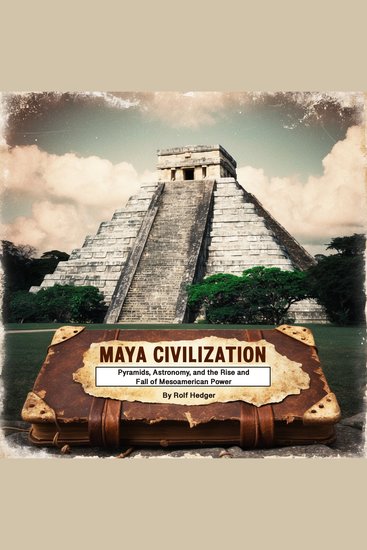
  • Maya Civilization - Pyramids Astronomy and the Rise and Fall of Mesoamerican Power - cover

    Maya Civilization - Pyramids...

    Rolf Hedger

    • 0
    • 0
    • 0
    The Maya civilization emerged from the fertile lands of Mesoamerica, where early agricultural societies gradually developed into one of the most advanced cultures of the ancient world. Long before the rise of monumental cities and towering pyramids, the ancestors of the Maya lived in small villages, relying on farming, hunting, and fishing for sustenance. Corn, or maize, became the cornerstone of their diet and played a central role in their mythology, economy, and daily life. Over time, these early settlements expanded, evolving into complex societies with trade networks, religious practices, and political hierarchies. 
    The roots of Maya civilization can be traced back to the Preclassic period, around 2000 BCE. During this time, small communities scattered across present-day southern Mexico, Guatemala, Belize, Honduras, and El Salvador began cultivating staple crops such as maize, beans, squash, and chili peppers. As agricultural techniques improved, populations grew, leading to the formation of larger settlements. Villages transitioned into regional centers, where early forms of leadership and governance emerged. These developments set the stage for the sophisticated city-states that would later define the Maya world. 
    The Maya were not isolated in their cultural development. They shared Mesoamerica with other influential civilizations, most notably the Olmecs, who thrived along the Gulf Coast of Mexico. The Olmecs, often considered the “mother culture” of Mesoamerica, left a lasting impact on the Maya through their artistic styles, religious beliefs, and ceremonial architecture. The colossal stone heads of the Olmecs, their early writing systems, and their concept of a sacred ballgame were all absorbed and adapted by the Maya. This exchange of ideas helped shape the foundations of Maya civilization, leading to the rise of the first great Maya cities.
    Show book

  • Chasing Bandits in the Badlands - cover

    Chasing Bandits in the Badlands

    Bob Breen

    • 0
    • 0
    • 0
    In January 1993, the Australian government sent just under one thousand young men and women to serve under American command in a violent, impoverished, starving society. Most males over the age of twelve either carried or had access to a gun, and most Somali men had been fighting a vicious civil war for years. 
    Australian soldiers and their teams had to gain control of the streets of Baidoa and surrounding towns. This contest was not ‘find, fight and kill’ warfare. There was no decisive victory or defeat. The aim was to detect ‘the bad boys’ and deter and de-escalate their violence rather than escalate hostilities to success through ‘body count’. This mode of operation was not community policing by soldiers either. It involved adjusting attitudes forcefully and assuring uncomfortable consequences for bad behaviour and ultimately lethal responses to armed challenges. 
     
    The world looked over their shoulders. Corporals and diggers had to make split-second decisions to open or hold fire. Holding fire when provoked by punks constituted disciplined professional performance. Opening fire before understanding the situation, especially against unarmed provocateurs, constituted unprofessional conduct and possible condemnation, even criminal charges. These young Australians carried the international reputation of Australia and its army on their shoulders. Their actions would either enhance that reputation or create controversy, negative publicity and, potentially, international embarrassment and condemnation. 
     
    After adjusting their own attitudes to balance aggression and compassion, fight leaders and their diggers forcefully adjusted Somali attitudes, secured a stalemate, and then took control for the time they were in Somalia Australian soldiers individually and collectively helped a traumatised society needing a ‘fair go’ and gave ordinary Somali men, women and children trying to survive a little bit of hope.
    Show book