¡Acompáñanos a viajar por el mundo de los libros!
Añadir este libro a la estantería
Grey
Escribe un nuevo comentario Default profile 50px
Grey
Suscríbete para leer el libro completo o lee las primeras páginas gratis.
All characters reduced
Phobia Understanding Basics - cover

Phobia Understanding Basics

Storm Mindweaver

Traductor A AI

Editorial: Publifye

  • 0
  • 0
  • 0

Sinopsis

Phobia Understanding Basics offers an accessible exploration into the world of phobias, differentiating them from normal fears and categorizing various types like specific, social, and agoraphobia. It explains how phobias can stem from genetic predispositions, learned behaviors, or even traumatic experiences. The book's unique value lies in empowering readers to understand the roots of their anxiety while providing practical knowledge of evidence-based treatment options, such as cognitive behavioral therapy (CBT) and exposure therapy, to regain control of their lives.

 
The book progresses systematically, starting with the historical context of phobia research and moving into the biological, psychological, and environmental factors that contribute to the development of phobias. It then presents an overview of different treatment approaches, illustrating their application with case studies. By drawing upon clinical trials and insights from experts, it bridges psychology with neuroscience and sociology.

 
Ultimately, the book emphasizes that while phobias can be debilitating mood disorders, they are treatable conditions. It concludes with relapse prevention strategies, offering a comprehensive starting point for individuals seeking to understand and overcome their phobias.
Disponible desde: 15/03/2025.
Longitud de impresión: 104 páginas.


Otros libros que te pueden interesar

  • Yoruba Mythology: Captivating Myths and Legends of the Yoruba and Other West African Peoples - cover

    Yoruba Mythology: Captivating...

    Matt Clayton

    • 0
    • 0
    • 0
    Do you like stories about kings and queens, spirits and monsters, or tricksters and villains? 
    If so, this book is for you. Containing delightful stories from the Yoruba and other West African peoples, this book presents tales of courage and cunning, virtue and vice, and fortunes found and lost. Some of these stories draw upon actual historical persons and events, while others are purely fictional, but each story has something to delight any reader. 
    Here are just a few of the stories you will find inside this book:How Queen Moremi saved her people from their enemiesWhy King Oranyan’s staff still stands in its place todayHow Gassire gave up dreams of a kingdom to become a singer of talesHow a king wanted to know what it was like to be poor and found out the hard wayHow clever commoners outwitted the kings who wanted to kill themHow the Ashanti came to farm yamsHow a baby who was not yet ready to be born defeated the monster SasabonsamHow the wise and clever Kumba saved her village from a man-eating lionHow Kigbo the farmer learned the hard way that it is not wise to play around with spiritsAnd much, much more!                
    Scroll up and click the “add to cart” button to enjoy each of these captivating West African stories!
    Ver libro
  • The Art of War - cover

    The Art of War

    Niccolò Machiavelli

    • 0
    • 0
    • 0
    ""The Art of War" is a treatise by the Italian Renaissance political philosopher and historian Niccolò Machiavelli. Written between 1519 and 1520, it was published the following year and remains one of his most important works. Unlike the more widely read "The Prince" and "The Discourses", this book focuses specifically on military matters.    Here are the key features of "The Art of War":    Format: The book takes the form of a Socratic dialogue. Lord Fabrizio Colonna, perhaps Machiavelli's persona, declares the purpose at the outset: "To honor and reward virtù, not to have contempt for poverty, to esteem the modes and orders of military discipline, to constrain citizens to love one another, to live without factions, to esteem less the private than the public good." The military is likened to the roof of a palazzo protecting its contents.  Setting: The dialogues occur in the Orti Oricellari, classical-style gardens built by Bernardo Rucellai in the 1490s for Florentine aristocrats and humanists. The discussions take place between Cosimo Rucellai and "Lord Fabrizio Colonna," with other patrizi and captains of the recent Florentine republic.  Fabrizio's Wisdom: Fabrizio is enamored with the Roman Legions of the early to mid Roman Republic. He advocates adapting their strategies to the contemporary situation of Renaissance Florence. His knowledge dominates the discussions, often turning them into monologues where he details how an army should be raised, trained, organized, deployed, and employed.  Practical Insights: Machiavelli's theories are not merely theoretical; they are based on his observations during his fourteen years as secretary to the Chancery of Florence. He reported on the size, composition, weaponry, morale, and logistical capabilities of the most effective militaries of his day.  "The Art of War" serves as a guide to military leaders, including Frederick the Great and Napoleon, and remains an authoritative treatise on the fundamentals of warfare. Its clear and concise style stands in contrast to that of "The Prince"."
    Ver libro
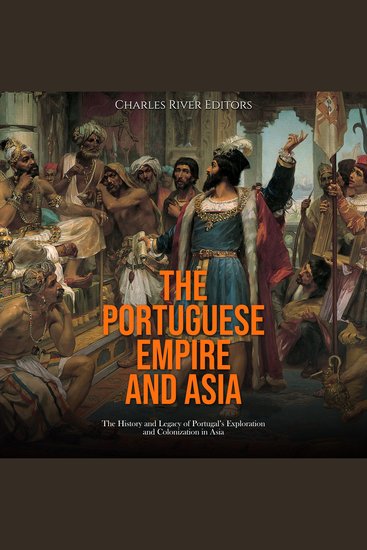
  • Portuguese Empire and Asia The: The History and Legacy of Portugal’s Exploration and Colonization in Asia - cover

    Portuguese Empire and Asia The:...

    Editors Charles River

    • 0
    • 0
    • 0
    By the mid-15th century, the Byzantine Empire had collapsed and the various Crusades that had taken place in the region had largely disrupted the overland routes of the Silk Road and trade. Compounding the difficulties of trade was the rise of the Ottoman Empire in place of the Byzantines and the outbreak of the Black Death in Europe.  
    It was roughly around this time that a period of European exploration began, and major factors that contributed to this period of exploration were introduced by the Chinese, albeit indirectly. The magnetic compass had already been developed and used by the Chinese sailors since the 12th century, although it had first been created in the 3rd century BCE as a divination device. The Portuguese started exploring the west coast of Africa and the Atlantic under orders from Prince Henry the Navigator. At this point, Europeans had not yet been capable of navigating completely around Africa since the ships being built were not yet fully capable of being able to sail very far from the coast and navigation in open waters was difficult, but the Portuguese continued pushing down the western African coast looking for ways to bypass the Ottomans and Muslims of Africa who had been making overland trade routes difficult.  
    	In 1488, Bartholomew Diaz rounded the southern tip of Africa, named the Cape of Good Hope by King John of Portugal, and entered the Indian Ocean from the Atlantic. 	The Portuguese had found access to the trade regions that they had been searching for, but sailing from Portugal to India and beyond would require too many resources to travel with at once. To remedy this problem, Portugal began establishing a number of forts and trading posts along the route. The Portuguese were able to establish a fort on the west coast of India, Fort Manuel, in 1500, and in 1505 a fort was erected off the coast of Tanzania. 
    Ver libro
  • From Warlords to Statelords - Armed Groups and Power Trajectories in Libya and Yemen - cover

    From Warlords to Statelords -...

    Federica Saini Fasanotti,...

    • 0
    • 0
    • 0
    In Libya and Yemen armed groups play a central role. Pervading weak and contested institutions, they have gradually brought their webs of survival, profit and governance under the state umbrella: warlords have become the new lords of the state. Armed groups control most of the energy revenues, critical infrastructure, smuggling and illicit trafficking. Their leaders are multifaceted: they are simultaneously military commanders, tribal chiefs, politicians and businessmen.
    Combining comparative analysis and case studies, this Report sheds light on the "economic face" of the armed groups and their power trajectories. How do armed groups build networks of profit and loyalty in the territories they hold? How does clientelism mark a continuity trend with former authoritarian regimes?
    Ver libro
  • Parents of the World Unite! - How to Save Our Schools from the Left's Radical Agenda - cover

    Parents of the World Unite! -...

    Ian Prior

    • 0
    • 0
    • 0
    This essential playbook reveals the winning strategies for successfully fighting a radical woke agenda in your kids’ schools. Ian Prior is one of the most articulate and successful parent-activists in the United States. Armed with 12 inspiring battle-tested rules and revealing stories about sparring with self-righteous Woke neighbors (the “Chardonnay Antifa”), Ian shares secrets about what fellow parents can do in their own school districts to stop the Left's dark vision from taking root.   Get ready to laugh. This is not a boring education book. With real world lessons and funny anecdotes readers can connect with, Ian explains how families can win the battle to stop divisive and dangerous concepts rooted in critical race theory and other dangerous left-wing ideologies from spreading to their schools. He convincingly makes the case that the Left envisions a public education system in America where children are no longer the responsibility of their parents but rather mere wards of the state.   You’ll be shocked and amused by the outrageous stories in Ian’s suburban county that unexpectedly became ground zero for the parents’ rights movement. This sign-of-the times book helpfully explains the confusing and infuriating cultural moment we find ourselves in.Parents of the World, Unite! is an indispensable book for American families who believe they should be able to raise their children without government interference in their moral, religious, and ethical choices -- and are ready to join a revolution of parents.
    Ver libro
  • What's Wrong with Stereotyping? - cover

    What's Wrong with Stereotyping?

    Erin Beeghly

    • 0
    • 0
    • 0
    What's Wrong with Stereotyping? offers a refreshing and accessibly written philosophical take on the ethics of stereotyping. Stereotyping is woven into every aspect of human experience: conversation, psychology, algorithmic systems, and culture. It relates to generalization and induction, core aspects of rationality. But when and why it is morally wrong to stereotype? This book tackles this deep and enduring puzzle. 


    Core chapters evaluate important ethical wrongs: the failure to treat persons as individuals, disrespect, harm, prejudice, threats to freedoms, and the failure to treat persons as equals. One finds that there is no "essence" of wrongful stereotyping, a single property or set of properties that all problematic cases share in common. Nor are the wrongs of stereotyping reducible to an elegant number, two or three. Instead, wrongful stereotyping is characterized by clusters of wrong-making properties, including all the ones noted here. Listeners will come away with a radically pluralistic, open-ended theory of wrongful stereotyping that they can use to identify wrongful stereotyping in their own lives and our contemporary world. Filled with thought-provoking examples and models for social change, this book emphasizes the messiness of moral reality and the importance of looking to the past in order to understand the ethical perils of stereotyping.
    Ver libro