Rejoignez-nous pour un voyage dans le monde des livres!
Ajouter ce livre à l'électronique
Grey
Ecrivez un nouveau commentaire Default profile 50px
Grey
Abonnez-vous pour lire le livre complet ou lisez les premières pages gratuitement!
All characters reduced
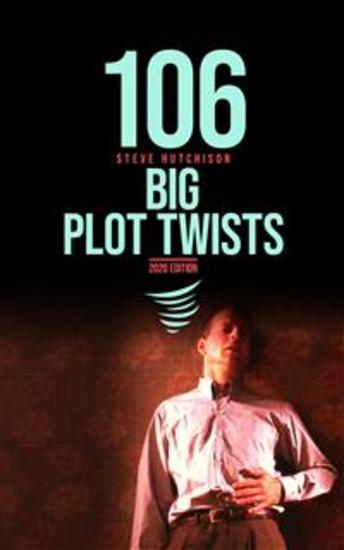
106 Big Plot Twists - cover

106 Big Plot Twists

Steve Hutchison

Maison d'édition: Tales of Terror

  • 0
  • 0
  • 0

Synopsis

A plot twist is a literary technique that introduces a radical change in the direction or expected outcome of the plot in a work of fiction. In this edition of Trends of Terror, film critic Steve Hutchison reviews 106 horror and horror-adjacent movies with big plot twists and ranks them. How many have you seen?
Disponible depuis: 03/04/2023.

D'autres livres qui pourraient vous intéresser

  • Prince - Imp of the Perverse - cover

    Prince - Imp of the Perverse

    Barney Hoskyns

    • 0
    • 0
    • 0
    Originally published in 1988, and charting the first decade of Prince’s meteoric rise, Prince: Imp of the Perverse, was the earliest book to explore Prince’s prodigious and eccentric talent.  
     
    Prince Rogers Nelson stood alone as a musical maestro amongst his peers, and proved you could do it all yourself: write, play, perform, produce and take control of your career.  He took American pop by the scruff of the neck and shaped it to his own mercurial ends.  
     
    This contemporary account examines the genius, and reveals truths, behind the many masks.
    Voir livre
  • Creakwood Tales: The Boy Who Drew Shadows - A Chilling Bedtime Story They’ll Never Forget - cover

    Creakwood Tales: The Boy Who...

    M.K. Langley

    • 0
    • 0
    • 0
    Creakwood Tales: The Boy Who Drew Shadows invites you into a hauntingly magical world where the line between light and darkness blurs. This chilling bedtime story follows a mysterious boy with an uncanny gift—the power to draw shadows that come to life. As eerie secrets unfold beneath the flickering glow of moonlight, readers will be captivated by a spine-tingling tale that lingers long after the final page. Perfect for those who crave a thrill before drifting to sleep, this unforgettable story will keep hearts racing and imaginations soaring.
    Voir livre
  • Ancestral Puebloans - The Cliff Dwellers of Mesa Verde and the Architects of the Southwest - cover

    Ancestral Puebloans - The Cliff...

    Rolf Hedger

    • 0
    • 0
    • 0
    The Ancestral Puebloans, once known as the Anasazi, were among the earliest inhabitants of the American Southwest, establishing complex societies that thrived in the arid landscapes of present-day Colorado, New Mexico, Arizona, and Utah. Their origins trace back thousands of years to nomadic hunter-gatherers who gradually transitioned into settled agricultural communities. Archaeological evidence suggests that the ancestors of the Pueblo people descended from early groups who migrated into the region over 10,000 years ago, following game and adapting to the changing environment. 
    As these early populations settled, they developed strategies to cope with the harsh desert conditions. By around 2000 BCE, they had begun cultivating maize, a crop introduced from Mesoamerica, which allowed for more stable food sources and led to the formation of permanent villages. The adoption of agriculture marked a significant shift in their way of life, as they built storage pits for surplus grain and started domesticating turkeys for additional sustenance. Over time, these settlements expanded, and small familial clusters evolved into larger communities. 
    The Basketmaker period, beginning around 1200 BCE, represents a crucial stage in Ancestral Puebloan development. During this era, people lived in semi-subterranean pit houses, circular structures dug into the earth and covered with wooden frames and mud plaster. These early homes provided insulation against the region’s extreme temperatures. The Basketmakers were also known for their exceptional weaving and basketry skills, crafting intricate containers and sandals from yucca fibers and other natural materials. Pottery, which became a defining feature of Puebloan culture, gradually emerged during the later stages of this period, allowing for improved food storage and cooking techniques.
    Voir livre
  • Greatest Comedy Shows Volume 9 - Ten Classic Shows from the Golden Era of Radio - cover

    Greatest Comedy Shows Volume 9 -...

    Various Various

    • 0
    • 0
    • 0
    OASIS AUDIO CLASSIC RADIO SHOWCASE SERIES   Oasis Audio has gone into the vaults and dusted off the very earliest form of audio book, old time radio shows, for our listeners. Introduced episode by episode by Jim Engel, old time radio authority and board member of the Museum of Broadcast Communications in Chicago, this series of classic radio shows is sure to have something for everyone. Celebrity casts and top-notch writers made the 1920s through the early 1950s, the golden era of radio. The series features seven exciting themes with 100 episodes in each. That is 700 classic radio programs in all.   Greatest Comedy Shows   Roll on the floor with laughter with comedy legends such as Abbott & Costello, George Burns & Gracie Allen, Ozzie and Harriet, Jack Benny, Bob & Ray and so many more. 100 great Comedy classics in ten volumes. Volume 9 My Favorite Husband 11-20-48 George Attends a Teenage Dance with Lucille Ball & Richard DenningsMy Favorite Husband 12-09-50 Trying to Cash the Prize Check with Lucille Ball & Richard DenningMy Favorite Husband 1950-12-30 Liz Has the Flimjabs with Lucille Ball & Richard DenningMy Friend Irma 2-9-48 Billy Boy the Boxer with Marie WilsonMy Friend Irma 3-29-48 The Big Secret with Marie WilsonOur Miss Brooks 3-19-50 Auction Mix-Up with Eve ArdenOur Miss Brooks 3-26-50 No Uniforms for Opening Day with Eve ArdenOur Miss Brooks 4-2-50 April Fools TV Set with Eve ArdenOur Miss Brooks 4-9-50 Tint Tomorrow Dye with Eve ArdenOur Miss Brooks 5-7-50 Cold Barbeque with Eve Arden
    Voir livre
  • Meditation - Sounds of Thunderstorms (432 Hz Edition) - Schubert Piano Sonata No 18 in G Major D894 - cover

    Meditation - Sounds of...

    Anthony Morse

    • 0
    • 0
    • 0
    Meditation: Sounds of Thunderstorms (432 Hz Edition) - Schubert Piano Sonata No. 18 in G Major, D.894 
     
    Immerse yourself in a tranquil fusion of classical mastery and nature’s serenity. This digital audio experience blends Schubert’s timeless piano composition with the rhythmic ambiance of distant thunderstorms—all tuned to 432 Hz, a frequency associated with deep relaxation and inner balance.


    Key Benefits:
     
    ✅ 432 Hz Frequency – Thought to enhance calmness, mental clarity, and stress relief 
     
    ✅ Nature & Classical Harmony – Thunderstorms provide a grounding atmosphere, complementing Schubert’s expressive melodies 
     
    ✅ Perfect for Meditation & Focus – Ideal for yoga, mindfulness, sleep, or creative inspiration


    Piano Sonata no. 18 in G major, D. 894 - I. Molto moderato e cantabile


    Piano Sonata no. 18 in G major, D. 894 - II. Andante


    Piano Sonata no. 18 in G major, D. 894 - III. Menuetto: Allegro moderato


    Piano Sonata no. 18 in G major, D. 894 - IV. Allegretto
    Voir livre
  • What Your Favorite Color Says About You - The Psychology of Color Preferences - cover

    What Your Favorite Color Says...

    John Harpoon

    • 0
    • 0
    • 0
    Color is a fundamental part of human experience, shaping emotions, perceptions, and even behavior. From ancient civilizations to modern psychology, color has been studied for its impact on the human mind. Some colors evoke feelings of warmth and excitement, while others create a sense of calm and relaxation. But beyond their immediate effects, colors can also serve as a reflection of personality and identity. The idea that a person’s favorite color reveals something about their character has intrigued psychologists, researchers, and individuals alike. This book explores the fascinating connection between color preferences and human psychology, offering insights into how and why we gravitate toward certain shades.  
    How a person develops a preference for a particular color is influenced by multiple factors, including early childhood experiences, cultural associations, and even genetic predispositions. Some psychologists suggest that color preferences are rooted in personal memories—positive experiences with a specific color may lead to a lasting affinity for it. Additionally, cultural and societal norms play a significant role in shaping perceptions of color. For example, while white represents purity and new beginnings in Western cultures, it is often associated with mourning in parts of Asia. These cultural variations demonstrate that color meanings are not universal, but rather deeply ingrained in social contexts.  
    Despite these external influences, color preferences are also highly personal and can evolve over time. A child who loves bright and playful colors like yellow or orange may later develop an appreciation for more subdued tones such as blue or gray. Life experiences, emotional growth, and shifting priorities contribute to these changes.
    Voir livre