Join us on a literary world trip!
Add this book to bookshelf
Grey
Write a new comment Default profile 50px
Grey
Subscribe to read the full book or read the first pages for free!
All characters reduced
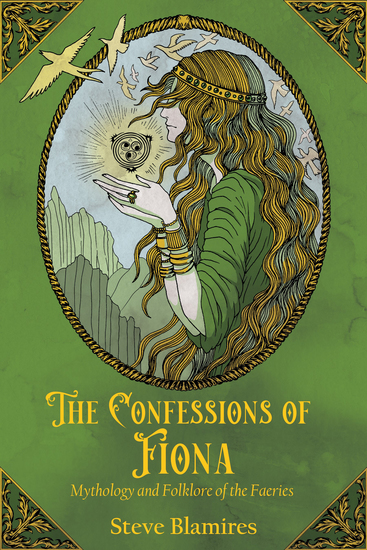
The Confessions of Fiona - Mythology and Folklore of the Faeries - cover

The Confessions of Fiona - Mythology and Folklore of the Faeries

Steve Blamires

Publisher: Crossed Crow Books

  • 0
  • 0
  • 0

Summary

The Confessions of Fiona by Steve Blamires details the beliefs, stories, and tenets of the Sidhe as revealed by one of the Sidhe, Fiona Macleod. For twelve years, this faery woman laid out the entire mythology, pantheon, and rituals of the faeries themselves. This volume reveals, expands, and explains what we can learn from her.  The Secrets of the Sidhe Revealed!  In 1893, the Scottish writer and mystic William Sharp (1855–1905) started writing under the name Fiona McLeod. The name Fiona did not exist before then, at least not in our world. For the following twelve years, Fiona wrote profusely of her own tradition; that is, the mythology and deities that the faeries recognize. None of these myths, legends, gods, or goddesses were known to humans prior to Fiona’s revelations.   Steve Blamires presents those concepts in his new book, The Confessions of Fiona. He has studied the esoteric faery tradition for thirty years. He presents a unique ritual system; previously unknown myths, legends, and gods and goddesses, offering insight to the modern researcher of this fascinating nonhuman magical body of work. Woven into the legends that the faeries share is a whole ritual magical tradition that humans can emulate with a basic knowledge of the Western magical tradition, the four festivals, the four magical tools, and what has come to be known as pathworking. But they are all significantly different from our human perspective.   Faeries are large, shockingly powerful, and, at times, cruel and dangerous. Steve shows how and when these mighty beings of ancient times were literally shrunken to become the Tinkerbells of popular imagery. Because of this important change of perspective, Steve includes in this book an in-depth look at the faery god Dalua—a truly dark, dangerous god but a necessary one.   To help readers access more of Fiona McLeod’s writings and teachings, Steve has included an appendix detailing all her essential works and scores of relevant direct quotations throughout the book.
Available since: 01/14/2025.
Print length: 252 pages.
Other books that might interest you

  • HOW TO BOOST YOUR CREATIVITY - Gain Confidence Independence and Self-Acceptance; Work on Body Language Public Speaking and Communication Skills (2022 Guide for Beginners) - cover

    HOW TO BOOST YOUR CREATIVITY -...

    Elmer Hall

    • 0
    • 0
    • 0
    Do you know that more than 70% of people do not consider themselves to be creative? 
    However, one of our most important abilities as humans is creativity. We are born with it and use it almost from the moment we are born and begin exploring the world. 
    Think of Apple, Facebook, Microsoft, Tesla, and other modern-day fortunes built on creativity. They were all created as a result of attempting to think of new ways to solve or approach everyday problems. 
    Think again if you believe you don't require creativity. Think about what you could do if you just let your brain explode and came up with its best ideas. 
    Some of the concepts you will learn by reading this book include: 
    ·      How to Incorporate Creativity into Your Business 
    ·      How to assist your mind in making the necessary connections to begin the creative process 
    ·      How creativity has the potential to transform your life 
    ·      Working with and leading a creative team 
    ·      How to use logic and reasoning to solve creative problems 
    Get the book, and don't be afraid to discover your true potential.
    Show book
  • Captive Gods - Religion and the Rise of Social Science - cover

    Captive Gods - Religion and the...

    Kwame Anthony Appiah

    • 0
    • 0
    • 0
    Philosopher Kwame Anthony Appiah explores how early social scientists developed our modern understandings of society through their theories of religion The foundations of modern social science were built on the study of religion, the acclaimed thinker Kwame Anthony Appiah argues. Delving into the intellectual currents of the nineteenth and early twentieth centuries, he investigates how formative thinkers—notably Edward Burnett Tylor, Émile Durkheim, Georg Simmel, and Max Weber—grappled with the concepts of society and religion as interdependent categories. Appiah shows how their efforts to define religion, or evade the task, mark the power and limitations of social thought in ways that persist among theorists today. Religion was not an object of study but a framework through which early social scientists established sociology as a discipline. Appiah also examines recent work in both interpretive sociology and evolutionary and cognitive psychology about the mechanisms through which communities form beliefs and values—while underscoring the enduring significance of these earlier debates for contemporary social thought. Throughout, he intertwines storytelling, historical analysis, and philosophical reflection to show how our ideas about society and culture have been, and continue to be, forged in dialogue with religious questions.
    Show book
  • The Offensive Church - Breaking the Cycle of Ethnic Disunity - cover

    The Offensive Church - Breaking...

    Bryan C. Loritts

    • 0
    • 0
    • 0
    Crises around race have put the church in a defensive posture, always reacting to racial conflicts in society. But Jesus wants more. He wants Christians to play offense by discipling people into a new humanity, where we push beyond mere diversity and into a biblical vision for ethnic unity. 


    Bryan Loritts calls Christians to proactively and intentionally live out the embodied reality of a people at one with one another. We play offense by practicing a robust gospel, preparing reliable leadership, and providing relational environments so that the church becomes the aroma of Christ to our culture and gains ground against the demonic foothold of racism in all its forms.
    Show book
  • Russian Nuclear Orthodoxy - Religion Politics and Strategy - cover

    Russian Nuclear Orthodoxy -...

    Dmitry Adamsky

    • 0
    • 0
    • 0
    A nuclear priesthood has arisen in Russia. From portable churches to the consecration of weapons systems, the Russian Orthodox Church has been integrated into every facet of the armed forces to become a vital part of Russian national security, politics, and identity. This extraordinary intertwining of church and military is nowhere more visible than in the nuclear weapons community, where the priesthood has penetrated all levels of command and the Church has positioned itself as a guardian of the state's nuclear potential. Russian Nuclear Orthodoxy considers how, since the Soviet collapse in 1991, the Church has worked its way into the nuclear forces, the most significant wing of one of the world's most powerful military organizations. 


    Dmitry Adamsky describes how the Orthodox faith has merged with Russian national identity as the Church continues to expand its influence on foreign and domestic politics. The Church both legitimizes and influences Moscow's assertive national security strategy in the twenty-first century. This book sheds light on the role of faith in modern militaries and highlights the implications of this phenomenon for international security. Ultimately, Russian Nuclear Orthodoxy interrogates the implications of the confluence of religion and security for other members of the nuclear club, beyond Russia.
    Show book
  • Plotting the Impossible: A Modern Guide to Story Architecture - cover

    Plotting the Impossible: A...

    Billy Grady

    • 0
    • 0
    • 0
    Every unforgettable story shares a hidden framework—a structure that pulls readers in, keeps them hooked, and leaves them breathless at the end. Plotting the Impossible is your key to mastering that architecture, whether you’re writing a high-stakes thriller, a sweeping romance, or a genre-defying masterpiece. 
    In this insightful and practical guide, bestselling author and coach Billy Grady reveals how to: 
    Build bulletproof plots that captivate from the first page to the last 
    Design twists and turns that surprise without breaking believability 
    Balance pacing and tension for maximum emotional impact 
    Adapt classic story structures to fit modern audiences and unique voices 
    Packed with real-world examples, actionable exercises, and step-by-step blueprints, Plotting the Impossible gives you the tools to create stories that feel both inevitable and unforgettable. 
    If you’ve ever wondered how to turn a wild idea into a perfectly constructed narrative, this book will show you how to make the impossible not just possible—but unforgettable.
    Show book
  • The Birth of Anarchism - 1849-1887 - cover

    The Birth of Anarchism - 1849-1887

    Pierre-Joseph Proudhon, Mikhail...

    • 0
    • 0
    • 0
    Mankind can rule itself without the force of top-down authority, and freedom is more than just choosing how to meet the needs and demands of capital. Inequality is structural and intentional, not inevitable and necessary.  
    It does not have to be this way. In solidarity, we are better. 
    Think for yourself, and question authority. 
    This is the essence of anarchism, which has a bad name and reputation because it attacks the necessity of centralised power and authority. The media archetype is Tyler Durden, filled with violence and nihilism – yet anarchism is the most positive of political philosophies, one that Jesus and Buddha both preached, stating that empathy and a rejection of authority were key to human flourishing. Neither would disagree with most early anarchists. 
    Proudhon, whose “property is robbery” is perhaps the most well-known anarchist slogan, lays out the conceptual foundation for key anarchist ideas. He argues that usury (charging interest) is a fundamental harm to society, that there is enough for everyone if we simply take other values to be higher than capital gain, that mutualism is inevitable, and that all governments and ideologies make the same mistake, in trying to change society from the top. Positive change must arise from the great masses of humanity, not from their rulers. 
    Bakunin's speeches are about solidarity arising from the masses, and the ground for a global reconfiguration. 
    Louis Lingg was convicted to death with six others, for being one of the ‘Chicago Anarchists’. They were executed to make a political point, based on corrupted evidence and perjury. His statement is one of contempt for the powers that be, and his belief that mankind should be free and should fight until it is. 
    We end with Kropotkin, who firmly believed in decentralized society. He believed that the greatest strength of mankind lies in the masses, not their rulers, and exhorts us to “Act for Yourselves”.
    Show book