Join us on a literary world trip!
Add this book to bookshelf
Grey
Write a new comment Default profile 50px
Grey
Subscribe to read the full book or read the first pages for free!
All characters reduced
Weapons and Fighting Tactics of the Waffen-SS - cover

Weapons and Fighting Tactics of the Waffen-SS

Stephen Hart, Russell Hart

Publisher: Amber Books Ltd

  • 0
  • 0
  • 0

Summary

In-depth coverage of small arms, mortars and support weapons, anti-tank weapons, light and heavy tanks, self-propelled guns, and armored personnel carriers employed by the death’s head soldiers from 1939-45. Each featured weapon is accompanied by a full spec table providing calibre, weight, length, range, feed and muzzle velocity (all weights and measures in imperial and metric). The authors look at how the weapons were used in action, and include accounts of SS aces Barmann, Frauscher, Gresiak and Wittmann in action. From the Mp40 submachine gun to the massive King Tiger tank, Weapons and Fighting Tactics of the Waffen-SS is a complete record of the deployment and use of the hardware in the service of the armed SS.
Available since: 05/24/2023.
Print length: 192 pages.

Other books that might interest you

  • Roman Gods and Legends - Exploring the Divine Myths of Ancient Rome - cover

    Roman Gods and Legends -...

    Odessa Nightshade

    • 0
    • 0
    • 0
    Mythology was at the heart of ancient Roman culture, shaping the way people understood the world, their history, and even their daily lives. Roman myths were more than just entertaining stories; they provided a framework for religious practices, reinforced social hierarchies, and legitimized political authority. From grand temples dedicated to Jupiter to household shrines honoring protective spirits, mythology was deeply embedded in Roman society. These myths explained the origins of Rome, the will of the gods, and the moral expectations placed upon its people.  
      
    One of the most fascinating aspects of Roman mythology is its connection to Greek mythology. The Romans borrowed heavily from the Greeks, adapting their gods, myths, and religious traditions to fit their own culture. Jupiter became the Roman equivalent of Zeus, Venus took the place of Aphrodite, and Neptune mirrored Poseidon. Yet, Roman mythology was not simply a copy of Greek traditions—it evolved to reflect Rome’s unique values, including its emphasis on duty, discipline, and the power of the state. Roman gods were deeply tied to civic life, with religious festivals and rituals reinforcing the unity and strength of the empire.  
      
    As Rome expanded, so did its pantheon. Over time, new deities were integrated from conquered cultures, blending native Italian, Etruscan, and foreign influences into Roman religious beliefs. This constant evolution reflected the empire’s adaptability and its ability to absorb and reshape traditions to maintain social cohesion. The role of mythology also shifted, particularly as emperors began to position themselves as semi-divine figures, further intertwining politics with religion. These myths were not just ancient relics but living traditions that reinforced Rome’s identity and dominance. 
    Show book
  • The Viking Age - Raiders and Traders - cover

    The Viking Age - Raiders and...

    Harris Ropes

    • 0
    • 0
    • 0
    The story of the Vikings begins in the rugged, coastal lands of Scandinavia, where modern-day Norway, Sweden, and Denmark now stand. These northern regions, characterized by their cold climate, deep fjords, and dense forests, shaped a resilient and resourceful people. Isolated by geography and challenged by limited arable land, the early Norse communities developed a strong connection to nature, the sea, and their close-knit societies. Life in Scandinavia during the early Middle Ages was not easy, but it fostered a culture of survival, adaptability, and innovation. 
    At the heart of Viking society was a deep belief in their mythology and gods. Norse mythology offered a complex system of deities, heroes, and mythical creatures that guided the moral and spiritual lives of the people. Central figures like Odin, the wise All-Father; Thor, the thunder god and protector; and Freyja, the goddess of love and fertility, were not just worshipped but also deeply integrated into the everyday lives of the Norse. These myths were passed down through oral storytelling, poetic sagas, and ritual practices, helping to create a shared identity among the diverse Scandinavian tribes. 
    Viking society was organized into a hierarchical structure that valued strength, honor, and loyalty. At the top were the jarls, or chieftains, who held power over clans and led warriors into battle or on raids. Below them were the karls, the free farmers, craftsmen, and traders who formed the backbone of Viking communities. At the bottom were the thralls, or slaves, who were usually captured during raids or born into servitude. Despite this stratification, Viking culture emphasized personal achievement and reputation, allowing individuals to rise in status through bravery, skill, and loyalty.
    Show book

  • Self-Publishing for the First-Time Author - Edition 2 - cover

    Self-Publishing for the...

    M.K. Williams

    • 0
    • 0
    • 0
    You’ve written your first book and you are ready to self-publish it, congratulations! 
    Now, what steps do you need to take to self-publish? What are the best strategies? How do you ensure retailers and libraries will carry your book? These are a few of the questions that many aspiring authors ask as they set out on their publishing journey. 
    Aggregating 8 plus years of experience in the self-publishing space, M.K. Williams has compiled the answers that you need into an easily digestible format to walk you through the publishing process. 
    There are lots of online gurus who will throw acronyms, jargon, and advanced strategies at you right out the gate. Williams breaks down the practical steps that you need to take as you self-publish your first book. This self-publishing guidebook covers everything from editing, formatting, assigning ISBNs, and selecting your publishing platforms. 
    Get this for yourself or as a gift for the aspiring writer in your life.
    Show book
  • Trauma Survivor's Self-Help Guidebook - Empowering Strategies For Healing And Converting Pain Into Strength And Resilience - cover

    Trauma Survivor's Self-Help...

    Brian Gibson

    • 0
    • 0
    • 0
    Trauma is an inescapable part of the human experience, and its effects can profoundly shape an individual's life. No one is immune to the possibility of encountering traumatic events or the subsequent symptoms that may arise. "The Trauma Survivor's Self-Help Guidebook" is meticulously crafted to support trauma survivors navigating their unique healing journeys. It offers various tools and techniques to foster resilience and recovery. 
    This guidebook is an essential resource for anyone seeking to understand and mitigate the impact of trauma on their lives.  
    "The Trauma Survivor's Self-Help Guidebook" encourages trauma survivors to practice these skills in a state of emotional regulation. By doing so, these techniques become more accessible during times of heightened stress or when experiencing trauma-based symptoms. This preparatory work is crucial, as it ensures that survivors can draw upon these skills when they are most needed, thus enhancing their ability to cope with triggers and emotional upheavals. 
    Through the practices outlined in this guidebook, trauma survivors are given the means to reconnect with their bodies, minds, and the present moment, fostering a deep sense of resilience and well-being as they progress toward recovery.
    Show book
  • Navy Gazette - A voyage into the turbulent events of the British Navy at Sea A full-cast audio - cover

    Navy Gazette - A voyage into the...

    Mr Punch

    • 0
    • 0
    • 0
    Experience first-hand the reality of life in the British Navy as we sail from the Viking invasion of Anglo Saxon England to a young sailor’s grief at the death of Lord Nelson, from the Spanish Armada to the Battle of Jutland and from organised press gangs to murderous mutinies. Told entirely in the words of those who were there. 
      
    Performed by an outstanding company of award-winning actors including Dame Eileen Atkins, Cheryl Campbell, Nigel Davenport, Alex Jennings, Richard Johnson OBE, Hugh Laurie CBE, Michael Maloney, Geoffrey Palmer OBE, Michael Pennington, Prunella Scales CBE, Samuel West, John Wood CBE & full supporting cast. 
        
    Also available as part of The Gazettes Box Set, a six-volume edition (Military, Sport & Travel) creating a vivid portrait of British life through the centuries. 
      
    It is a highly enjoyable collection. Some pieces are just dazzling. Independent on Sunday 
      
    An extraordinary series... deserves a medal. The readers are all excellent and many of them distinguished. The Spectator 
      
    From the same stable that produced The Chronicle, my favourite audio this year, I've just listened equally spellbound to a compilation of travellers' tales at home. The Guardian 
     
    ©2022 Mr Punch Audiobooks Ltd. (P)2022 Mr Punch Audiobooks Ltd
    Show book
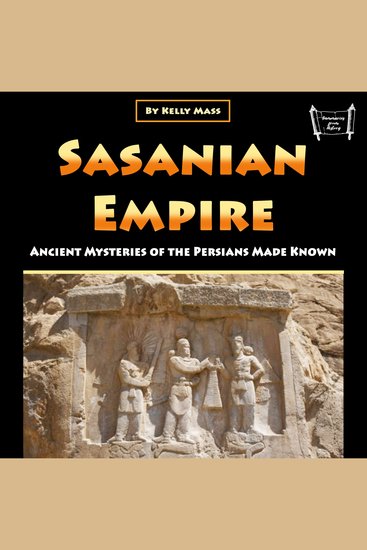
  • Sasanian Empire - Ancient Mysteries of the Persians Made Known - cover

    Sasanian Empire - Ancient...

    Kelly Mass

    • 0
    • 0
    • 0
    The Sasanian Empire, often referred to by historians as the Neo-Persian Empire, was the last significant Iranian empire before the Muslim invasions of the 7th and 8th centuries AD. Named after the House of Sasan, this empire lasted nearly four centuries, from 224 to 651 AD, making it the longest-lived Persian imperial dynasty. The Sasanian Empire emerged during late antiquity, succeeding the Parthian Empire and re-establishing Persian prominence in the region, rivaling the Roman Empire (later known as the Byzantine Empire after 395 AD). 
    Ardashir I, an Iranian prince, founded the Sasanian Empire following the decline of Parthia, which was weakened by internal strife and pressures from Rome. After defeating the last Parthian king, Artabanus IV, at the Battle of Hormozdgan in 224, Ardashir set out to restore the glory of the Achaemenid Empire by expanding Iran's territories. Under the Sasanian rule, the empire stretched from the eastern Mediterranean, including Anatolia and Egypt, to parts of modern-day Pakistan. It also extended across southern Arabia, the Caucasus, and Central Asia. According to mythology, the Derafsh Kaviani served as the vexilloid of the Sasanian Empire. 
    The Sasanian period was marked by significant advancements in culture, architecture, and religion. Zoroastrianism became the state religion, shaping the empire's identity and influencing its governance. The Sasanians promoted a rich cultural life, characterized by advancements in art, science, and philosophy. They established grand cities with impressive architecture, including palaces, fire temples, and public spaces that highlighted their achievements.
    Show book