Join us on a literary world trip!
Add this book to bookshelf
Grey
Write a new comment Default profile 50px
Grey
Subscribe to read the full book or read the first pages for free!
All characters reduced
A Writer Writes - A Memoir - cover

We are sorry! The publisher (or author) gave us the instruction to take down this book from our catalog. But please don't worry, you still have more than 500,000 other books you can enjoy!

A Writer Writes - A Memoir

Stephen Birmingham

Publisher: Open Road Media

  • 0
  • 1
  • 0

Summary

A memoir by the New York Times–bestselling author and longtime chronicler of America’s wealthy elite. Born in Connecticut in 1929 and educated at Williams College, Stephen Birmingham went on to create a literary niche with his numerous nonfiction works about New York’s—and the nation’s—upper class, particularly focusing on Jewish, African American, and Irish communities, as well as old-money WASPs. He also drew on his “intimate knowledge of the private lives of the rich and famous” to write bestselling works of fiction such as The Auerbach Will (The New York Times Book Review). In this book, Birmingham’s attention is turned to his own life, both personal and professional, allowing us to learn about the man who created such compelling portraits of glittering parties, exclusive addresses, and, in some cases, rags-to-riches sagas that epitomize the American dream—and the American struggle. In the end, his story is as fascinating as those of the aristocrats he documented. “When it comes to the folkways of the rich, the powerful, and the privileged, Stephen Birmingham knows what he’s talking about.” —Los Angeles Times
Available since: 11/15/2022.
Print length: 412 pages.


Other books that might interest you

  • Civic Gifts - Voluntarism and the Making of the American Nation-State - cover

    Civic Gifts - Voluntarism and...

    Elisabeth S. Clemens

    • 0
    • 0
    • 0
    In Civic Gifts, Elisabeth S. Clemens takes a singular approach to probing the puzzle that is the United States. How, she asks, did a powerful state develop within an anti-statist political culture? How did a sense of shared nationhood develop despite the linguistic, religious, and ethnic differences among settlers and, eventually, citizens? Clemens reveals that an important piece of the answer to these questions can be found in the unexpected political uses of benevolence and philanthropy, practices of gift-giving and reciprocity that coexisted uneasily with the self-sufficient independence expected of liberal citizens Civic Gifts focuses on the power of gifts not only to mobilize communities throughout US history, but also to create new forms of solidarity among strangers. Clemens makes clear how, from the early Republic through the Second World War, reciprocity was an important tool for eliciting both the commitments and the capacities needed to face natural disasters, economic crises, and unprecedented national challenges. Encompassing a range of endeavors from the mobilized voluntarism of the Civil War, through Community Chests and the Red Cross to the FDR-driven rise of the March of Dimes, Clemens shows how voluntary efforts were repeatedly articulated with government projects.  The legacy of these efforts is a state co-constituted with, as much as constrained by, civil society.
    Show book
  • Bottom Shelf: How a Forgotten Brand of Bourbon Saved One Man's Life - cover

    Bottom Shelf: How a Forgotten...

    Fred Minnick

    • 0
    • 0
    • 0
    A forgotten bottle. A buried legacy. And one man determined to uncover the truth about his favorite bourbon.
     
    Before he became one of the most influential voices in American whiskey, Fred Minnick was a combat veteran wrestling with the invisible wounds of war. What started as a quiet exploration of taste and ritual soon became something more―a way to calm his mind, reconnect with his senses, and slowly rebuild a life.
     
    Today, Fred's palate shapes the industry. His reviews move markets, his instincts set trends. So when he casually named a dusty 1969 bottle of Old Crow as his all-time favorite in an interview, the response was seismic: prices soared from $40 to $3,000 almost overnight. But behind the buzz was a deeper mystery. Once revered by presidents, poets, and distillers alike, Old Crow had been stripped of its legacy and banished to the bottom shelf. Why was one of bourbon's most iconic brands abandoned―and what really happened to the whiskey itself?
     
    Part memoir, part whiskey-world investigation, Bottom Shelf unearths the forgotten history of America's most misunderstood bourbon―and reveals how one man's search for flavor became a fight to rediscover meaning, purpose, and truth in a world full of half-truths and tall tales.
    Show book
  • Capitalism and Crises - How to Fix Them - cover

    Capitalism and Crises - How to...

    Colin Mayer

    • 0
    • 0
    • 0
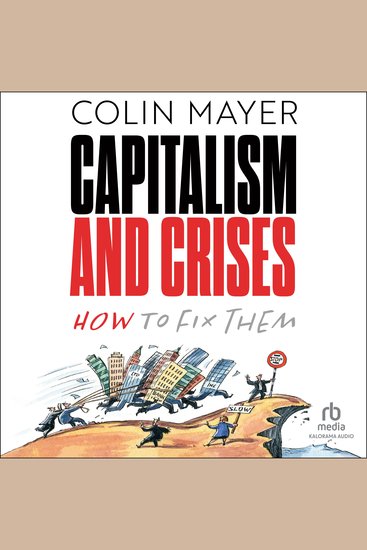
    The world is encountering multiple crises—climate, droughts, floods, energy, food, and pandemics, to name a few. We have a problem, this is the solution. 


    Capitalism and Crises is about how capitalism can fix them—how it can solve not cause them. The reason why it has caused them is that we have misconceived the nature of our capitalist system. We have failed to understand the key institution at the heart of it—business—and as a result we have allowed it to cause as well as solve problems. This book describes why this has happened and what needs to change to address it. 


    Drawing on history, philosophy, psychology, and biology as well economics, law, and finance, Mayer describes what has gone wrong, what needs to change, and how to fix it. He sets out the big challenges that capitalism must address and how it should set about doing that, and discusses how financial institutions should be at the heart of this, and how the public sector can work with the private on a common purpose of solving problems and creating shared prosperity. Capitalism and Crises provides an inspiring and motivational roadmap of how we as practitioners, policymakers, consumers, employees, communities, students, and citizens of the world can together tackle the challenges of the twenty-first century—to flourish and survive.
    Show book
  • Slaughter in Ukraine: 1941 Battle for Kyiv and Campaign to Capture Moscow - cover

    Slaughter in Ukraine: 1941...

    Daniel Wrinn

    • 0
    • 0
    • 0
    " Putin is making the same mistakes that doomed Hitler when he invaded the Soviet Union." – Reviewer 
    A Gripping and Riveting Short History of Operation Barbarossa 
    In just four weeks in the summer of 1941, the German Wehrmacht wrought unprecedented destruction on four Soviet armies. They conquered central Ukraine, killing or capturing three-quarters of a million men. 
    This is an informative and insightful military history of the Battles of Kyiv and Leningrad as well as Hitler's march on Moscow. This was one of the largest and most decisive battles of World War II and, for Hitler and Stalin, a battle of crucial importance. Daniel Wrinn charts the battle's dramatic course and aftermath, uncovering the irreplaceable losses suffered by Germany's "panzer groups" despite their battlefield gains, and the implications of these losses for the German war effort.
    Show book
  • Inner Child Healing Workbook: From Childhood Trauma Abuse and Emotional Neglect to Rediscovering Self-Love and Wholeness - cover

    Inner Child Healing Workbook:...

    Andy Gardner

    • 0
    • 0
    • 0
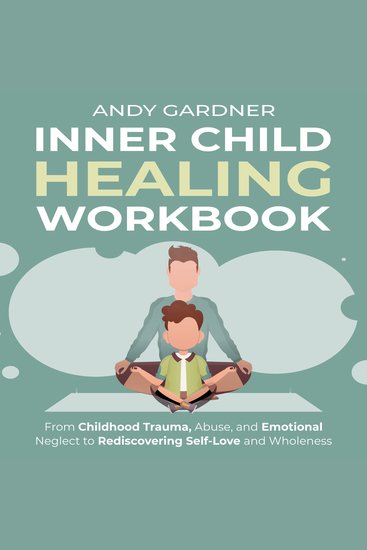
    Discover everything you need to know about healing your inner child from trauma, abuse, and emotional neglect. 
    Have you ever wondered how your negative childhood experiences still affect you today? 
    Do you want to understand who the inner child is and how it shapes your psychological landscape? 
    Do you wish you could have given your childhood self the support, compassion, and love it needed to thrive? 
    Living with a broken inner child can leave you with unhealthy coping mechanisms and prevent you from growing and developing as an adult. Inner child work allows you to recognize and address the traumatic experiences that you’ve lived through in the past. It serves as a way to look back in time, granting you the opportunity to analyze the thoughts and feelings of the past with the knowledge and understanding of the present. 
    Have a look at what you can find inside:What Is the Inner Child? The Effects of Past Trauma Reconnect with Your Inner Child Understand Cognitive ReframingHow Trauma Affects Emotional IntelligenceLearn How to Set Healthy BoundariesTips on How to Be Kind to Yourself! Learn How to Honor Your Inner Child A Treasure Trove of Tips and Tricks for Healing 
    This workbook serves as the ultimate guide to healing your inner child and embarking on the path to self-love and wholeness. It offers a blend of helpful, comprehensive information, interesting knowledge, and valuable exercises and activities.  
    Click the “Add to Cart” button to regain control of your life.
    Show book
  • The Sociology of Deviance - Understanding Rule-Breaking and Its Impact on Society - cover

    The Sociology of Deviance -...

    Fred Grandsen

    • 0
    • 0
    • 0
    Deviance is not an inherent quality of an action or behavior but rather a label assigned by society based on cultural norms, values, and historical context. What is considered deviant in one society may be perfectly acceptable in another, highlighting the socially constructed nature of rule-breaking. This means that deviance is not a fixed concept but a fluid one, constantly evolving as societies change over time. 
    Norms, or the unwritten rules that govern behavior, play a central role in determining what is labeled as deviant. These norms vary across cultures, social groups, and historical periods, meaning that what is seen as unacceptable in one setting may be tolerated or even encouraged in another. For example, attitudes toward tattoos, same-sex relationships, and gender roles have shifted dramatically over time, illustrating how deviance is shaped by broader social forces rather than existing as an objective reality. 
    One of the key aspects of the social construction of deviance is the process of labeling. According to labeling theory, deviance is not just about breaking rules but also about how society reacts to those who violate norms. When a person is labeled as deviant, they may experience stigma, discrimination, or exclusion, reinforcing their deviant identity. This can lead to a self-fulfilling prophecy where individuals internalize their label and continue engaging in deviant behavior. For instance, a teenager who is repeatedly told they are a troublemaker may begin to see themselves that way and act accordingly.
    Show book