Join us on a literary world trip!
Add this book to bookshelf
Grey
Write a new comment Default profile 50px
Grey
Subscribe to read the full book or read the first pages for free!
All characters reduced
Motor Matt's Prize; or The Pluck That Wins - An Exciting Tale of Resilience and Bravery in the Early 20th Century - cover

Motor Matt's Prize; or The Pluck That Wins - An Exciting Tale of Resilience and Bravery in the Early 20th Century

Stanley R. Matthews

Publisher: Good Press

  • 0
  • 0
  • 0

Summary

In "Motor Matt's Prize; or, The Pluck That Wins," Stanley R. Matthews crafts a riveting tale that blends adventure and technology, capturing the spirit of early 20th-century America. The narrative follows the intrepid Motor Matt, a skilled mechanic and a symbol of youthful perseverance, as he embarks on a series of thrilling escapades that test his ingenuity and courage. Matthews employs a straightforward yet vivid literary style, employing elements typical of the dime novel genre, characterized by fast-paced action and moral undertones that celebrate hard work and determination against adversity. Stanley R. Matthews, an author primarily known for his contributions to boy's adventure literature, draws upon his own fascination with machinery and the looming modernity of the automotive world. This work reflects the values of an era that revered both innovation and tenacity, mirroring Matthews' appreciation for the narratives that shaped young minds during his time. His ability to weave together themes of friendship, competition, and personal growth highlights a dedication to empowering youth through storytelling. Recommended for young readers and those nostalgic for classic adventure tales, "Motor Matt's Prize" offers more than just entertainment; it embodies the virtues of resilience and creativity. While invoking the thrills of mechanical prowess, it encourages readers to embrace their own challenges with vigor and hope, making it a timeless addition to any literary collection.
Available since: 10/26/2023.
Print length: 79 pages.
Other books that might interest you

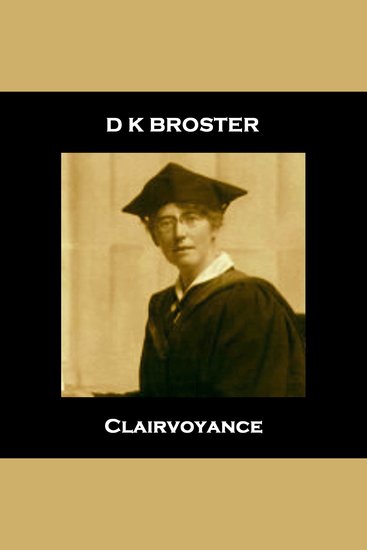
  • Clairvoyance - From their pens to your ears genius in every story - cover

    Clairvoyance - From their pens...

    D K Broster

    • 0
    • 0
    • 0
    Dorothy Kathleen Broster was born on 2nd September 1877 at Devon Lodge in Grassendale Park, Garston, Liverpool. 
    At 16, the family moved to Cheltenham, where she attended Cheltenham Ladies' College and then on to St Hilda’s College, Oxford to read history, where she was one of the first female students, although at this time women were not awarded degrees. 
    Broster served as secretary to Charles Harding Firth, a Professor of History for several years, and collaborated on several of his works. Her first two novels were co-written with a college friend, Gertrude Winifred Taylor. 
    With the Great War interrupting her literary ambitions she served as a Red Cross nurse at a Franco-American hospital, but returned to England with a knee infection in 1916.  
    After the war, she moved near to Battle in East Sussex and took up writing full-time.  
    In 1920 she at last received her Bachelor of Arts and Master of Arts from Oxford. 
    Her novels, mainly historical fiction, peaked in popularity with ‘The Flight of the Heron’, in 1925, a best-seller followed up by two sequels. 
    As well as poetry and various articles she also wrote several short stories, the best known of which is a classic of weird fiction ‘The Couching at the Door’ in which an artist appears to be haunted by a mysterious entity. 
    An intensely private individual many readers deduced from her name that she was both a man and Scottish. 
    D K Broster died in Bexhill Hospital on 7th February 1950.  She was 73.
    Show book
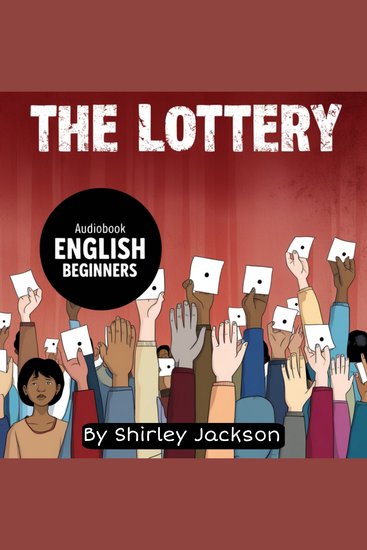
  • The Lottery for English Beginners - Learn English Through a Classic American Story - cover

    The Lottery for English...

    Shirley Jackson

    • 0
    • 0
    • 0
    "The Lottery" by Shirley Jackson is a timeless American short story, presented here in simple English for beginner English learners. Follow the intriguing events of a small town’s mysterious annual tradition. This special edition helps new readers improve their language skills while enjoying a classic piece of American literature.
    Show book
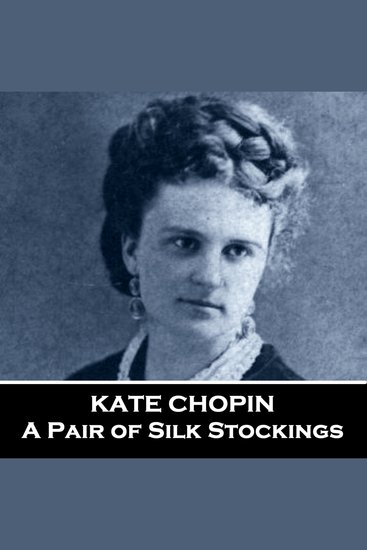
  • A Pair of Silk Stockings - From their pens to your ears genius in every story - cover

    A Pair of Silk Stockings - From...

    Kate Chopin

    • 0
    • 0
    • 0
    Katherine O'Flaherty was born on the 8th February 1850 in St Louis, Missouri to parents of French and Irish descent. 
    At age 5, she was sent to the Sacred Heart Academy and, apart from a 2 year period at home when her father died, remained there until graduating in 1868.  Whilst there she began writing and became an avid reader of almost anything that crossed her path.   
    Kate married Oscar Chopin in 1870 and the couple moved to New Orleans, and later to the rural setting of Cloutierville, Louisiana to raise their 6 children.  
    In 1882 her husband died leaving her in a deep trench of debt.  Despite her best efforts to turn the businesses around they were sold, and she moved the family back to St Louis and the financial help of her mother.  Sadly, her mother died within the year.  Kate, now struggling with depression, pushed herself to write and gained a local reputation as a writer of short stories that captured the local color and vibrancy of her surroundings. 
    By the early 1890’s her short stories were published nationally.  With this widespread audience also came negative reviews, controversy, and cries of immorality as themes such as interracial relationships, the rights of women and other burning issues of the day were written about. 
    Despite the criticism, which unnerved her, she continued to write though in the main her works, around 100 short stories and two novels, were not attributed with any literary worth. 
    Kate Chopin died from a brain haemorrhage in St Louis Missouri on the 22nd of August 1904.  She was 54. 
    For much of the 20th Century her work was forgotten and out of print.  It was only in early 1970’s, with the rise of feminism and the call for a more just society that she was given the status her works had long described and shone a literary light at.  She is now safely revered as one of America’s great authors.
    Show book
  • Grace (Unabridged) - cover

    Grace (Unabridged)

    James Joyce

    • 0
    • 0
    • 0
    James Augustine Aloysius Joyce (2 February 1882 - 13 January 1941) was an Irish novelist, short story writer, poet and literary critic. He contributed to the modernist avant-garde movement and is regarded as one of the most influential and important writers of the 20th century.
    GRACE: Two gentlemen who were in the lavatory at the time tried to lift him up: but he was quite helpless. He lay curled up at the foot of the stairs down which he had fallen. They succeeded in turning him over. His hat had rolled a few yards away and his clothes were smeared with the filth and ooze of the floor on which he had lain, face downwards. His eyes were closed and he breathed with a grunting noise.
    Show book
  • Fantomina: Love in a Maze - cover

    Fantomina: Love in a Maze

    Eliza Haywood

    • 0
    • 0
    • 0
    'Her design was once more to engage him, to hear him sigh, to see him languish, to feel the strenuous pressures of his eager arms, to be compelled, to be sweetly forc'd to what she wished with equal ardour.'
    
    Originally published in 1725, and daringly exploring themes such as identity, class and female desire, Fantomina: Love in a Maze is comprehended as one of the finest – yet underappreciated – novellas of the eighteenth-century.
    
    A beautiful young woman becomes intrigued with a charming, but severely shallow, young man at the theatre: Beauplaisir. Witnessing his treatment of some of the ladies there, she disguises herself as 'Fantomina', to determine whether his behaviour would change towards her. After a short fling, Beauplaisir tires of her and leaves, much to her outrage. Fantomina then takes on a series of alternative personas in a bid to re-capture his attention. A scathing commentary on men's treatment of women in society, Fantomina: Love in a Maze is a remarkable work which would have scandalised its readers at the time of publication. This audiobook is brought to life by the brilliant Helen Keeley.
    Eliza Haywood (1693 – 1756) was an English writer, actress and publisher. In her lifetime, she penned over seventy works, including novels, poetry, plays and periodicals. A proto-feminist, she was famed for her romance writing, which mirrored contemporary scandals in eighteenth century society.
    Show book
  • Before the Supreme Court - From their pens to your ears genius in every story - cover

    Before the Supreme Court - From...

    Lafcadio Hearn

    • 0
    • 0
    • 0
    Lafcadio Hearn was born on the 27th June 1850 on the Ionian isle of Levkás in Greece to a British Army officer and a Greek Mother. 
    His father, fearing for his career prospects at being married to a Greek Orthodox wife, sent them to Dublin whilst he continued to advance his career with further postings.  Life there was difficult for mother and son.  His father returned, wounded and traumatised, when Lafcadio was three.  He annulled the marriage and she remarried but had to give up care of Lafcadio to her sister-in law.   
    After brief periods for Catholic education in England and France he emigrated to Ohio in the United States when he was 19, taking on a series of casual jobs before embarking on a career as a journalist, publishing poems and essays in Cincinnati.  It was whilst here that he began a side-line in translating, starting with Gautier and Flaubert.  He married in 1874 to a 20 year old African-American woman in violation of Ohio's anti-miscegenation law.  The marriage soon failed. 
    In 1877 he relocated to New Orleans to write on a variety of themes before picking up a two year assignment from Harper’s to write in the West Indies, where he also wrote his first novel. 
    In 1890 Harper’s sent him to Japan.  Here he left journalism and took the remarkable decision to become a schoolteacher in the north of Japan.   Enraptured by the culture he was driven to explain it in various Western publications to those who had little, if any, knowledge of its culture.  Within the year he had fallen in love with, and married, a high-born Japanese lady, together they would have four children.   
    In 1895 he became a Japanese national and took the name Koizumi Yakumo, Koizumi being his wife’s family name. 
    The following few years, whilst a professor of Literature at the Imperial University of Japan, were his most creative and admired period.   
    Lafcadio Hearn died of heart failure on the 26th of September 1904, in Tokyo, Japan shortly before leaving to deliver a series of lectures at Cornell University in New York State.  He was 54.
    Show book