Join us on a literary world trip!
Add this book to bookshelf
Grey
Write a new comment Default profile 50px
Grey
Subscribe to read the full book or read the first pages for free!
All characters reduced
The Flags of Our Fighting Army Including standards guidons colours and drum banners - Unveiling the Army's Symbolic Legacy - cover

The Flags of Our Fighting Army Including standards guidons colours and drum banners - Unveiling the Army's Symbolic Legacy

Stanley C. Johnson

Publisher: Good Press

  • 0
  • 0
  • 0

Summary

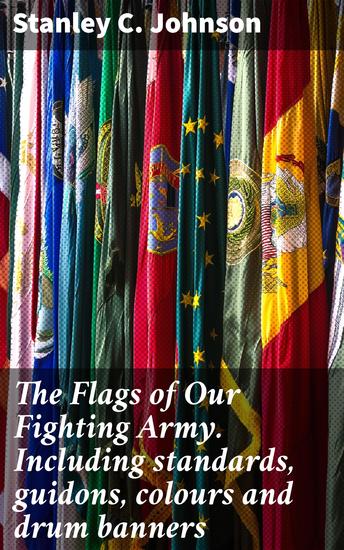
In "The Flags of Our Fighting Army," Stanley C. Johnson presents a meticulous exploration of military heraldry, providing a comprehensive guide to the standards, guidons, colors, and drum banners that have represented the valor and heritage of armed forces. Johnson employs a scholarly yet accessible style, seamlessly blending historical narrative with rich visual descriptions, which allows readers to appreciate both the aesthetic and symbolic significance of these military emblems. The book situates its content within a broader context of military history, emphasizing how flags have played a pivotal role in instilling morale and identity among troops throughout various conflicts. Stanley C. Johnson, an esteemed historian and military scholar, draws upon his extensive background in military studies and flag history to craft this authoritative volume. His passion for the subject matter is evident in his detailed research and personal anecdotes, which enrich the text. Johnson's commitment to preserving the legacies of those who served is a driving force behind this work, motivated by a desire to illuminate the intricate connections between banners and soldier identity in times of war. This book is highly recommended for historians, military enthusiasts, and anyone interested in the cultural significance of flags. Johnson's insightful analysis offers valuable perspectives on how these symbols of honor continue to resonate with contemporary audiences, making "The Flags of Our Fighting Army" an essential addition to both personal libraries and academic collections.
Available since: 11/11/2023.
Print length: 125 pages.

Other books that might interest you

  • Jeremiah - The World English Bible Book 24 (Unabridged) - cover

    Jeremiah - The World English...

    Various Authors

    • 0
    • 0
    • 0
    Jeremiah (c. 650 - c. 570 BC), also called the "weeping prophet", was one of the major prophets of the Hebrew Bible. According to Jewish tradition, Jeremiah authored the Book of Jeremiah, the Books of Kings and the Book of Lamentations, with the assistance and under the editorship of Baruch ben Neriah, his scribe and disciple. In addition to proclaiming many prophecies of Yahweh, the God of Israel, the Book of Jeremiah goes into detail regarding the prophet's private life, his experiences, and his imprisonment. Judaism and Christianity both consider the Book of Jeremiah part of their canon. Judaism regards Jeremiah as the second of the major prophets. Christianity holds him to be a prophet and his words are quoted in the New Testament. Islam also regards Jeremiah as a prophet and his narrative is recounted in Islamic tradition.
    Show book
  • Symbols of Freedom - Slavery and Resistance Before the Civil War - cover

    Symbols of Freedom - Slavery and...

    Matthew J. Clavin

    • 0
    • 0
    • 0
    In the early United States, anthems, flags, holidays, monuments, and memorials were powerful symbols of an American identity that helped unify a divided people. A language of freedom played a similar role in shaping the new nation. Resonating across the country, they encouraged the creation of a republic where the right to "life, liberty, and the pursuit of happiness" was universal. 


    For enslaved people and their allies, the language and symbols that served as national touchstones made a mockery of freedom. Yet, as author Matthew J. Clavin reveals, it was these powerful expressions of American nationalism that inspired forceful and even violent resistance to slavery. 


    Symbols of Freedom is the surprising story of how enslaved people and their allies drew inspiration from the language and symbols of American freedom. Mindful and proud that theirs was a nation born in blood, these disparate patriots fought to fulfill the republic's promise by waging war against slavery. 


    In a time when the US flag, the Fourth of July, and historical sites have never been more contested, this book reminds us that symbols are living artifacts whose power is derived from the meaning with which we imbue them.
    Show book
  • The Maximum Security Book Club - Reading Literature in a Men's Prison - cover

    The Maximum Security Book Club -...

    Anonymous

    • 0
    • 0
    • 0
    A riveting account of the two years literary scholar Mikita Brottman spent reading literature with criminals in a maximum-security men’s prison outside Baltimore, and what she learned from them—Orange Is the New Black meets Reading Lolita in Tehran. 
    On sabbatical from teaching literature to undergraduates, and wanting to educate a different kind of student, Mikita Brottman starts a book club with a group of convicts from the Jessup Correctional Institution in Maryland. She assigns them ten dark, challenging classics—including Conrad’s Heart of Darkness, Shakespeare’s Macbeth, Stevenson’s Dr. Jekyll and Mr. Hyde, Poe’s story “The Black Cat,” and Nabokov’s Lolita—books that don’t flinch from evoking the isolation of the human struggle, the pain of conflict, and the cost of transgression. Although Brottman is already familiar with these works, the convicts open them up in completely new ways. Their discussions may “only” be about literature, but for the prisoners, everything is at stake. 
    Gradually, the inmates open up about their lives and families, their disastrous choices, their guilt and loss. Brottman also discovers that life in prison, while monotonous, is never without incident. The book club members struggle with their assigned reading through solitary confinement; on lockdown; in between factory shifts; in the hospital; and in the middle of the chaos of blasting televisions, incessant chatter, and the constant banging of metal doors. 
    Though The Maximum Security Book Club never loses sight of the moral issues raised in the selected reading, it refuses to back away from the unexpected insights offered by the company of these complex, difficult men. It is a compelling, thoughtful analysis of literature—and prison life—like nothing you’ve ever read before.
    Show book
  • True Love Stories From World War Two (WWII) - Real Life Love Stories of Couples Throughout the Ages - cover

    True Love Stories From World War...

    Amelia Kenton

    • 0
    • 0
    • 0
    Throughout the hardest times in history, love has endured the unthinkable, often laced with tragedy and hardship…and there have been few times more testing than World War II, when couples were forced to be miles apart, reliant on letters to communicate, and often not knowing for weeks whether their sweetheart was even alive. 
    In this gripping collection of real life love stories from one of the most tumultuous times in human history, you’ll find hope and inspiration in every corner.You’ll find:10 epic love stories brimming with emotionReal life stories told through the exchange of letters and fleshed out with background information from the timeA story salvaged from letters that were nearly burned – until they were saved by a daughter determined to share her parents’ great romance with the worldTales of love enduring incredible distance, longing, and lonelinessThe couple who fought for what was right… even though it meant parting after just a few years of wedded blissLessons in vulnerability and daring to bare your soul and the doors that can open when you doForbidden love – a passionate romance that broke not just one social taboo, but also faced grave danger for another reason under the Nazi regimeThe innocuous crush that blossomed into a life-changing love affairThe woman who never gave up hope… despite her love being documented as ‘killed in action’Love that survives against all odds – and the inspiration you can take from one incredible tale 
    Laced with tragedy and heartache, you’ll need your tissues handy. But for every tear you shed, there’s a smile to be found as you witness the power of true love. Immerse yourself in some of the world’s greatest (yet lesser-known) love stories.
    Show book
  • Moving House and other Poems from Hong Kong - cover

    Moving House and other Poems...

    Gillian Bickley

    • 0
    • 0
    • 0
    The old is contrasted with the new, fictional with actual life. Links are made between different cultures, different lives, different experiences. The expatriate life-style of constant movement runs parallel with the title of the book. 
     "Gillian Bickley writes as she responds to everyday events, always with the echo of 'time's winged chariot' in her ears. The fact of moving house sends her speeding back through the moves of a lifetime and forward to the last move, to the small room of the grave. The opening poem suggests the elusive presence of the author, and the deeper themes glimpsed through her deceptively simple poems. The variety of human life and the individual response to life, these are Gillian Bickley's central interests. The power that invigorates the poems in Moving House is the control of language. In this bare, tight poetry, no idle words are allowed. Its vocabulary draws on the base language of essences and epiphanies. The chosen spare language is the perfect partner for this poetry of mature experience." — Emeritus Professor I. F. Clarke and M. Clarke. 
    "The poetic observations of a sensitive writer responding to the reality of being alive." "Insightful probing into the darker issues of our lives . . . to make sense of human experience." — Paul Bench, Speech & Drama: Journal of the Society of Teachers of Speech and Drama. 
    "A privileged view into the emotional, intellectual and spiritual life of its writer." "The profound intimacy of the personal poems, reflecting universal truths about the human condition, renders the reader at once intruder and confidant." — Solveig Bang, Sunday Morning Post. 
    "Bickley's delicately-crafted poems are faithful word portraits of various aspects of Hong Kong at the turn of the millennium: its landscape, its people, its myths and spirits." —Tammy Ho, Asian Review of Books. 
    Show book
  • Dark Psychology - How to See through Manipulative Games and Persuasion Tactics - cover

    Dark Psychology - How to See...

    Wesley Felt

    • 0
    • 0
    • 0
    Many believe that the most successful people in the world have mastered the ability to use their minds to attract what they desire. Imagine being able to draw what you want most into your life effortlessly, without having to take direct action. Imagine being able to manifest your goals and desires through the discipline of your thoughts. 
      
    Everything begins with thoughts, which most people don’t fully grasp, as actions are rooted in these ideas. Before diving into the methods that harness the power of the mind, it’s important to ask: What is the subconscious mind? 
      
    The subconscious is a part of the mind that, while not fully conscious, influences a person’s actions and feelings. Some view the subconscious as connected to the spirit or soul, capable of shaping your reality based on the messages it receives from your actions and beliefs. 
      
    If this is true, then it’s crucial to examine your subconscious mind and consider what you truly want. However, this is easier said than done. The complexities of life and the mix of positive and negative experiences make it difficult to control what is fed to the subconscious mind.
    Show book