Join us on a literary world trip!
Add this book to bookshelf
Grey
Write a new comment Default profile 50px
Grey
Subscribe to read the full book or read the first pages for free!
All characters reduced
The Jam - Every Album Every Song - cover

The Jam - Every Album Every Song

Stan Jeffries

Publisher: Sonicbond Publishing

  • 0
  • 0
  • 0

Summary

From the band’s first single, ‘In The City’ in April 1977, to their last, ‘Beat Surrender’ in November 1982, The Jam went from new wave wannabees to arguably the biggest band in the UK. The Jam on track covers every song released by the group during their five-and-a-half-year career on the Polydor label that saw them have thirteen top twenty singles and five top ten albums in the UK. The book also includes the pick of demos and little-known recordings from various compilation albums after the band’s demise. Each song is looked at from a musical and lyrical point of view and includes contemporary comments from Paul Weller, Bruce Foxton and Rick Buckler, plus music critics and those working closely with the band.
 
   Album and single sleeves, as well as TV and video appearances, are part of the mix as Stan Jeffries looks at what made The Jam one of Britain’s most respected acts, while demonstrating how their legacy continues to this day. For both the dedicated and the curious, this book guides you through the career of one of Britain’s musical giants.


Stan Jeffries, Sheffield born and fled. North, to Newcastle, where he lived and worked for seven years and wrote The Encyclopaedia of World Pop Music 1980-2001 in his spare time. He spent a dozen or so years touring the globe with any band who’d have him. Laughably, he called this a job. His first Jam album was All Mod Cons and his first Jam show was in Leicester during the 1979 Setting Sons tour. Currently, he lives in Andalusia, Spain, where he struggles to make himself understood by the natives.
Available since: 05/19/2025.
Print length: 160 pages.

Other books that might interest you

  • The Talking Draft Method - Hollywood’s Secret for a Fast First Draft - cover

    The Talking Draft Method -...

    Frederick Gooltz

    • 0
    • 0
    • 0
    The Talking Draft Method is the fastest way for playwrights and screenwriters to create scenes. A writer records audio of themselves improvising the dialogue and the action lines, the audio is transcribed, then the text is reformatted into a script. This is not new, as the book reveals, it is actually one of old Hollywood's best-kept secrets. 
    Today it can be done instantly and for free. This practical guide shows exactly how to use The Talking Draft Method for a fast first draft of your script. This book also contains many of Hollywood's most popular outlining structures, plus great revision tricks of the trade to ensure that your next drafts are as great as they can be. 
    The Talking Draft Method is also the best way to achieve a creative flow state while writing. This book contains some of the latest findings about flow state neuroscience and provides helpful steps to harness the peak performance of the flow state as a writer while using the Talking Draft Method. 
    Inside This Practical Guide to The Talking Draft Method:how to achieve a creative flow stateovercome common first draft trapspopular screenplay structurescommon beat sheet examplesproven techniques for revisionsthe screenwriter's "notes" decodernever fear a blank page againthe history of the methodtips for aspiring writers
    Show book
  • Art Collecting - Buying Investing Evaluating and Dealing in Fine Art and Contemporary Art - cover

    Art Collecting - Buying...

    Jace Benett

    • 0
    • 0
    • 0
    Art has the remarkable ability to capture the essence of human creativity, emotions, and culture. For centuries, it has served as a mirror reflecting our society's ever-evolving thoughts, passions, and perspectives. From the timeless masterpieces of the Renaissance to the cutting-edge innovations of contemporary artists, art continues to inspire, provoke, and move us in profound ways. 
    Art collecting, an age-old practice that has transcended generations, allows individuals to become custodians of these profound expressions of human imagination. Whether you're an aspiring art enthusiast, a seasoned collector, or someone who's simply curious about the world of art, this book is your gateway to the captivating universe of art collecting. 
    At its core, art collecting is a deeply personal endeavor. It's about more than just acquiring pieces of artwork; it's a journey of exploration, self-expression, and appreciation. But why do people collect art? The motivations are as diverse as the art itself. Some collect for the sheer joy of surrounding themselves with beauty, while others see it as an investment opportunity. Art can be a reflection of one's identity or a means of connecting with different cultures and histories. In this book, we'll delve into the myriad reasons why individuals choose to embark on this enriching path. 
    Understanding the art market is a crucial aspect of art collecting. Over time, this market has evolved from a relatively exclusive sphere to a global industry with immense economic significance. We'll explore the historical trajectory of the art market, examining the key milestones and shifts that have shaped it.
    Show book
  • The Gothic Cathedral - Architecture of Faith - cover

    The Gothic Cathedral -...

    Harris Ropes

    • 0
    • 0
    • 0
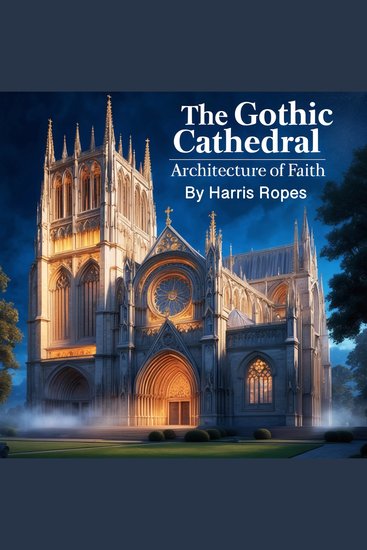
    The origins of Gothic architecture lie in the transition from the Romanesque style that dominated Europe in the early medieval period. Romanesque churches, with their thick walls, small windows, and rounded arches, provided a sense of solidity but limited natural light and height. By the 12th century, new architectural innovations emerged, driven by a desire for greater verticality, spacious interiors, and an infusion of divine light. These aspirations led to the birth of the Gothic style, first appearing in France before spreading across Europe. 
    One of the key figures in this transition was Abbot Suger of the Abbey of Saint-Denis, near Paris. In the 1130s, he initiated the reconstruction of the abbey church, incorporating pointed arches, ribbed vaults, and extensive stained glass windows. Suger believed that light was a manifestation of the divine, and through these architectural changes, he sought to transform the church into a place of spiritual illumination. His innovations set a precedent for what would become the defining characteristics of Gothic architecture. 
    The pointed arch, a hallmark of the Gothic style, replaced the rounded arch of the Romanesque period. This architectural shift was more than an aesthetic change; it allowed for greater structural efficiency, enabling builders to construct taller and more spacious interiors. The ribbed vault, another significant innovation, helped distribute weight more evenly, allowing for thinner walls and the introduction of expansive stained glass windows. These windows, often adorned with biblical scenes, served both a decorative and didactic function, educating the largely illiterate medieval population about religious narratives.
    Show book
  • Nature's Symphony of Soothing Sounds of Bird Songs Deep in the Forest for Meditation & Stress Relief - Elevate Your Wellness & Achieve Serene Sleep Through Calming Therapeutic 8D Audio Harmony - cover

    Nature's Symphony of Soothing...

    Cedar Skye

    • 0
    • 0
    • 0
    Embark on a journey to tranquility with "Nature's Symphony of Soothing Sounds of Bird Songs Deep in the Forest for Meditation & Stress Relief." This enchanting audiobook offers a serene blend of forest birdsongs and calming nature sounds designed to enhance your meditation practice and promote deep stress relief. 
    Immerse yourself in the therapeutic 8D audio harmony that captures the essence of a peaceful woodland retreat. Each track features a rich tapestry of melodic birdcalls and soothing forest ambiance, creating a serene environment that supports wellness and serene sleep. The deep forest sounds provide a perfect backdrop for relaxation, helping you unwind and achieve a state of inner calm. 
    Ideal for those seeking to improve sleep quality or foster a sense of peaceful rejuvenation, this audiobook transforms your space into a sanctuary of serenity and harmony. The meditative melodies of the forest’s feathered friends guide you to a place of tranquility and restoration, making it an essential tool for enhancing your relaxation routine. 
    Elevate your well-being and enjoy a moment of profound relaxation with “Nature’s Symphony of Soothing Sounds of Bird Songs Deep in the Forest.” Let the gentle, melodious sounds transport you to a world of calmness and zen, where every note contributes to your ultimate sense of serenity.
    Show book
  • Time of My Life The: Dirty Dancing - cover

    Time of My Life The: Dirty Dancing

    Andrea Warner

    • 0
    • 0
    • 0
    An engaging exploration into the enduring popularity of Dirty Dancing and its lasting themes of feminism, activism, and reproductive rights 
     
    When Dirty Dancing was released in 1987, it had already been rejected by producers and distributors several times over, and expectations for the summer romance were low. But then the film, written by former dancer Eleanor Bergstein and starring Jennifer Grey and Patrick Swayze as a couple from two different worlds, exploded. Since then, Dirty Dancing’s popularity has never waned. The truth has always been that Dirty Dancing was never just a teen romance or a dance movie — it also explored abortion rights, class, and political activism, with a smattering of light crime-solving. 
     
    In The Time of My Life, celebrated music journalist Andrea Warner excavates the layers of Dirty Dancing, from its anachronistic, chart-topping soundtrack, to Baby and Johnny’s chemistry, to Bergstein’s political intentions, to the abortion subplot that is more relevant today than ever. The film’s remarkable longevity would never have been possible if it was just a throwaway summer fling story. It is precisely because of its themes — deeply feminist, sensitively written — that we, over 30 years later, are still holding our breath during that last, exhilarating lift.
    Show book
  • Medieval Education - The Rise of Universities - cover

    Medieval Education - The Rise of...

    Harris Ropes

    • 0
    • 0
    • 0
    During the early medieval period, education in Europe was primarily shaped by the influence of the Church. With the decline of the Western Roman Empire, formal education systems deteriorated, leaving monasteries and cathedral schools as the main centers of learning. These institutions preserved classical knowledge and played a crucial role in the intellectual revival of the Middle Ages. Monastic and cathedral schools provided education for clergy members and, over time, expanded their reach to include nobles and, in some cases, commoners. 
    Monastic schools were among the earliest centers of learning, with monks serving as teachers and scribes. These schools focused on religious instruction, teaching Latin, biblical texts, and theological commentaries. The goal was to prepare future clergy members for service in the Church. Monastic scriptoria were responsible for copying and preserving important texts, ensuring the transmission of classical and Christian knowledge. While most students in monastic schools were destined for religious life, some noble families sent their sons for education in literacy and administration, as the Church held significant political influence. 
    Cathedral schools emerged as a response to the growing demand for education beyond monastic settings. They were often attached to large churches or bishoprics and provided instruction to a wider audience, including future clergymen, royal officials, and scholars. These schools offered a more structured curriculum, covering subjects such as grammar, rhetoric, and logic, which formed the foundation of medieval education. Over time, cathedral schools developed into important intellectual hubs, attracting students from various regions. The presence of prominent teachers and scholars helped establish certain cathedral schools as precursors to medieval universities.
    Show book