Join us on a literary world trip!
Add this book to bookshelf
Grey
Write a new comment Default profile 50px
Grey
Subscribe to read the full book or read the first pages for free!
All characters reduced
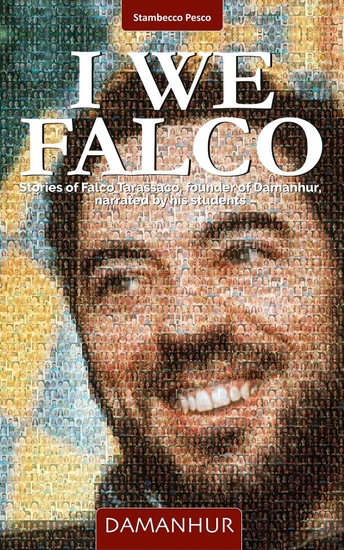
I We Falco - Stories of Falco Tarassaco founder of Damanhur narrated by his students - cover

I We Falco - Stories of Falco Tarassaco founder of Damanhur narrated by his students

Stambecco Pesco (SilvioPalombo)

Translator Beira Hamamelis (Tiziana Redoni)

Publisher: Dhora Impresa Sociale

  • 0
  • 0
  • 0

Summary

Falco Tarassaco (Oberto Airaudi, 1950-2023 founder of Damanhur) is a philosopher, psychic, spiritual guide, researcher in various fields straddling science, art, and metaphysics. Above all, he is a man who is able to excite and engage others, proposing to them projects through which to create an innovative reality every day, based on a sense of community, a sense of the sacred, respect for human beings and for every form of life, visible and invisible, around us.
 
This book explainsaa Falco Tarassaco through the stories of seventeen students: from those who shared his entire journey with him to those who did not know him personally, having embraced his philosophy after his death, to those who met him through a video or a book.
Available since: 09/09/2023.
Print length: 182 pages.

Other books that might interest you

  • Memoirs of a Tory Radical - cover

    Memoirs of a Tory Radical

    Nigel Lawson

    • 0
    • 1
    • 0
    A fully revised and updated edition of Nigel Lawson's extraordinary autobiography. A key minister for a full decade and Chancellor of the Exchequer, from 1983 to 1989, Nigel Lawson was one of the most powerful and effective of Margaret Thatcher's colleagues, and among the chief architects of Thatcherism. This abridged edition of Lord Lawson's memoirs - first published as The View from No.11 in 1992 and acclaimed as one of the best political memoirs of the period - goes straight to the heart of economic policy-making at a time of crisis and creative change. It explains the workings of government with candour, clarity and depth, against the backdrop of the remarkable story of the rise and fall of his political collaboration with Margaret Thatcher, productive and successful for many years, but ending with his dramatic resignation in October 1989.The book includes a new final chapter reflecting on events from the perspective of 2010, also discussing the crisis in the banking sector and global warming.
    Show book
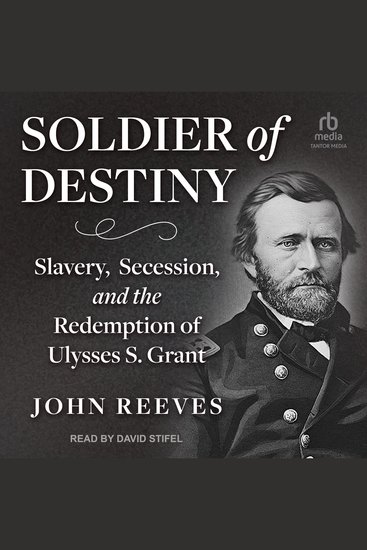
  • Soldier of Destiny - Slavery Secession and the Redemption of Ulysses S Grant - cover

    Soldier of Destiny - Slavery...

    John Reeves

    • 0
    • 0
    • 0
    Captain Ulysses S. Grant rose to become general-in-chief of the United States Army in 1864. Was it destiny? Or was he just an ordinary man, opportunistically benefiting from the turmoil of the Civil War to advance to the highest military rank? 


    Soldier of Destiny reveals that Grant always possessed the latent abilities of a skilled commander—and he was able to develop these skills out West without the overwhelming pressure faced by more senior commanders in the Eastern theater at the beginning of the Civil War. 


    From 1861 to 1864, Grant went from being ambivalent about slavery to becoming one of the leading individuals responsible for emancipating the slaves. Soldier of Destiny tells the story of Grant's connection to slavery in far more detail than in previous biographies. 


    Grant's life story is a tale of redemption within the context of his fraught relationships with his antislavery father and his slaveholding wife. This narrative explores the poverty, inequality, and extraordinary vitality of the American West during a crucial time in our nation's history. Writers on Grant have tended to overlook his St. Louis years, even though they are essential for understanding his later triumphs.
    Show book
  • First Wilderness - My Quest in the Territory of Alaska (Revised Edition) - cover

    First Wilderness - My Quest in...

    Sam Keith

    • 0
    • 0
    • 0
    After serving as a US Marine during World War II and attending college on the GI Bill, Sam Keith decided to seek adventure in Alaska as a laborer on the Adak Navy base. There he befriended Dick Proenneke, whose shared love of the outdoors, hard work, and self-reliance quickly bonded an alliance between the two. Together they explored the wilds of South Central Alaska, while working on the Navy base, hunting and fishing with friends and breathing in the great outdoors. Keith was ready to leave after three years of finding almost everything he sought—not realizing then how his fate was intrinsically tied to his friend's and how it would lead to writing the bestselling book One Man's Wilderness. 


    Sam Keith passed away in 2003. But in 2013, his son-in-law and children's book author/illustrator Brian Lies discovered in an archive box in their garage a book manuscript, originally written in 1974 after the publication of One Man's Wilderness. First Wilderness is the story of Keith's own experiences, at times harrowing, funny, and fascinating. Along with the original manuscript are excerpts from his journals, letters, and notebooks, woven in to create a compelling and poignant memoir of search and discovery. Foreword by Nick Jans, one of Alaska's foremost authors and photographers, and afterword by Keith's daughter Laurel Lies.
    Show book
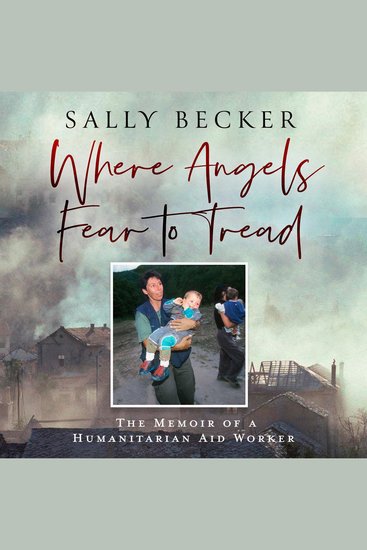
  • Where Angels Fear to Tread: The Memoir of a Humanitarian Aid Worker - cover

    Where Angels Fear to Tread: The...

    Sally Becker

    • 0
    • 0
    • 0
    'I was filled with apprehension about crossing the front line, but I would have risked my life to save just one child. Ivan was giving me a chance to save them all…' 
    This is the extraordinary work of Sally Becker, a humanitarian aid worker who for over three decades has risked it all in order to help the children of war. 
    Where Angels Fear to Tread is a reminder that – with determination, unrelenting passion and drive – one person can change the lives of so many. 
    In May 1993, Sally Becker went to Bosnia to help the innocent victims of war. She started by delivering humanitarian aid to the region, and was soon hailed as the 'Angel of Mostar' for rescuing wounded children and their families from the besieged city. Sally continued her work throughout the conflict and is credited with saving many lives. 
    When President Milosevic ordered his troops into Kosovo, her missions continued, this time on foot across the mountains. While attempting to bring sick and wounded children and their families to safety, she was captured by Serb paramilitaries, but neither this nor being shot by masked gunmen in Northern Albania could make her abandon her task. 
    Bosnia was Sally's first mission and the beginning of her lifelong commitment to help rescue children caught up in some of the most horrific wars around the world, including missions to help children in Iraq, Ukraine and most recently Gaza. 
    Her account provides a rare and invaluable insight into the complexities of international aid work, the shocking reality of life on the front lines and the desperate race to save innocent children trapped in war zones. 
    This is her extraordinary story. 
    Sally Becker's autobiography, a compelling narrative of her life in the service of others, is set to be the latest bestseller in non-fiction. Her memoirs, steeped in tales of charity and social welfare, underscore the power of individual action amidst the often sluggish responses of government institutions. 
    nan 
    HarperCollins 2025
    Show book
  • Conformity Hill - cover

    Conformity Hill

    Joyce Collins

    • 0
    • 0
    • 0
    I made fast friends with my peers, but I was not popular with the leadership. They were less than receptive to my opinion that requiring such strict conformity was not only unnecessary, but counter-productive. My outspoken nature quickly earned me close scrutiny from everyone in my chain of command, but I was good at my job. I received nothing but praise for my performance. There wasn't the slightest chink in my professional armor, so they did the only thing they could do. They waited for me to screw up. And screw up I did. I made a colossal error in judgment, completely non-commensurate with my rank, age, and experience. Then they came after me with no holds barred. I'd never been through such an upheaving experience and I hope never to do so again. I fought. I lost. I won. This is my story.
    Show book
  • Marcus Crassus: The Life and Legacy of Ancient Rome’s Richest Man - cover

    Marcus Crassus: The Life and...

    Editors Charles River

    • 0
    • 0
    • 0
    The reasons for Spartacus’s enduring appeal are obvious, but his uprising has overshadowed the fact that his was actually the third such uprising against the Roman Republic in a short span. Preceding this, the First and Second Servile Wars had already demonstrated that revolts against Rome and the whole institution of slavery could gain momentum, and these earlier uprisings provided a blueprint for the larger attempt by Spartacus to win freedom.  
    	At the same time, it’s often overlooked how the revolt affected Rome, and how the leader who put it down propelled his career and played an outsized role in Roman politics ahead of the civil war between Pompey and Caesar. Marcus Licinius Crassus is most remembered today for being the richest Roman in history, and arguably the richest man in world history, but that came about in part because he played a key role in the revolutionary events that took place in Rome throughout the 1st century BCE, including the dictatorship of Sulla, the Third Servile War, the First Triumvirate, and the Parthian Wars. Crassus was the son of Publius Licinius Crassus, who was consul in 97 BCE, and while very little is known of Crassus’ early life, his career as a military figure began in earnest when he escaped from Rome in 87 BCE to Spain to avoid Lucius Cornelius Cinna, who, along with Gaius Marius, led the opposition against Sulla.  
    	Thanks to his rise in the military and politics, Crassus’s renown and riches heavily influenced his contemporaries. In the wake of the Third Servile War, Crassus’ patronage helped position Julius Caesar to be appointed governor of Hispania Ulterior. In order to maintain political office, which made him immune from prosecution for his debts, he left for modern day Spain before his praetorship expired.
    Show book