Join us on a literary world trip!
Add this book to bookshelf
Grey
Write a new comment Default profile 50px
Grey
Subscribe to read the full book or read the first pages for free!
All characters reduced
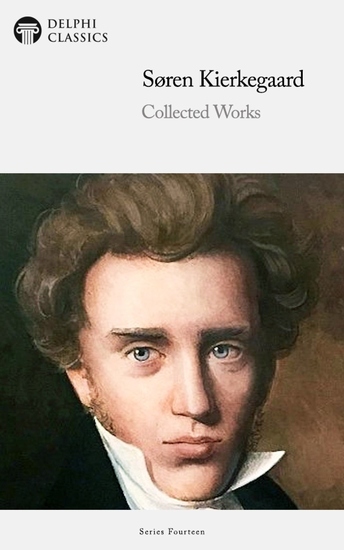
Delphi Collected Works of Soren Kierkegaard Illustrated - cover

Delphi Collected Works of Soren Kierkegaard Illustrated

Søren Kierkegaard

Publisher: Delphi Publishing Ltd

  • 0
  • 0
  • 0

Summary

A nineteenth century Danish philosopher and theologian, Søren Kierkegaard was a major influence on the development of existentialism and Protestant theology. He attacked the literary, philosophical and ecclesiastical establishments of his day for misrepresenting the highest task of human existence—becoming oneself in an ethical and religious sense. His critical works on organised religion, Christianity, morality, ethics and psychology reveal a fondness for metaphor, irony and parables. Many of his philosophical essays deal with how one lives as a “single individual”, giving priority to concrete human reality over abstract thinking, while highlighting the importance of personal choice. This eBook presents Kierkegaard’s collected works, with numerous illustrations, rare translations, concise introductions and the usual Delphi bonus material. (Version 1)

 
* Beautifully illustrated with images relating to Kierkegaard’s life and works* Concise introductions to the treatises* All the major essays, with individual contents tables* Images of how the books were first published, giving your eReader a taste of the original texts* Excellent formatting of the texts* Rare translations by David F. Swenson, Lillian Marvin Swenson and Walter Lowrie, digitised here for the first time* Includes the seminal autobiography– available in no other collection* Features a bonus biography – discover Kierkegaard’s intriguing life* Ordering of texts into chronological order and genres

 
CONTENTS:

 
The BooksEither/Or (1843)Fear and Trembling (1843)Repetition (1843)Upbuilding Discourses (1844)Philosophical Fragments (1844)The Concept of Dread (1844)Three Discourses on Imagined Occasions (1845)Stages on Life’s Way (1845)Works of Love (1847)Christian Discourses (1848)The Lilies of the Field and the Birds of the Air (1849)Three Discourses at the Communion on Fridays (1849)The Sickness unto Death (1849)Selections from the Writings of Kierkegaard (1923)

 
The AutobiographyThe Point of View for my Work as an Author (1851)

 
The BiographyIntroduction to Kierkegaard (1923) by Lee M. Hollander
Available since: 12/03/2023.
Print length: 1133 pages.

Other books that might interest you

  • Start of World War II The: The History of the Events that Culminated with Nazi Germany’s Invasion of Poland - cover

    Start of World War II The: The...

    Editors Charles River

    • 0
    • 0
    • 0
    "My good friends," the mustached, bony man with thick eyebrows and large, strong teeth somewhat reminiscent of those of a horse, shouted to the crowds from the second-floor window of his house at 10 Downing Street, "this is the second time in our history, that there has come back to Downing Street from Germany peace with honor. I believe it is peace for our time." The man addressing the crowd, British Prime Minister Neville Chamberlain, had just returned from the heart of Nazi Germany following negotiations with Adolf Hitler, and the crowd gathered outside the English leader's house on September 30, 1938 greeted these ringing words with grateful cheers. The piece of paper Chamberlain flourished exultantly seemed to offer permanent amity and goodwill between democratic Britain and totalitarian Germany. In it, Britain agreed to allow Hitler's Third Reich to absorb the Sudeten regions of Czechoslovakia without interference from either England or France, and since high percentages of ethnic Germans – often more than 50% locally – inhabited these regions, Hitler's demand for this territory seemed somewhat reasonable to Chamberlain and his supporters. With Germany resurgent and rearmed after the disasters inflicted on it by the Treaty of Versailles following World War I, the pact – known as the Munich Agreement – held out hope of a quick end to German ambitions and the return of stable, normal international relations across Europe. 
    Of course, the Munich agreement is now notorious because its promise proved barren within a very short period of time. Chamberlain's actions either failed to avert or actually hastened the very cataclysm he wished to avoid at all costs. The "Munich Agreement" of 1938 effectively signed away Czechoslovakia's independence to Hitler's hungry new Third Reich, and within two years, most of the world found itself plunged into a conflict which made a charnel house of Europe and left somewhere between 60-80 million people dead globally.
    Show book
  • The Unbroken Reich - What If Germany Had Won World War I? - cover

    The Unbroken Reich - What If...

    Marcus Draysun

    • 0
    • 0
    • 0
    As World War I raged across Europe, 1917 emerged as the critical year that could have determined the war’s ultimate outcome. In our reality, the entry of the United States and the crumbling of the Eastern Front led to Germany’s eventual defeat. But what if events had unfolded differently? A few pivotal moments could have swung the war in Germany’s favor, altering the course of history entirely. 
    One of the most significant factors was the failure of the German spring offensives in 1918. If these attacks had broken through Allied lines, Germany might have forced Britain and France to negotiate peace before American troops arrived in full strength. The Germans, under General Ludendorff, came close to achieving this, but logistical challenges and the resilience of the Allies ultimately led to exhaustion on the German side. Had Germany secured victory on the Western Front in early 1918, a new Europe could have emerged under German dominance. 
    Another key element was the Russian Revolution. With the fall of the Tsar and the rise of the Bolsheviks, Russia exited the war, allowing Germany to shift troops westward. However, if Germany had been able to negotiate a more favorable peace with Russia earlier—perhaps by supporting a less radical government—it could have stabilized the Eastern Front sooner, securing vital resources and preventing the chaotic collapse that followed. A stable Russian ally or puppet state could have relieved Germany’s strategic burden and ensured long-term control over Eastern Europe.
    Show book
  • Modern Africa: A Captivating Guide to Modern African History - cover

    Modern Africa: A Captivating...

    Captivating History

    • 0
    • 0
    • 0
    Modern Africa is inextricably linked to a long history dominated by the struggles, pain, and strength of a people whose story is not told enough.  
    Africans, though fascinatingly diverse, share a common evolution, all of which is characterized by the powerful strides of many names etched in the memories of their people. 
    This audiobook presents these memories with a stimulating detailed account. This book shares the knowledge you need to know about modern Africa. Discover how the continent has come to be what it is today, and learn how other countries influenced events. 
    It is an exciting adventure. In this audiobook, you will learn about the following:The origins of modern Africa;The slave trade and colonial rule;Africa and the two world wars;The wave of independence and civil wars;Africa’s wealth and diversity;The role of religion in Africa;The life and times of African revolutionaries and dictators;The challenges facing modern Africa;African international relations;And so much more! 
    There has never been a better time to learn more about the African continent. Scroll up and click the “add to cart” button to begin your journey!
    Show book
  • Benin Empire - Art Warfare and the Kingdom of Bronze - cover

    Benin Empire - Art Warfare and...

    Rolf Hedger

    • 0
    • 0
    • 0
    The Benin Empire, one of the most powerful and influential kingdoms in West Africa, flourished for over 1,000 years. Its capital, Benin City, located in present-day southern Nigeria, was an epicenter of art, culture, and political power. The empire’s historical significance extends beyond its impressive architectural feats, remarkable artistry, and military prowess, as it was also a hub of trade and diplomacy. 
    The origins of the Benin Empire can be traced back to the early 11th century, with a history deeply intertwined with the Kingdom of Ife, from which the Benin people are believed to have descended. The development of the kingdom was largely shaped by its early rulers, the Obas, whose leadership and vision helped lay the foundation for the Benin Empire. The Benin monarchy, a vital institution in the kingdom, solidified the rule of the Obas and their divine connection to the people. 
    At its peak, the Benin Empire extended its influence over a vast region in West Africa, establishing a complex political and social structure. The monarchy not only commanded political and military power but also served as a central force in religious and cultural life. The empire was renowned for its rich heritage in art, including the world-famous Benin Bronzes, which showcased the advanced craftsmanship and symbolic significance of Benin artisans. These bronzes, intricate sculptures, and plaques, which depicted scenes of royalty, warriors, and historical events, remain symbols of the empire’s grandeur.
    Show book
  • Revolution: The Rise of Arteta’s Arsenal - cover

    Revolution: The Rise of Arteta’s...

    Charles Watts

    • 0
    • 0
    • 0
    THE SUNDAY TIMES BESTSELLER  
    The inside story of Mikel Arteta’s astonishing transformation of Arsenal 
    November 2019. Unai Emery’s final game as Arsenal manager sees the Gunners languishing eighth in the league. Appointed in the dying embers of the Wenger years, Emery’s 18 months as Arsenal boss has seen the team and the club go backwards – playing unimaginative, pragmatic football, and recently losing to London rivals Chelsea in the final of the Europa League. Something had to change; a fresh head with fresh ideas. A new leader. 
    This is the story of how Mikel Arteta turned Arsenal into one of the most exciting, innovative and feared teams in the league. From cutting his teeth as an assistant under Pep Guardiola before joining Arsenal in the winter of 2019, through to title contenders years later – including bust-ups, Covid, disappointments, FA Cup wins, fan revolt, and eventually the rise of an extraordinary young team standing on the edge of greatness – this book will be the first of its kind to explore the workings of Arteta’s philosophy and how he transformed the club from outsiders to title challengers. 
    With chapters on his tactical innovations, in-game strategies, transfer insight and, of course, an account of the memorable 2022-23 season – Revolution is the story of an extraordinary football ascent and the first draft of Arsenal’s new history. 
    The latest bestseller, Revolution, is a non-fiction masterpiece that chronicles the rise of Arsenal in the 21st century under the leadership of Mikel Arteta. It provides an in-depth look into the economics and management strategies employed, making it a must-read for fans and business enthusiasts alike. 
    For fans of Ray Walker (The Ultimate Los Angeles Rams Trivia Book), Joshua Robinson (Messi vs. Ronaldo), David Dein (Calling the Shots), Jon Spurling (Get It On), and Ian Wright (A Life in Football). 
    HarperCollins 2023
    Show book
  • One Baby Blanket - cover

    One Baby Blanket

    Sharmila Ali

    • 0
    • 0
    • 0
    How one baby blanket altered the course of this corporate trainer's life
    Show book