Join us on a literary world trip!
Add this book to bookshelf
Grey
Write a new comment Default profile 50px
Grey
Subscribe to read the full book or read the first pages for free!
All characters reduced
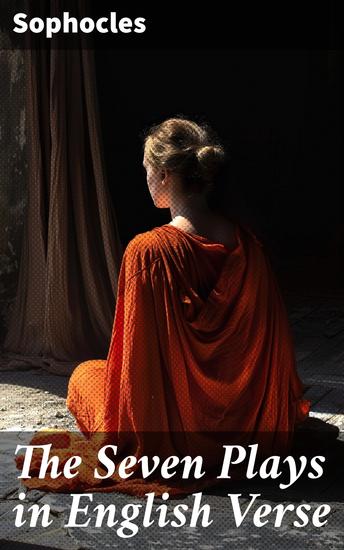
The Seven Plays in English Verse - Timeless Greek Tragedies in Poetic English Verse - cover

The Seven Plays in English Verse - Timeless Greek Tragedies in Poetic English Verse

Sophocles

Translator Lewis Campbell

Publisher: Good Press

  • 0
  • 0
  • 0

Summary

In "The Seven Plays in English Verse," Sophocles, one of the greatest playwrights of ancient Greece, presents a striking collection of his most important tragedies, rendered in elegant verse by modern translators. This anthology captures the essence of human struggle, destiny, and moral conflict, showcasing Sophocles' mastery of dramatic structure and character development. The plays delve into themes of fate, ethics, and the repercussions of one's actions, set against the backdrop of Greek mythology and societal norms, thus allowing contemporary readers to engage with the poignant emotional landscapes of the original texts while appreciating their lyrical qualities. Sophocles (c. 496/5 'Äì 406/5 BCE) was a pivotal figure in the evolution of Greek theater, admired for his innovative contributions such as the introduction of painted scenery and increased dialogue. His exploration of complex characters and profound moral questions in works like "Oedipus Rex" and "Antigone" reflects his keen insights into the human condition, possibly shaped by his own experiences in Athenian society, including the political turmoil of his time. This collection not only preserves the timeless qualities of his work but also highlights his role in shaping Western literary tradition. This remarkable compilation serves as an essential resource for both scholars and general readers alike, inviting them to appreciate Sophocles' profound insights into human existence and the timeless dilemmas faced by individuals. It is a must-read for those looking to delve into the depth of Greek tragedy, offering a lyrical and accessible gateway into the ancient world of Sophocles.
Available since: 08/12/2023.
Print length: 232 pages.
Other books that might interest you

  • The Age Of Innocence - cover

    The Age Of Innocence

    Edith Wharton

    • 0
    • 0
    • 0
    The Age of Innocence is a 1920 novel by American author Edith Wharton. It was her twelfth novel and was initially serialized in 1920 in four parts, in the magazine Pictorial Review. Later that year, it was released as a book by D. Appleton & Company. It won the 1921 Pulitzer Prize for Fiction, making Wharton the first woman to win the prize. 
     
    Though the committee had initially agreed to give the award to Sinclair Lewis for Main Street, the judges, in rejecting his book on political grounds, "established Wharton as the American 'First Lady of Letters'". The story is set in the 1870s, in upper-class, "Gilded Age" New York City. Wharton wrote the book in her 50s, after she was already established as a major author in high demand by publishers.
    Show book
  • 3 Stories - Success at What Cost - A trio of classic tales perfect for a commute walk or quiet night in - cover

    3 Stories - Success at What Cost...

    Leo Tolstoy, Anthony Hope, Amy Levy

    • 0
    • 0
    • 0
    There is something about the number 3.    
     
    The Ancient Greeks believed 3 was the perfect number, and in China 3 has always been a lucky number, and they know a thing or two.   
     
    Most religions also have 3 this and 3 that and, of course, in these more modern times, three’s a crowd may be too many, except when it’s a ménage à trois.  It seems good things usually come in threes. 
     
    Whatever history and culture says WE think 3, a hat-trick of stories, is a great number to explore themes and literary avenues that classic authors were so adept at creating. 
     
    From their pens to your your ears.  
     
    01 - 3 Stories - Success At What Cost 
    02 - How Much Land Does A Man Need by Leo Tolstoy 
    03 - Cohen of Trinity by Amy Levy 
    04 - A Sucessful Rehearsal by Anthony Hope
    Show book
  • Rise of Historical Criticism The (Unabridged) - cover

    Rise of Historical Criticism The...

    Oscar Wilde

    • 0
    • 0
    • 0
    Oscar Wilde (16 October 1854 - 30 November 1900) was an Irish poet and playwright. After writing in different forms throughout the 1880s, he became one of the most popular playwrights in London in the early 1890s.
    THE RISE OF HISTORICAL CRITICISM: This Essay was written for the Chancellor's English Essay Prize at Oxford in 1879, the subject being 'Historical Criticism among the Ancients.' The prize was not awarded. To Professor J. W. Mackail thanks are due for revising the proofs.
    Show book
  • Benito Cereno - cover

    Benito Cereno

    ‎Herman Melville

    • 0
    • 0
    • 0
    Benito Cereno is a novella by Herman Melville, a fictionalized account about the revolt on a Spanish slave ship captained by Don Benito Cereno, first published in three installments in Putnam's Monthly in 1855.
    Show book
  • A Study in Scarlet - cover

    A Study in Scarlet

    Arthur Conan Doyle

    • 0
    • 0
    • 0
    Sherlock Holmes, a brilliant but eccentric detective, and his loyal companion Dr. Watson solve their first case together. A gruesome murder in London leads them on a trail involving a mysterious cult and a shocking revelation about the victim's past. The investigation unveils a complex web of secrets, deceit, and revenge stretching across continents, culminating in a dramatic confrontation with the killer. The story blends mystery, suspense, and a touch of the macabre, introducing the iconic duo and establishing their unique dynamic.
    Show book
  • Bell The - Story Time Episode 63 (Unabridged) - cover

    Bell The - Story Time Episode 63...

    Hans Christian Andersen

    • 0
    • 0
    • 0
    The Bell (1845): In the narrow streets of a large town people often heard in the evening, when the sun was setting, and his last rays gave a golden tint to the chimney-pots, a strange noise which resembled the sound of a church bell; it only lasted an instant, for it was lost in the continual roar of traffic and hum of voices which rose from the town. "The evening bell is ringing," people used to say; "the sun is setting!" Those who walked outside the town, where the houses were less crowded and interspersed by gardens and little fields, saw the evening sky much better, and heard the sound of the bell much more clearly. It seemed as though the sound came from a church, deep in the calm, fragrant wood, and thither people looked with devout feelings.
    Show book