Join us on a literary world trip!
Add this book to bookshelf
Grey
Write a new comment Default profile 50px
Grey
Subscribe to read the full book or read the first pages for free!
All characters reduced
Filter Material Science - cover

Filter Material Science

Sophie Carter

Translator A AI

Publisher: Publifye

  • 0
  • 0
  • 0

Summary

Filter Material Science explores the science of filtration, focusing on the materials and methods used to create effective filters. It emphasizes the critical link between a filter's material properties, such as fiber composition (natural, synthetic, or hybrid), and its overall filtration efficiency, highlighting how advancements in material science and nanotechnology are shaping modern filtration technologies. The book delves into manufacturing methodologies like weaving, knitting, and electrospinning, which are vital for producing filters capable of capturing airborne pollutants and other contaminants. The book examines different filter materials, including cellulose, polymers, and nanofibers, detailing their chemical properties and suitability for specific applications. Performance evaluation is a key focus, with discussions on standardized testing methods used to measure particle capture efficiency and filter lifespan. Filter Material Science progresses from fundamental concepts in materials science and fluid dynamics to advanced topics like self-cleaning filters and bio-based materials, offering a holistic view of the field. The book's approach integrates theoretical analyses with practical applications, bridging the gap between materials science and real-world filter design. It progresses through chapters, each focusing on a specific aspect of filter material science, from material properties to manufacturing techniques and performance evaluation, ultimately presenting emerging trends and innovations in filtration technology.
Available since: 02/27/2025.
Print length: 93 pages.
Other books that might interest you

  • Uncle Remus - cover

    Uncle Remus

    Joel Chandler Harris

    • 0
    • 0
    • 0
    Many readers will already be familiar with Uncle Remus’ favorite animal characters – Br’er Rabbit and Br’er Fox among them – and some of the popular tales concerning them. (To this day, “tar baby” as an expression for a particularly sticky situation that is almost impossible to solve, has passed into the English language and common use.) Even people who have never read any of these tales will know exactly why you don’t throw a rabbit into a briar patch, mainly because Walt Disney produced his first movie ever to use professional actors with animation, called “Song of the South”, based on the Uncle Remus tales. 
        Joel Chandler Harris, a newsman in Georgia, grew up listening to folktales told by the local black population. Later, he published his version of these tales in a series of stories printed in the “Atlanta Constitution.” The tales of, and by, Harris’ chief character Uncle Remus, an old black man scrabbling to make his living in the post-Civil War South, were extremely popular and widely read. Harris’ use of innovative spelling to give the reader a sense of the black dialect was considered novel.    While this is not a book that will pass a current political correctness test, due to its use of labels for black folks which have gone out of polite conversation, Uncle Remus is a largely sympathetic look at post-war plantation life. Uncle Remus himself is a warm, folksy man of good humor and dry wit, and after finishing his animal stories, the remaining sayings and tales are a moment of history frozen in amber. (Summary by Mark)
    Show book
  • Echoes of the Spanish Flu - cover

    Echoes of the Spanish Flu

    Santiago Machain

    • 0
    • 0
    • 0
    This book delves into the harrowing yet illuminating story of the 1918-1919 Spanish Flu pandemic, exploring its origins, symptoms, and the unprecedented global spread. From the disease's impact on everyday life to shifts in public health policy, it examines the pandemic's lasting effects on society, science, and culture, drawing critical insights for today's world.
    Show book
  • The Passenger Pigeon - cover

    The Passenger Pigeon

    William B. Mershon

    • 0
    • 0
    • 0
    Not Yet Available
    Show book
  • Silurian Period The: The History of the Prehistoric Era When Life Formed on Land - cover

    Silurian Period The: The History...

    Editors Charles River

    • 0
    • 0
    • 0
    The early history of Earth covers such vast stretches of time that years, centuries, and even millennia become virtually meaningless. Instead, paleontologists and scientists who study geochronology divide time into periods and eras.  
    The Silurian Age occurred during the mid-Paleozoic, and despite its relative brevity, the era developed some interesting features that promulgated life on Earth. Roderick J. Murchison, a British geologist, named a sequence of rocks after a group of indigenous people called the Silures living in Wales during the mid-19th century. Despite their absence in the Silurian Age, the name was bestowed to honor the tribe. 
    Murchison was inspired by close friend Adam Sedgwick, who named the Cambrian Age, employing the Latin word for Wales. In 1835, the two presented a paper together entitled On the Silurian and Cambrian Systems. Their separate categorizing systems caused a serious enough disagreement over chronology that the friendship ended bitterly. The alternative name for Siluria was Gotlandia after the Baltica island of Gotland. 
    What ultimately precipitated these subdivisions in the chronology was a “famous unconformity” on the River Onny in Shropshire. It indicated a natural break within “classic Silurian on its own home territory.” The timeline for beginning and end dates has remained imprecise, but the order of fossilized discoveries has proven correct. Joachim Barrande, a French paleontologist, geologist, and botanist, pursued the same issue in the Prague Basin of Bohemia. Studying the Paleozoic trilobite for a period of 10 years, his extensive work was published in his Silurian System of Central Bohemia. Altogether, he identified and analyzed over 4,000 new fossil species, producing the enormous Encyclopedia of Fossils, numbering over 6,000 pages.
    Show book
  • Stuff Matters - Exploring the Marvelous Materials That Shape Our Man-Made World - cover

    Stuff Matters - Exploring the...

    Mark Miodownik

    • 0
    • 0
    • 0
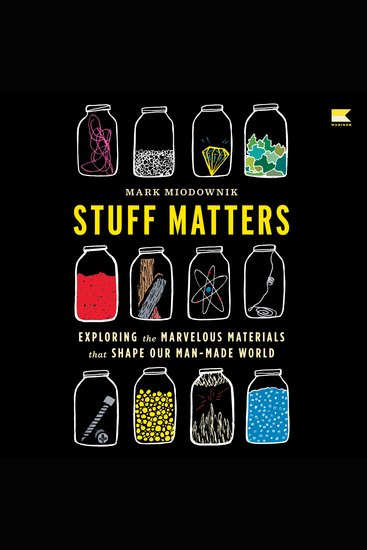
    A New York Times BestsellerAn eye-opening adventure deep inside the everyday materials that surround us, packed with surprising stories and fascinating scienceWhy is glass see-through? What makes elastic stretchy? Why does a paper clip bend? Why does any material look and behave the way it does? These are the sorts of questions that Mark Miodownik is constantly asking himself. A globally-renowned materials scientist, Miodownik has spent his life exploring objects as ordinary as an envelope and as unexpected as concrete cloth, uncovering the fascinating secrets that hold together our physical world.In Stuff Matters, Miodownik entertainingly examines the materials he encounters in a typical morning, from the steel in his razor and the graphite in his pencil to the foam in his sneakers and the concrete in a nearby skyscraper. He offers a compendium of the most astounding histories and marvelous scientific breakthroughs in the material world, including:The imprisoned alchemist who saved himself from execution by creating the first European porcelain.The hidden gem of the Milky Way, a planet five times the size of Earth, made entirely of diamond.Graphene, the thinnest, strongest, stiffest material in existence—only a single atom thick—that could be used to make entire buildings sensitive to touch.From the teacup to the jet engine, the silicon chip to the paper clip, the plastic in our appliances to the elastic in our underpants, our lives are overflowing with materials. Full of enthralling tales of the miracles of engineering that permeate our lives, Stuff Matters will make you see stuff in a whole new way.
    Show book
  • Internet of Things (IoT) - Part 2 IoT Security Privacy and Applications in Various Industries - cover

    Internet of Things (IoT) - Part...

    Daniel Garfield

    • 0
    • 0
    • 0
    In an era where connectivity reigns supreme, the Internet of Things (IoT) has emerged as a powerful force, permeating our homes, workplaces, and cities. "Secure Horizons" offers a comprehensive exploration of the IoT, with a specific focus on security, privacy, and its wide-ranging applications across various industries. 
    As the IoT continues to expand, ensuring the security and privacy of interconnected devices and data becomes paramount. This book equips readers with the knowledge and tools necessary to navigate this complex landscape. It delves into the challenges and vulnerabilities that arise when countless devices, sensors, and networks interconnect, emphasizing the importance of robust security measures and best practices to safeguard against cyber threats. 
    Moreover, "Internet of Things (IoT) " examines the critical issue of privacy in the IoT era. Readers will gain insights into the collection, storage, and utilization of vast amounts of data generated by IoT devices, exploring the ethical implications and regulatory frameworks that govern data privacy. The book presents strategies and methodologies for preserving privacy in IoT deployments, empowering readers to navigate the delicate balance between connectivity and individual rights. 
    Embark on a journey into the world of secure and privacy-aware IoT deployments, and explore the endless possibilities and applications across diverse industries. Join "Secure Horizons" to navigate the challenges, unleash the potential, and create a future where the Internet of Things thrives while preserving security, privacy, and individual rights. 
     
    Show book