¡Acompáñanos a viajar por el mundo de los libros!
Añadir este libro a la estantería
Grey
Escribe un nuevo comentario Default profile 50px
Grey
Suscríbete para leer el libro completo o lee las primeras páginas gratis.
All characters reduced
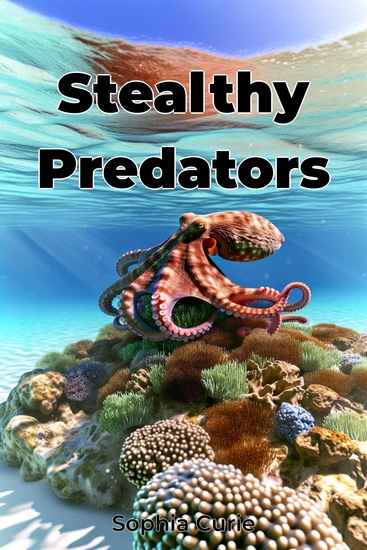
Stealthy Predators - cover

Stealthy Predators

Sophia Curie

Traductor A AI

Editorial: Publifye

  • 0
  • 0
  • 0

Sinopsis

"Stealthy Predators" explores the fascinating world of animal camouflage and stealth, revealing how evolutionary adaptation has driven the development of incredible survival strategies. The book delves into the core principles of camouflage like disruptive coloration and mimicry, showcasing how various species seamlessly blend into their environments. It highlights the delicate balance of ecosystems and the constant evolutionary arms race between predator and prey. Discover how military strategists and engineers have even drawn inspiration from nature's camouflage experts, influencing human innovation.

 
The book begins by introducing basic principles of camouflage and predator-prey dynamics, then progresses to specific examples, classifying stealth strategies among ambush predators. One section examines big cats, while another investigates marine life such as octopuses and cuttlefish.

 
The concluding chapters explore the role of these adaptations in maintaining ecosystem health and the consequences of habitat loss. Supported by scientific literature, field studies, and visual evidence, this book offers a unique perspective on the interconnectedness of life, making it valuable for nature enthusiasts and students of biology alike.
Disponible desde: 12/02/2025.
Longitud de impresión: 63 páginas.

Otros libros que te pueden interesar

  • An Engineer Imagines - cover

    An Engineer Imagines

    Peter Rice

    • 0
    • 0
    • 0
    The long-awaited reissue of the autobiography of Peter Rice, one of the main structural engineers behind the Sydney Opera House, the Pompidou Centre, the Menil Collection and Lloyd's of London.
    
    'I am an engineer. Often people will call me an 'architect engineer' as a compliment. It is meant to signify a quality of engineer who is more imaginative and design-orientated than a normal engineer... To call an engineer an 'architect engineer' because he comes up with unusual or original solutions is essentially to misunderstand the role of the engineer in society.'
    An Engineer Imagines is a rare look into the professional creativity and philosophy of Peter Rice, who was widely acclaimed as the greatest structural engineer of his generation. He was a man who, in Renzo Piano's words, could design structures 'like a pianist who can play with his eyes shut'. Working with many of the world's greatest architects on buildings that became icons of contemporary architecture, he brought a uniquely poetic feeling to his work.
    Joining Ove Arup & Partners in 1956, Rice had heard that 'it was a place where an oddball could fit in.' Taking on Arup's theory of Total Design to heart, Rice writes about the role of the engineer in society, and how he himself applied his creativity to various projects. He admits he became an engineer by accident, tentatively feeling his way through a career without a natural instinct. But as he takes you through each of his projects, one-by-one, you can trace his development from graduate to veteran.
    Written in clear and poetic language, Rice's autobiography is perfect for those who want to better understand postwar buildings, our concrete environment, or are budding students of engineering and architecture.
    Ver libro
  • Adaptive Computing - Designing Systems that Evolve with Change - cover

    Adaptive Computing - Designing...

    James Henry

    • 0
    • 0
    • 0
    In an era marked by rapid technological advancement and shifting user demands, Adaptive Computing: Designing Systems that Evolve with Change explores the revolutionary potential of adaptive systems in transforming how we interact with technology. This comprehensive guide delves into the principles, methodologies, and real-world applications of adaptive computing, highlighting the importance of designing systems that can learn, self-organize, and adjust in response to dynamic environments. 
    Readers will embark on a journey through the foundational theories of adaptive computing, including systems theory and cybernetics, while uncovering the key technologies that enable adaptability, such as machine learning, IoT, and cloud computing. The book provides insightful case studies across various sectors—healthcare, finance, smart cities, and education—demonstrating how adaptive systems enhance efficiency, personalize user experiences, and drive innovation. 
    This book offers valuable insights into designing resilient systems that thrive in complexity and uncertainty. It also addresses the ethical considerations and challenges involved in creating adaptive technologies, emphasizing the need for transparency, security, and trust. 
    Adaptive Computing: Designing Systems that Evolve with Change is your essential roadmap to understanding and harnessing the power of adaptive systems, equipping you with the knowledge to navigate the future of intelligent computing and drive meaningful change in your organization and beyond. 
     
    Ver libro
  • Extinctions - How Life Survives Adapts and Evolves - cover

    Extinctions - How Life Survives...

    Michael J. Benton

    • 0
    • 0
    • 0
    Cutting-edge techniques across biology, chemistry, physics, and geology have transformed our understanding of the deep past, including the discovery of a previously unknown mass extinction. This compelling evidence, revealing a series of environmental crises resulting in the near collapse of life on Earth, illuminates our current dilemmas in exquisite detail. 


    Beginning with the oldest, Professor Michael J. Benton takes us through the "big five" die outs: the Late Ordovician, which set the evolution of the first animals on an entirely new course; the Late Devonian, apparently brought on by global warming; the cataclysmic End-Permian, also known as the Great Dying, which wiped out over 90 percent of all life on Earth; the newly discovered Carnian Pluvial Event; and the End-Cretaceous asteroid. He examines how global warming, acid rain, ocean acidification, erupting volcanoes, and meteorite impact have affected conditions on Earth, and how life survived, adapted, and evolved. 


    In Extinctions, listeners will learn about revolutionary new tools used to uncover ancient extinction events and processes in forensic detail, and how scientists are improving our understanding of the deep past. New research allows us to link long-ago upheavals to crises in our current age, the Anthropocene, with important consequences for us all.
    Ver libro
  • Introduction to Artificial Intelligence - A Comprehensive Guide - cover

    Introduction to Artificial...

    Ruchini Kaushalya

    • 0
    • 0
    • 0
    **Unlock the Power of Artificial Intelligence: Your Ultimate Guide** 
    Feeling overwhelmed by AI? Struggling to grasp its potential? "Introduction to Artificial Intelligence - A Comprehensive Guide" is here to help! This audiobook demystifies AI, making it accessible to everyone, regardless of technical background.  
    **Benefits:** 
    1. **Clarity:** Understand AI with easy-to-digest explanations. 
    2. **Applications:** Discover how AI revolutionizes industries like healthcare, finance, and marketing. 
    3. **Empowerment:** Make informed decisions about AI adoption in your projects. 
    4. **Problem-Solving:** Use AI algorithms to tackle real-world problems. 
    5. **Career Boost:** Acquire in-demand AI skills to advance your career. 
    6. **Future-Proofing:** Stay relevant in an evolving technological landscape. 
    Don't let confusion hold you back. Embrace AI with confidence. Click "Buy Now" and transform your life and career with the ultimate AI guide. Act now!
    Ver libro
  • Summary: What Happened to You? - Conversations on Trauma Resilience and Healing - cover

    Summary: What Happened to You? -...

    Alice Moore, Liam Daniels

    • 0
    • 0
    • 0
    Summary: What Happened to You? (Oprah Winfrey and Bruce Perry) 
    You are likely to be familiar with the question, “What’s wrong with you?” We've all encountered it at some point, and most likely, we've asked it ourselves. But have you ever considered that this might be the wrong question to ask? 
    In a powerful and compelling conversation, Oprah and Dr. Perry discuss the importance of our past in shaping us and why asking “What’s wrong with you?” might be an unhelpful and misguided question. They propose shifting the focus to “What happened to you?” instead. This may seem simple, but it has been groundbreaking in changing the way we understand and think about trauma, which in turn has offered a significantly more optimistic approach to recovery. 
    Asking “What happened to you?” also removes any unintentional blame or fault directed toward any traumatized individual. It favors a compassionate, empathetic approach to therapy and healing. But this is just one of the core messages of Oprah and Dr. Perry’s book. 
    “Summary: What Happened to You?” provides you with all the powerful ideas, practices, and concepts that Oprah and Dr. Perry discuss in their original book. 
    You'll get:A complete breakdown of the original covering the most essential aspects of it in a concise, clear, and easy-to-read format—without missing anything important!Explanations of key brain systems and processes from a world-leading neuroscientist and trauma specialist.Information on different methods of trauma treatment.A powerful combination of storytelling and the latest research on neuroscience and traumatology.Shocking facts about trauma.And much more! 
    While it is beneficial to have read their original work, it’s not compulsory, as this summary will provide you with all the information you need. Don't miss out on the combined wisdom of these two giants.
    Ver libro
  • Pollution is Colonialism - cover

    Pollution is Colonialism

    Max Liboiron

    • 0
    • 0
    • 0
    In Pollution Is Colonialism Max Liboiron presents a framework for understanding scientific research methods as practices that can align with or against colonialism. They point out that even when researchers are working toward benevolent goals, environmental science and activism are often premised on a colonial worldview and access to land. Focusing on plastic pollution, the book models an anticolonial scientific practice aligned with Indigenous, particularly Métis, concepts of land, ethics, and relations. Liboiron draws on their work in the Civic Laboratory for Environmental Action Research (CLEAR)—an anticolonial science laboratory in Newfoundland, Canada—to illuminate how pollution is not a symptom of capitalism but a violent enactment of colonial land relations that claim access to Indigenous land. Liboiron's creative, lively, and passionate text refuses theories of pollution that make Indigenous land available for settler and colonial goals. In this way, their methodology demonstrates that anticolonial science is not only possible but is currently being practiced in ways that enact more ethical modes of being in the world.
    Ver libro