Join us on a literary world trip!
Add this book to bookshelf
Grey
Write a new comment Default profile 50px
Grey
Subscribe to read the full book or read the first pages for free!
All characters reduced
An Engineer Imagines - cover

An Engineer Imagines

Peter Rice

Publisher: Batsford

  • 0
  • 0
  • 0

Summary

The long-awaited reissue of the autobiography of Peter Rice, one of the main structural engineers behind the Sydney Opera House, the Pompidou Centre, the Menil Collection and Lloyd's of London.

'I am an engineer. Often people will call me an 'architect engineer' as a compliment. It is meant to signify a quality of engineer who is more imaginative and design-orientated than a normal engineer... To call an engineer an 'architect engineer' because he comes up with unusual or original solutions is essentially to misunderstand the role of the engineer in society.'
An Engineer Imagines is a rare look into the professional creativity and philosophy of Peter Rice, who was widely acclaimed as the greatest structural engineer of his generation. He was a man who, in Renzo Piano's words, could design structures 'like a pianist who can play with his eyes shut'. Working with many of the world's greatest architects on buildings that became icons of contemporary architecture, he brought a uniquely poetic feeling to his work.
Joining Ove Arup & Partners in 1956, Rice had heard that 'it was a place where an oddball could fit in.' Taking on Arup's theory of Total Design to heart, Rice writes about the role of the engineer in society, and how he himself applied his creativity to various projects. He admits he became an engineer by accident, tentatively feeling his way through a career without a natural instinct. But as he takes you through each of his projects, one-by-one, you can trace his development from graduate to veteran.
Written in clear and poetic language, Rice's autobiography is perfect for those who want to better understand postwar buildings, our concrete environment, or are budding students of engineering and architecture.
Available since: 03/14/2024.
Print length: 224 pages.
Other books that might interest you

  • Journeyman Electrician - Conquer Your Journeyman Electrician Exam! Gain access to dynamic audio lessons for unparalleled results - cover

    Journeyman Electrician - Conquer...

    Dexter Marlowe

    • 0
    • 0
    • 0
    Audiobook Title: Journeyman Electrician 
    ⭐⭐ Simplified Guide & Explanations Included ⭐⭐ 
    Are you aiming to advance in your career and fortify your knowledge by successfully becoming a Journeyman Electrician? 
    Seeking a comprehensive guide that provides all the essential elements to pass your Journeyman Electrician Exam? 
    Your search ends here! 
    This guide is your definitive companion for deepening your understanding, applying your skills, and engaging in hands-on exercises. With this, you're geared for success. 
    Updated for the latest Journeyman Electrician Exam Structure. 
    Key features of this enriched guide: 
    - Profound insights about the Journeyman Electrician Certification 
    - Detailed explanations of electrical principles and safety guidelines 
    - Effective strategies for exam preparation and problem-solving 
    Our guide distinguishes itself through comprehensive coverage, essential for your exam victory. Concepts are not merely skimmed; they are delved into with precision. 
    Please note that this guide is not affiliated with any official Journeyman Electrician entity and is purely an independent resource for your benefit. 
    Designed with a clear structure and easy-to-understand language, our Journeyman Electrician Guide ensures smooth transitions between topics. Say goodbye to dense jargon and welcome clear, precise, and technically accurate content. 
    So, why wait? Click the BUY NOW button, secure your guide, and commence your journey to becoming a successful Journeyman Electrician!
    Show book
  • Evolution Is Wrong - A Radical Approach to the Origin and Transformation of Life - cover

    Evolution Is Wrong - A Radical...

    Erich von Däniken

    • 0
    • 0
    • 0
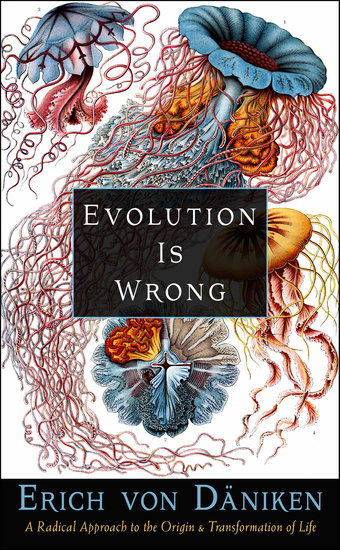
    A Fascinating Exploration on Why the Darwinists’ Theory No Longer Explains EverythingThere was once a set of ideas called the theory of evolution, conceived by clever people and confirmed by countless scientists. Then people discovered the electron microscope. This made it possible to make the molecules within the cell visible, and suddenly questions about evolution arose that were not possible before. Which force actually bundles the atoms in the right order? What moves the molecular chains into the correct position? How did the first living unit within the cell actually come about? How does inheritance work, how does information pass on to the next generation? Did humans descend only and exclusively from primates—as Charles Darwin and countless other great minds assumed—or did additional “engines” intervene in evolution? Today it is clear: countless questions can no longer be answered with the previous theory of evolution. There is a form of life called “Blob” (Physarum polycephalum). The “thing” has neither eyes nor ears, neither a mouth nor a nose or even a brain. Nevertheless, it takes in food, overcomes obstacles by the shortest route and exchanges information with other “blobs.” The “blob” contradicts any evolutionary thought that one develops from the other. Or the “gastric-brooding frogs” (Rheobatrachus) found in Australia. They hatch their young in the stomach. Impossible in a slow, evolutionary process. Everywhere there are characteristics of animals that do not want to fit into the theory of evolution anywhere. And man? Are we really the most adapted life-form on this planet? Today, more and more scientists who contradict the previous theory of evolution speak out. The theory fits the changes within the species, but it can no longer be reconciled with the inner workings of the cell. Some other influence that has so far escaped us is affecting evolution. It is called “Intelligent Design.” Intelligent planning is suspected behind this. Anyone or anything—a spirit of the universe? Aliens?—could be behind this planning. Erich von Däniken uses countless examples to demonstrate the impossibility of the previous evolutionary idea. He quotes scientists who argue against the previous teaching, but also those who defend it. Unfortunately, established science still refuses to look at discrepancies and holes in the theory of evolution, even though it is quite obvious that there is more going on with regard to the development of all species, as well as human culture, than could be explained by the theory of evolution alone.
    Show book
  • On the Origin of Species - cover

    On the Origin of Species

    Charles Darwin

    • 0
    • 0
    • 0
    'It is not the strongest of the species that survive, nor the most intelligent, but the one most responsive to change.'
    
    Considered as the foundation of evolutionary biology, Charles Darwin's groundbreaking On the Origin of Species profoundly transformed the field of biology at the time, as well as contemporary religious beliefs.
    
    First published in 1859, On the Origin of Species presents Darwin's theory of evolution by natural selection. Darwin argues that species evolve over time; individuals with superior traits better suited to their environment are more likely to survive and reproduce. These favourable traits become more common in subsequent generations, leading to the gradual development of a new species. Darwin draws upon extensive evidence from biology, geology and the animal kingdom to support his theory, challenging the idea that species are fixed and unchanging. Revolutionary in its influence, On the Origin of Species laid the foundation for modern evolutionary biology, genetics and ecology. This audiobook edition is skilfully narrated by Mark Elstob.
    Charles Darwin (1809 – 1882) was an English biologist, naturalist and geologist. Initially studying medicine and theology, Darwin became drawn to natural science, wherein he developed the pioneering theory of evolution via natural selection. He remains a hugely respected figure in science to this day.
    Show book
  • AI Frameworks - An In-Depth Guide to Building Optimizing and Deploying Intelligent Systems Using Leading Tools and Techniques - cover

    AI Frameworks - An In-Depth...

    May Sherry

    • 0
    • 0
    • 0
    "AI Frameworks: An In-Depth Guide to Building, Optimizing, and Deploying Intelligent Systems Using Leading Tools and Techniques." This comprehensive guide is designed for AI practitioners, data scientists, and developers who want to master the tools and techniques essential for creating cutting-edge AI solutions. 
    In this book, you'll delve deep into the world of AI frameworks, exploring the fundamental concepts and advanced features that drive modern AI development. The guide covers: 
    "AI Frameworks" is not just a guide; it's your roadmap to mastering the art of AI development and driving impactful innovation in the rapidly evolving field of artificial intelligence. 
     
    Show book
  • The Beast Within - Humans as Animals - cover

    The Beast Within - Humans as...

    Jessica Serra

    • 0
    • 0
    • 0
    How different from animals are we really? 


    Are humans the only creatures who love, laugh, cry, possess morals, and wage war? In The Beast Within, scientific researcher and ethologist Jessica Serra upends the assumptions that underpin our very human hypothesis that we possess a superior place in the hierarchy of organisms on Earth. How did we come to think of our animality as standing in opposition to our humanity—and does this reasoning have a scientific basis? 


    Through the fascinating discoveries made by ethologists, anthropologists, and archeologists, Serra deciphers our behaviors in light of their animal roots and demystifies ideas about how different animals are from humans. She compares human behaviors with those exhibited by other species in chapters spanning topics as varied as sex, morality, emotions, intelligence, and family. Exploring the evolution of various animal species, as well as the evolution of historical ideas about humanity and animality, Serra theorizes that human behaviors and motivations may hold more in common with those of animals than we think. These explorations of scientific findings encourage us to reconsider how much we have truly removed ourselves from "the beast within."
    Show book
  • Earth in Flames - How an Asteroid Killed the Dinosaurs and How We Can Avoid a Similar Fate From Nuclear Winter - cover

    Earth in Flames - How an...

    Alan Robock, Owen Brian Toon

    • 0
    • 0
    • 0
    Sixty-six million years ago an asteroid as large as Mt. Everest hit what is now the Yucatan Peninsula at a speed ten times faster than the fastest rifle bullet. Debris from the impact blew into space, re-entered the atmosphere as a swarm of shooting stars that burned the global forests and grasslands, leaving behind a thin global layer containing rock from the asteroid and from Mexico, and smoke from the fires. This layer marks one of the greatest extinctions in Earth history including not just dinosaurs, but also fish, plankton, ammonites, and plants making up about 75% of the known species. 


    A nuclear war with just a few hundred of the world's 12,000 nuclear weapons targeted on densely populated cities could plunge Earth into the same types of conditions that the dinosaurs experienced. Even a war between India and Pakistan could kill 1 to 3 billion people from starvation due to agricultural failure, while 6 billion people might starve following a war involving Russia, NATO, and the U.S. 


    The book describes how the dinosaurs died, and how their deaths parallel what might happen to people after a nuclear war. The book reflects on the odds of future asteroid impacts, how to stop them, and ends with what the listeners personally and together can do to prevent a nuclear war, so that humans don't end up like the dinosaurs.
    Show book