Join us on a literary world trip!
Add this book to bookshelf
Grey
Write a new comment Default profile 50px
Grey
Subscribe to read the full book or read the first pages for free!
All characters reduced
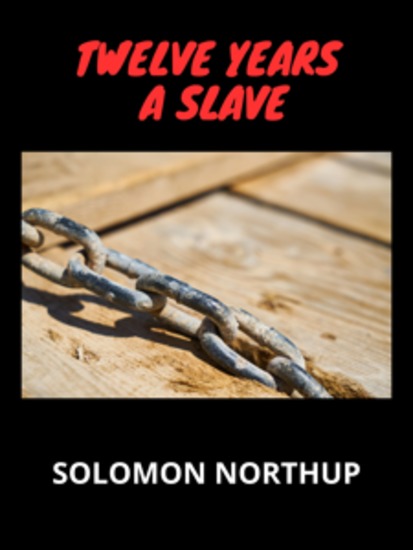
Twelve Years a Slave - cover

Twelve Years a Slave

Solomon Northup

Publisher: Stargatebook

  • 0
  • 0
  • 0

Summary

In 1853, this book shook American society and heralded the Civil War. 160 years later, it inspired Steve McQueen and Brad Pitt to create a cinematic masterpiece that has won many awards and accolades, including the 2014 Oscar for best film of the year.
As for Solomon Northup himself, the book was a confession for him about the darkest period of his life. A period when despair almost suffocated the hope of breaking free from the chains of slavery and regaining the freedom and dignity that had been taken from him.
The text of the translation is taken from the original 1855 edition. The translator has retained the author's style, which shows that Solomon Northup was not only learned but also literate.
Available since: 12/01/2024.

Other books that might interest you

  • Of Human Bondage - The Classic Tale - cover

    Of Human Bondage - The Classic Tale

    W. Somerset Maugham

    • 0
    • 0
    • 0
    The Narrow Corner is a novel by the British writer W. Somerset Maugham, published by William Heinemann in 1932. A quote from Meditations, iii 10, by Marcus Aurelius, introduces the work: "Short, therefore, is man's life, and narrow is the corner of the earth wherein he dwells." In the story, set "a good many years ago" in what is now Indonesia, a young Australian, cruising the islands after his involvement in a murder in Sydney, has a passionate affair on an island which causes a further tragedy. William Somerset Maugham was an English playwright, novelist, and short-story writer. He was among the most popular writers of his era and reputedly the highest-paid author during the 1930s. Both Maugham's parents died before he was 10, and the orphaned boy was raised in Whitstable, Kent by a paternal uncle, who was emotionally cold. He did not want to become a lawyer like other men in his family, so he trained and qualified as a physician. His first novel Liza of Lambeth (1897) sold out so rapidly that Maugham gave up medicine to write full-time. 
     
    In 1915 he wrote Of Human Bondage, widely considered his masterpiece. During the First World War, he served with the Red Cross and in the ambulance corps before being recruited in 1916 into the British Secret Intelligence Service. He worked for the service in Switzerland and Russia before the October Revolution of 1917 in the Russian Empire. During and after the war, he traveled in India, Southeast Asia and the Pacific. He drew from those experiences in his later short stories and novels.
    Show book
  • Portrait of a Lady The (Unabridged) - cover

    Portrait of a Lady The (Unabridged)

    Henry James

    • 0
    • 0
    • 0
    When Isabel Archer, a beautiful, spirited American, is brought to Europe by her wealthy Aunt Touchett, it is expected that she will soon marry. But Isabel, resolved to determine her own fate, does not hesitate to turn down two eligible suitors. She then finds herself irresistibly drawn to Gilbert Osmond, who, beneath his veneer of charm and cultivation, is cruelty itself. A story of intense poignancy, Isabel's tale of love and betrayal still resonates with modern audiences.
    Show book
  • The Devil in the Belfry - cover

    The Devil in the Belfry

    Edgar Allen Poe

    • 0
    • 0
    • 0
    A quiet unchanging town gets a visit from a most peculiar and, we come to find out, dastardly character. 
    Show book
  • The Picture of Dorian Gray - cover

    The Picture of Dorian Gray

    Oscar Wilde

    • 0
    • 0
    • 0
    "It is your best work, Basil, the best thing you have ever done," said Lord Henry, languidly. "You must certainly send it next year to the Grosvenor. The Academy is too large and too vulgar. The Grosvenor is the only place."    "I don't think I will send it anywhere," he answered, tossing his head back in that odd way that used to make his friends laugh at him at Oxford. "No: I won't send it anywhere."    Lord Henry elevated his eyebrows, and looked at him in amazement through the thin blue wreaths of smoke that curled up in such fanciful whorls from his heavy opium-tainted cigarette. "Not send it anywhere? My dear fellow, why? Have you any reason? What odd chaps you painters are! You do anything in the world to gain a reputation. As soon as you have one, you seem to want to throw it away. It is silly of you, for there is only one thing in the world worse than being talked about, and that is not being talked about. A portrait like this would set you far above all the young men in England, and make the old men quite jealous, if old men are ever capable of any emotion."    "I know you will laugh at me," he replied, "but I really can't exhibit it. I have put too much of myself into it."    Lord Henry stretched his long legs out on the divan and shook with laughter.  "Yes, I knew you would laugh; but it is quite true, all the same."    "Too much of yourself in it! Upon my word, Basil, I didn't know you were so vain; and I really can't see any resemblance between you, with your rugged strong face and your coal-black hair, and this young Adonis, who looks as if he was made of ivory and rose-leaves. Why, my dear Basil, he is a Narcissus, and you--well, of course you have an intellectual expression, and all that.    But beauty, real beauty, ends where an intellectual expression begins. Intellect is in itself an exaggeration, and destroys the harmony of any face. The moment one sits down to think, one becomes all nose, or all forehead, or something horrid. Look at the successful men in any of the learned professions. How perfectly hideous they are! Except, of course, in the Church. But then in the Church they don't think. A bishop keeps on saying at the age of eighty what he was told to say when he was a boy of eighteen, and consequently he always looks absolutely delightful. Your mysterious young friend, whose name you have never told me, but whose picture really fascinates me, never thinks. I feel quite sure of that. He is a brainless, beautiful thing, who should be always here in winter when we have no flowers to look at, and always here in summer when we want something to chill our intelligence. Don't flatter yourself, Basil: you are not in the least like him."
    Show book

  • Miss Winchelsea's Heart (Unabridged) - cover

    Miss Winchelsea's Heart...

    H. G. Wells

    • 0
    • 0
    • 0
    Herbert George Wells (21 September 1866 - 13 August 1946) was an English writer. Prolific in many genres, he wrote dozens of novels, short stories, and works of social commentary, history, satire, biography and autobiography. His work also included two books on recreational war games. Wells is now best remembered for his science fiction novels and is often called the "father of science fiction", along with Jules Verne and the publisher Hugo Gernsback.
    MISS WINCHELSEA'S HEART: Miss Winchelsea was going to Rome. The matter had filled her mind for a month or more, and had overflowed so abundantly into her conversation that quite a number of people who were not going to Rome, and who were not likely to go to Rome, had made it a personal grievance against her.
    Show book
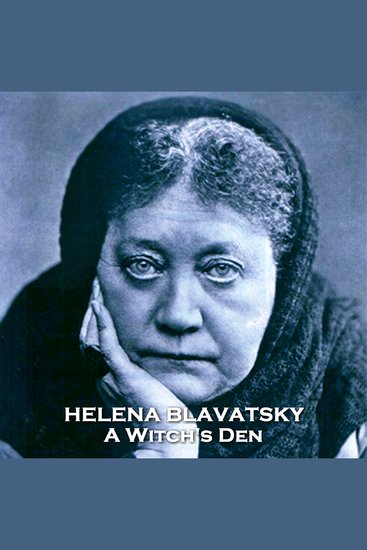
  • A Witch's Den - A look into the darker rituals of late 19th Century rural India - cover

    A Witch's Den - A look into the...

    Helena Blavatsky

    • 0
    • 0
    • 0
    Helena Petrovna Blavatsky, often known as Madame Blavatsky, was born on 12th August 1831 into an aristocratic family in present day Dnipro in Ukraine, then part of the Russian Empire.  She was the younger sister of the writer Vera Zhelikhovsky. 
     
    Much of Blavatsky’s life story relies on her own memories which changed much during her lifetime and therefore parts of it are unreliable.  What appears to be certain is that much of her life was lived first on family travels and postings and then on her journeys in an effort to further her own self-education and quest for knowledge. 
     
    As a teenager she developed an interest in Western esotericism and from there she claimed many travels including a trip to India where she encountered a group of spiritual adepts, the ‘Masters of the Ancient Wisdom’, who sent her to Shigatse, Tibet, where they trained her to develop a deeper understanding of the synthesis of religion, philosophy, and science.  
     
    By the early 1870s, Blavatsky was involved in the Spiritualist movement, which was then popular both in Britain and abroad, even though she argued against its main tenet that those ‘contacted’ were the spirits of the dead.  
     
    She moved to the United States in 1873 and became close to the journalist Henry Steel Olcott who helped her gain public attention as a spirit medium and then also became an adherent to her principles.   
     
    In 1875 in New York City she co-founded the Theosophical Society and two years later published ‘Isis Unveiled’, a book outlining her Theosophical world-view from its ancient roots to the modern day.  Her work was even more popular in Asia than elsewhere and is said to have influenced both Ghandi and Nehru amongst many others.  
     
    In 1880, she and Olcott moved to India, where the Society was allied to a Hindu reform movement.  That same year she converted to Buddhism.  However, she was often plagued with accusations of fraudulent paranormal phenomena.  
     
    With her health failing she returned to London and published ‘The Secret Doctrine’, her commentary on claimed ancient Tibetan manuscripts, and other books.  
     
    Helena Blavatsky died in London of influenza during the global pandemic on 8th May 1891.  She was 59.
    Show book