Join us on a literary world trip!
Add this book to bookshelf
Grey
Write a new comment Default profile 50px
Grey
Subscribe to read the full book or read the first pages for free!
All characters reduced
Summary of Nuclear War A Scenario - cover

Summary of Nuclear War A Scenario

Snap Read

Publisher: Snap Read

  • 0
  • 0
  • 0

Summary

What if nuclear war broke out today? This gripping summary of Annie Jacobsen's "Nuclear War: A Scenario" takes you minute-by-minute through a chilling hypothetical nuclear exchange. Experience the tension in the White House bunker, the chaos as missiles launch, and the devastating aftermath that follows.

Key takeaways from this summary:
- The first 24 critical minutes that change everything
- How military commanders and political leaders make split-second decisions
- The brutal reality of survival after nuclear strikes
- Why our nuclear defense systems might not save us
- The terrifying concept of "nuclear winter" and its lasting impact
- The fragile nature of nuclear deterrence in today's world

Why This Summary Book?
Get the core insights of Jacobsen's extensive research in a fraction of the time. Perfect for busy readers, students, and anyone concerned about global security. This summary breaks down complex military concepts into clear, digestible information while maintaining the urgency and gravity of the original work.

Don't wait to understand one of today's most pressing global threats. Click "Buy Now" to discover why experts call this book a wake-up call for humanity.

NOTE: This is an unofficial summary of Annie Jacobsen's Nuclear War: A Scenario and is not affiliated with the original author.
Available since: 12/20/2024.
Other books that might interest you

  • Gender Mosaic - Beyond the Myth of the Male and Female Brain - cover

    Gender Mosaic - Beyond the Myth...

    PhD Daphna Joel, Luba Vikhanski

    • 0
    • 0
    • 0
    With profound implications for our most foundational assumptions about gender, Gender Mosaic explains why there is no such thing as a male or female brain.For generations, we've been taught that women and men differ in profound and important ways. Women are more sensitive and emotional, whereas men are more aggressive and sexual, because this or that region in the brains of women is smaller or larger than in men, or because they have more or less of this or that hormone. This story seems to provide us with a neat biological explanation for much of what we encounter in day-to-day life. But is it true? According to neuroscientist Daphna Joel, it's not. And in Gender Mosaic, she sets forth a bold and compelling argument that debunks the notion of female and male brains. Drawing on the latest scientific evidence, including the groundbreaking results of her own studies, Dr. Joel explains that every human brain is a unique mixture -- or mosaic -- of "male" and "female" features, and that these mosaics don't map neatly into two categories. With urgent practical implications for the way we understand ourselves and the world around us, Gender Mosaic is a fascinating look at the science of gender, sex and the brain, and at how freeing ourselves from the gender binary can help us all reach our full human potential.
    Show book
  • Stuart Restoration The: The History and Legacy of the English Monarchy’s Return to Power in the Late 17th Century - cover

    Stuart Restoration The: The...

    Editors Charles River

    • 0
    • 0
    • 0
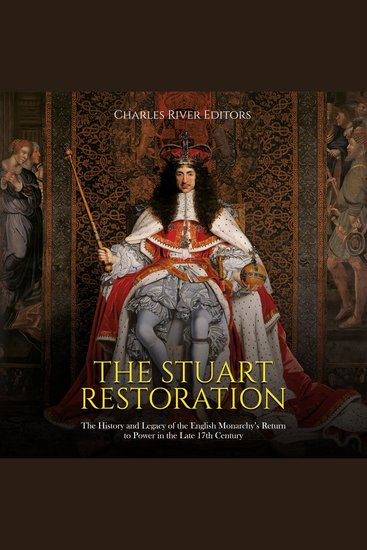
    Oliver Cromwell is one of the most important men in England’s history, but everything he struggled for collapsed within two decades of his death. The army, Parliament and the citizens of London grappled with each other for control of the country, and even the army no longer remained a united political force. Civil war almost broke out again as a force under Lambert failed to prevent General Monck, the military governor of Scotland, from marching south and dissolving the Rump Parliament. Excluded MPs were restored on condition that they themselves dissolve Parliament, and following fresh elections without military intervention, a new Parliament met on April 25, 1660. Dominated by Presbyterians and Royalists, it accepted a settlement offered by the man titling himself Charles II, the son and heir of Charles I. On May 25, 1660, Charles II returned to England, and less than two years after Cromwell’s death, his work was undone by the Restoration. King Charles II heaped ignominy upon defeat by having Cromwell’s body dug up and posthumously executed. Cromwell’s body was then decapitated, as was Ireton’s, and their heads were placed on a pike above Westminster Hall, where Charles I had been tried, for several years.  
    	Despite the Restoration, however, and despite the fact England’s republican experiment barely outlasted Cromwell, the Commonwealth and Restoration were hugely important in asserting the power of Parliament, and it permanently shifted England’s political balance firmly towards a constitutional monarchy limited by Parliament. The Stuart monarchy was restored on condition of compromise with Parliament and the army, and a precedent had been set for Parliament to replace the monarch, a precedent it would follow in the 1680s when James II was replaced by William and Mary in a settlement that set even more limits around the monarch.
    Show book
  • NASA’s Deadly Accidents - The History of the Disasters that Killed 17 Astronauts - cover

    NASA’s Deadly Accidents - The...

    Charles River Editors

    • 0
    • 0
    • 0
    As Apollo 11’s name suggests, there were actually a number of Apollo missions that came before, many of which included testing the rockets and different orbital and lunar modules in orbit. In fact, it wasn’t until Apollo 8 that a manned vehicle was sent towards the Moon and back, and before that mission, the most famous Apollo mission was Apollo 1, albeit for all the wrong reasons.  
    There were no delusions regarding the dangers of manned space travel, but they were brought home on January 27, 1967, when all three astronauts were killed by a fire that ignited in the cabin during a launch rehearsal. To this day, there is still debate over what ignited the fire, but the disaster made clear that the modules being used by NASA had a series of fatal flaws.  
    	In the decades after the Apollo program, American space shuttles flew over 130 missions and successfully completed over 98% of them, but unfortunately, the two most famous missions were the ones that ended tragically aboard the Challenger and Columbia. The Space Shuttle Challenger was the most heavily used space shuttle in the three years it was operational, carrying the first minority astronaut and woman astronaut into space. Challenger was also the first space shuttle to complete a landing at night.  
    	The notorious date of the Challenger disaster was commemorated by the crew of the Columbia while they were in space in 2003, and a few days later, on February 1, the Columbia was due to land at the Kennedy Space Center in Florida at 09:16. Only a few members of the press were present to watch the landing - this was, after all, supposed to be a routine return from a routine mission, the 113th for the shuttle program and the 28th for Columbia, one of the oldest Space Shuttles.
    Show book
  • Service With the Sixth Wisconsin Volunteers - Four Years with the Iron Brigade - cover

    Service With the Sixth Wisconsin...

    Rufus R. Dawes

    • 0
    • 0
    • 0
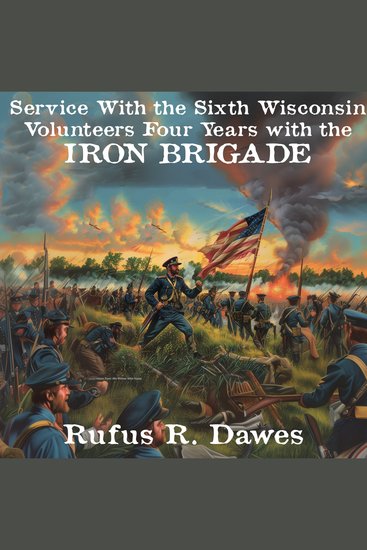
    Service With the Sixth Wisconsin Volunteers: Four Years with the Iron Brigade" is a compelling memoir penned by Rufus R. Dawes, offering a vivid portrayal of his experiences as a soldier during the American Civil War. Dawes, a member of the renowned Iron Brigade, provides readers with an intimate glimpse into the trials and triumphs of army life, recounting his four-year journey with remarkable detail and candor. From the thunderous chaos of battlefields to the quiet moments of camaraderie in camp, Dawes captures the essence of soldiering during one of the nation's most tumultuous periods. His narrative not only chronicles the physical challenges of war but also delves into the emotional toll it exacted on those who fought. Through Dawes' eyes, readers gain a deeper understanding of the sacrifices made by ordinary men thrust into extraordinary circumstances, making "Service With the Sixth Wisconsin Volunteers" an invaluable testament to the resilience and spirit of the Civil War generation.
    Show book
  • Argentina and Peronism: The History and Legacy of Argentina’s Transition from Juan Perón to Democracy - cover

    Argentina and Peronism: The...

    Charles River Editors

    • 0
    • 0
    • 0
    Until the 1930s, nationalism had always tended to be a phenomenon of the right-wing or the immigrant anarchists and Bolsheviks. Now, however, the emphasis shifted to the middle ground, and ironically, one of the issues driving Argentine nationalism was the outsized British presence in Argentine affairs, stoked recently by the preferential trade agreement. Perhaps most importantly, the seizure by the British in 1833 of the Islas Malvinas (or as the British termed them, the Falkland Islands) remained a sore point. 
    This wave of cultural nationalism was very different to the more visceral, political nationalism that came before it, and it gathered a considerable following in Buenos Aires among liberal intellectuals and the middle classes. The movement was given further impetus by the outbreak of World War II and the freezing of European markets, along with the British emphasis on the imperial preference as a means of saving foreign currency. Calls began to be heard for industries to be nationalized, for goods no longer imported to be manufactured at home, and for a greater degree of protectionism and self-sufficiency. At the same time, Argentina’s neutrality during the war was punished by the United States, which excluded Argentina from a program of arming several Latin American countries. This struck the Argentine armed forces with a bout of the jitters in case they fell behind in matters of military preparedness. 
    After the tensions had mounted for over a year, matters played out precisely as Perón’s opponents had feared. By the final months of 1945, his popularity had soared, and it seemed inevitable that he would seize control of the military government if permitted to remain in power.
    Show book
  • The New Life - cover

    The New Life

    Dante Alighieri

    • 0
    • 0
    • 0
    A Vita Nuova (pronounced [la ˈviːta ˈnwɔːva]; Italian for "The New Life")  is a text by Dante Alighieri published in 1294. It is an expression of the medieval genre of courtly love in a prosimetrum style, a combination of both prose and verse.
    Show book