Join us on a literary world trip!
Add this book to bookshelf
Grey
Write a new comment Default profile 50px
Grey
Subscribe to read the full book or read the first pages for free!
All characters reduced
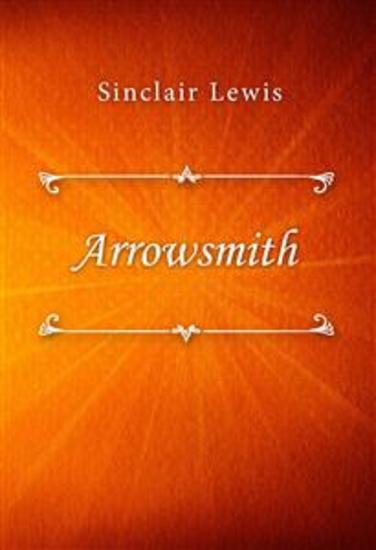
Arrowsmith - cover

Arrowsmith

Sinclair Lewis

Publisher: Classica Libris

  • 0
  • 0
  • 0

Summary

Published in 1925, Arrowsmith is the story of Martin Arrowsmith, a gifted scientist making his way from a small Midwestern town to the apex of the scientific community. Arrowsmith follows the titular character from medical school through stints as a small-town doctor and regional health official to his discovery of a virus that destroys bacteria.
Arrowsmith was awarded the 1926 Pulitzer Prize for Fiction, but the award was declined by the author. It has been adapted for radio, film and television.
Available since: 09/12/2022.

Other books that might interest you

  • Mr Pim Passes By - cover

    Mr Pim Passes By

    A. A. Milne

    • 0
    • 0
    • 0
    A.A. Milne will be forever associated with the timeless "Winnie the Pooh" books. In the Pooh stories and in his poetry for children Milne was able to enter the world of childhood in a unique way. Adults continue to enjoy the books as precious windows into their own childhood memories but also because the writing has a wry and winsome humour that speaks to any age. Yet Milne was a successful writer of humour long before he created these children's masterpieces, producing a fine body of articles, novels and plays. 
    "Mr Pim Passes By" is Milne's own adaptation of his successful play of the same name, first produced in 1919 and running for 246 performances. 
    The somewhat self-centred and over comfortable world of George Marden is suddenly disrupted by the arrival of the somewhat aged and confused Mr Pim. This seemingly routine social visit throws George and his family into a comic situation which raises serious questions about a past determined to rear its disturbing head! 
    Head Stories Audio presents " Mr Pim Passes By" by A. A. Milne - narrated by Simon Hester. With original music.
    Show book
  • Plea for Total Abstinence A (Unabridged) - cover

    Plea for Total Abstinence A...

    Charles Dickens

    • 0
    • 0
    • 0
    Charles Dickens was a writer and social critic who created some of the world's best-known fictional characters and is regarded as the greatest novelist of the Victorian era. His works enjoyed unprecedented popularity during his lifetime, and by the twentieth century critics and scholars had recognised him as a literary genius. His novels and short stories enjoy lasting popularity.
    A PLEA FOR TOTAL ABSTINENCE: One day this last Whitsuntide, at precisely eleven o'clock in the
    forenoon, there suddenly rode into the field of view commanded by the windows of my lodging an equestrian phenomenon.
    Show book
  • The Jungle Book - cover

    The Jungle Book

    Rudyard Kipling

    • 0
    • 0
    • 0
    "The Jungle Book" by Rudyard Kipling is a collection of stories originally published in the late 19th century. The central focus is on the adventures of a young boy named Mowgli, who is raised by wolves in the Indian jungle. The book explores themes of nature, survival, and the conflict between civilization and the wild.  
    The narrative highlights the bonds formed between Mowgli and various animal characters, emphasizing the laws that govern the lives of the jungle's inhabitants. At the beginning of the book, we learn about Mowgli's origins when he is discovered by Father Wolf after wandering into the wolf pack's territory. The fierce tiger, Shere Khan, poses a significant threat as he seeks to claim Mowgli for himself. However, Mother Wolf fiercely defends Mowgli, declaring him as her own, which ignites a debate among the pack members about the implications of accepting a human child into their midst. 
    This opening sets the stage for Mowgli’s complex relationship with both the jungle and the human world, showcasing the challenges he faces as he grows up estranged from both realms. The tone of adventure and danger that permeates the stories to come invites listeners into a vividly imagined natural world.
    Show book
  • A Torture By Hope - From their pens to your ears genius in every story - cover

    A Torture By Hope - From their...

    Villiers de I'Isle-Adam

    • 0
    • 0
    • 0
    The bookshelves of European literature are incredible collections that have gathered together centuries of very talented authors.  From this continent their fame spread and whilst among their number many are now forgotten or neglected their talents endure.  Among them is Villiers de I'Isle-Adam.
    Show book
  • October Vagabonds - cover

    October Vagabonds

    Richard Le Gallienne

    • 0
    • 0
    • 0
    Two friends set out on foot at the edge of autumn, trading the noise of the city for quiet roads and golden leaves. With no fixed destination, they walk through the backroads of upstate New York, staying in small inns, visiting country towns, and living on simple pleasures. 
    Along the way, they reflect on poetry, friendship, freedom, and the joy of slowing down. October Vagabonds is part travel memoir, part celebration of nature, and part quiet rebellion against the rush of modern life. 
    This is a story for those who dream of wandering, who long for crisp air and fire-lit nights, and who find meaning in moments that ask nothing in return. 
    Perfect for fans of lyrical prose, slow travel, and stories that value stillness over spectacle.
    Show book
  • Nikolai Gogol - A Short Story Collection - The absurdist Masters most compelling tale Ukranian born short story great that influenced the likes of Tolstoy and Dostoyevsky - cover

    Nikolai Gogol - A Short Story...

    Nikolai Gogol

    • 0
    • 0
    • 0
    Nikolai Vasilievich Gogol was born on 1st April 1809 to a father, descended from Ukrainian Cossacks and a mother with a military background in the Ukrainian town of Sorochyntsi, then part of the Russian Empire and rich in Cossack traditions and folklore.   
     
    His father wrote poetry and plays which the young Gogol helped stage at his uncle’s home theatre.  This helped ignite in him a love of literature and blossomed when he attended, what is now, the Nizhyn Gogol State University at the age of 12.  Here he participated in school theatre productions and refined his mastery of his native Ukrainian and also the Russian of his Imperial masters. 
     
    In 1828 he went to St Petersburg and unsuccessfully tried to begin a career as an actor after finding that with no money and no connections the civil service was barred to him. 
     
    Embezzling money from his mother he embarked on a trip to Germany. When the money ran out, he returned to St Petersburg but the experiences were used in a series of stories he contributed to periodicals.  These tales were steeped in his childhood memories of the Ukrainian landscape and peasantry enlivened with the supernatural of its folklore woven with realistic events of the day.  He wrote in Russian in a whimsical, colloquial style with a smattering of Ukrainian words and phrases that provided an authenticity.  Eight stories were published as ‘Evenings on a Farm near Dikanka’.  Seemingly all at once fame and fortune arrived. Gogol was hailed by his contemporaries, including Pushkin, as a pre-eminent writer of Russian literature.   
     
    His success continued with his brilliant plays ‘The Inspector General’ and the comedy ‘The Marriage for the Theatre’, both being highly acclaimed.   
     
    In 1834 he became Professor of Medieval History at the University of St. Petersburg but with little academic or teacher training, failed to adequately fulfil many of his duties and soon resigned this post.  With no obligations and using his earnings from his writing, which now included the impressionistic and immortal ‘Dead Souls’, Gogol travelled around Europe, spending the most time in Rome where he studied art, read Italian literature and developed a passion for opera.  
     
    In the 1840s Gogol became preoccupied with a need to purify his soul and embarked on a pilgrimage to Jerusalem. In tandem he fell under the influence of a strict and austere spiritual ascetic who persuaded him to observe strict fasts that, allied with his depression and deteriorating health, contributed to his death on 21st April 1852 at the age of only 43. 
     
    1 - Nikolai Gogol - A Short Story Collection - An Introduction 
    2 - The Nose by Nikolai Gogol 
    3 - The Cloak by Nikolai Gogol also known as 'The Overcoat' 
    4 - Old Fashioned Landowners by Nikolai Gogol 
    5 - St Johns Eve by Nikolai Gogol 
    6 - Diary of a Madman by Nikolai Gogol
    Show book