Join us on a literary world trip!
Add this book to bookshelf
Grey
Write a new comment Default profile 50px
Grey
Subscribe to read the full book or read the first pages for free!
All characters reduced
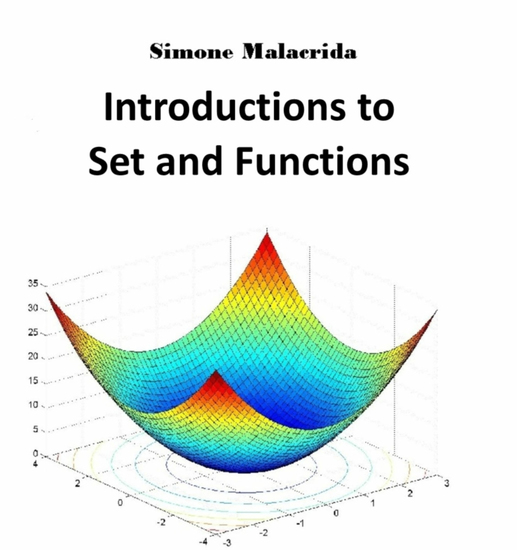
Introduction to Set and Functions - cover

Introduction to Set and Functions

Simone Malacrida

Publisher: BookRix

  • 0
  • 0
  • 0

Summary

The theoretical assumptions of the following mathematical topics are presented in this book:
mathematical logic
set theory
function theory
literal calculus
properties of powers and radicals
monomial and polynomial calculus
Each topic is covered by emphasizing practical applications and solving some significant exercises.
Available since: 04/18/2023.
Print length: 31 pages.

Other books that might interest you

  • Artificial Intelligence in Cryptocurrency and Banking - Podcast - cover

    Artificial Intelligence in...

    Bryan DeHart

    • 0
    • 0
    • 0
    This podcast explores the use of artificial intelligence (AI) and cybersecurity in the financial sector, specifically focusing on cryptocurrencies (Bitcoin) and the banking system. The existing literature on AI techniques such as SVM, ANN, LSTM, and GRU for cryptocurrency price prediction and risk management is reviewed. Additionally, the application of AI in customer service and banking risk management is analyzed, including technologies like blockchain and the Internet of Things (IoT). Finally, the challenges and future opportunities in these areas are discussed. The study is based on a comprehensive analysis of previous research and provides an overview of the state of the art.
    Show book
  • The Elements of Entomology - cover

    The Elements of Entomology

    William Ruschenberger

    • 0
    • 0
    • 0
    The Elements of Entomology is one of seven in a Series of First Books of Natural History Prepared for the Use of Schools and Colleges. It is a succinct little textbook from 1845 that presents an introduction to entomology. The author was a surgeon in the U.S. Navy and president of the Academy of Natural Sciences.(Summary by A.L. Gramour)
    Show book
  • The Stellar Mind - The Fundamental Intelligence of the Universe - cover

    The Stellar Mind - The...

    Ylia Callan

    • 0
    • 0
    • 0
    This audiobook is narrated by an AI Voice.  What if the universe itself thinks? The Stellar Mind takes listeners on an extraordinary journey into the hidden intelligence woven into the very fabric of reality. From the silent dance of neutrinos to the magnetic memory of planets, this audiobook explores how consciousness might exist far beyond brains, permeating stars, Earth, and the cosmos itself. 
     
    Blending cutting-edge science, philosophy, and metaphysical inquiry, this audiobook illuminates the mechanisms by which the universe processes information, remembers, and evolves. Discover the cognitive potential of cosmic plasma, the neural-like architecture of spacetime, and what this means for life, AI, and our search for extraterrestrial intelligence. 
     
    Thought-provoking and awe-inspiring, The Stellar Mind challenges conventional notions of mind, life, and intelligence, inviting you to perceive the universe not as inert matter but as a living, thinking entity. By the final chapter, listeners will reconsider their place in the cosmos and the profound ethical and spiritual implications of a universe that knows itself.
    Show book
  • Earth-Friendly Farming - Solutions for a Healthy Planet - cover

    Earth-Friendly Farming -...

    ABIGAIL MARKHAM, BRETT GEHRING

    • 0
    • 0
    • 0
    Earth-Friendly Farming: Solutions for a Healthy Planet 
    🌱 Sustainable Practices: Learn about the latest techniques in sustainable farming, including organic agriculture, permaculture, and regenerative farming methods. 
    💧 Water Wisdom: Explore innovative ways to conserve water and use it more efficiently in agricultural practices. 
    🌾 Crop Diversity: Understand the importance of crop diversity for ecological balance and how it can be implemented effectively on farms. 
    🐝 Ecosystem Harmony: Delve into the role of pollinators, beneficial insects, and wildlife in maintaining a healthy farm ecosystem. 
    🍃 Soil Health: Discover the crucial role of soil health in sustainable agriculture and ways to enhance soil fertility without harmful chemicals. 
    👨‍🌾 Community Impact: See how sustainable farming practices not only benefit the environment but also strengthen local communities and economies. 
    🌍 Climate Change Mitigation: Learn about the impact of agriculture on climate change and how earth-friendly farming can reduce carbon footprints and help in combating global warming. 
    "Earth-Friendly Farming" is an invaluable resource for farmers, environmentalists, students, and anyone interested in the future of agriculture. Each chapter is a deep dive into how we can use our lands more responsibly, emphasizing the connection between our farming choices and the health of our planet. 
    Are you ready to explore the green revolution in agriculture? To learn how sustainable practices can yield healthier crops, ecosystems, and communities? To understand the critical balance between farming and the natural world? 
    Open "Earth-Friendly Farming" and begin your journey into the heart of sustainable agriculture, where every seed planted is a step towards a healthier Earth. 🌍🌱💧🌾🐝🍃👨‍🌾📚
    Show book
  • Beat the Bots - A Writer's Guide to Surviving and Thriving in the Age of AI - cover

    Beat the Bots - A Writer's Guide...

    Jane K. Cleland

    • 0
    • 0
    • 0
    Beat the Bots offers science-based creativity techniques that guide you through the writing process to unlock your imagination and create compelling stories that resonate with emotional truth in ways AI can’t match. 
      
    Even though artificial intelligence is based on a technology called “machine learning,” computers can’t learn to be creative—but you can. This book will show you the way. AI is, by definition, derivative, not creative. It can’t bring rational judgment to determine the quality or value of its work. When you bring those capabilities to your writing, your stories will touch readers’ hearts and minds. 
      
    Just as real food is better for us than processed food, and actual social interactions are more meaningful than social media, when it comes to writing your story, artificial intelligence can’t replicate your individual human intelligence, imagination, and sensibility. Technical wizardry can’t tell your story. Only you can do that. Your uniqueness is what separates you from a chatbot, and explains why you can’t be replaced by an algorithm. You’ll succeed because you’re human, not in spite of it. 
      
    Through engaging FAQs, invaluable “Pro Tips,” and “AI Weighs In” revelations, you’ll be able to apply the writing lessons and creativity tactics to all aspects of storytelling, bringing your distinctive vision and voice to your projects in ways AI simply can’t. Thought-provoking, science-based guided exercises challenge you to apply each chapter’s lessons to your own writing. Whether you’re writing a novel, literary nonfiction, or a memoir, you’ll be able to write stories that are fresh and compelling—your stories—and those are the books that publishers want and readers crave. That’s how you’ll beat the bots.
    Show book

  • Chasing the Intact Mind - How the Severely Autistic and Intellectually Disabled Were Excluded from the Debates That Affect Them Most - cover

    Chasing the Intact Mind - How...

    Amy S.F. Lutz

    • 0
    • 0
    • 0
    The concept of the intact mind, first described in a 2006 memoir, refers to the idea that inside every autistic child is an intelligent, typical child waiting to be liberated by the right diet, the right treatment intervention, the right combination of supports and accommodations. The sentiment itself is not new. Though the idea gives hope to parents devastated by a child's diagnosis, Amy Lutz argues that it has also contributed to widespread dismantling of services badly needed by severely disabled children and their families. 


    In Chasing the Intact Mind, Lutz traces the history of the intact mind concept, explaining how it influences current policy and practice affecting those with autism. Lutz provides a historical analysis of the intact mind narrative and describes how the concept—originally unique to autism—has come to inform current debates at the heart of intellectual and developmental disability practice and policy in the United States. Lutz argues that focusing on the intact mind and marginalizing those with severe disability reproduces historic patterns of discrimination that yoked human worth to intelligence, and that it is only by making space for the impaired mind that we will be able to resolve these ongoing clashes—as well as even larger questions of personhood, dependency, and care.
    Show book