Join us on a literary world trip!
Add this book to bookshelf
Grey
Write a new comment Default profile 50px
Grey
Subscribe to read the full book or read the first pages for free!
All characters reduced
Goodbye Transylvania - A Romanian Waffen-SS Soldier in WWII - cover

Goodbye Transylvania - A Romanian Waffen-SS Soldier in WWII

Sigmund Heinz Landau

Publisher: Rowman & Littlefield Publishers

  • 0
  • 0
  • 0

Summary

A Romanian soldier details serving for Germany on the Eastern Front during World War II in this memoir, featuring firsthand accounts of combat. German by ancestry, born and raised in the ethnic welter of post-World War I Romania, Sigmund Heinz Landau left his home to volunteer for the Third Reich during World War II. Serving on the Eastern Front, he saw nearly six years of continuous fighting with a Luftwaffe Flak unit and eventually in the Waffen-SS, from sentry duty to desperate attacks against Soviet T-34s, from the siege of Budapest to the final campaign for Berlin in 1945. Landau’s memoir, written from a unique perspective, offers rare insight into what motivated soldiers to fight—and die—for Nazi Germany.
Available since: 06/14/2023.
Print length: 227 pages.

Other books that might interest you

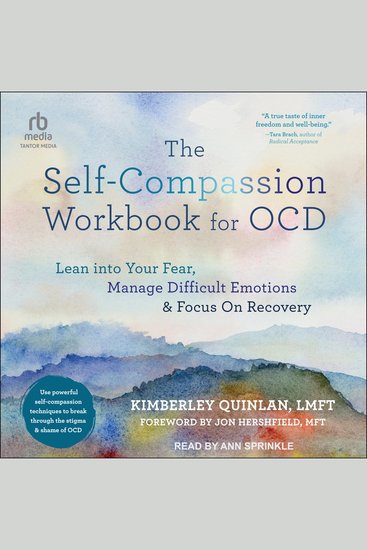
  • The Self-Compassion Workbook for OCD - Lean into Your Fear Manage Difficult Emotions and Focus On Recovery - cover

    The Self-Compassion Workbook for...

    LMFT Kimberley Quinlan, MFT Jon...

    • 0
    • 0
    • 0
    If you're one of millions who suffer from obsessive-compulsive disorder (OCD), you're all-too-familiar with feelings of anxiety, panic, shame, and uncertainty. In addition, the stigma associated with OCD can make you feel unworthy of receiving the compassion and kindness you need and deserve. You may even experience unwanted intrusive thoughts that result in harsh self-judgment—which can actually hinder your recovery and lead to additional mental health problems. So, how can you break this destructive cycle and start feeling better? 


    The Self-Compassion Workbook for OCD outlines a step-by-step program to help you understand the emotional experience of OCD, and develop the tools you need to manage your disorder and build a better life. Drawing on a powerful combination of cognitive behavioral therapy (CBT), exposure and response prevention (ERP), and compassion-focused therapy (CFT), this breakthrough guide will teach you how to balance intense emotions, lean into your fear, and focus on recovery. Over time, you'll learn to replace self-judgment with kindness and self-compassion, so you can stop suffering and start thriving. 


    Living with OCD can be extremely challenging, but it doesn't have to rob you of your self-worth. Let this book be your guide to discovering, supporting, and loving the best you that you can be.
    Show book
  • Educational Pluralism and Democracy - How to Handle Indoctrination Promote Exposure and Rebuild America’s Schools - cover

    Educational Pluralism and...

    Ashley Rogers Berner

    • 0
    • 0
    • 0
    In Educational Pluralism and American Democracy, education policy expert Ashley Rogers Berner envisions a K–12 education system that serves both the individual and the common good. Calling for education reform that will enable US public schools to fulfill the longstanding promise of American education, Berner proposes a radical reimagining of both the structure and content of US public school systems. She urges policymakers to embrace educational pluralism, an internationally common model in which the government funds diverse types of schools that deliver more universal content. 


    Providing an incisive assessment of democratic education throughout the world, Berner argues that educational pluralism can build students' exposure to diverse viewpoints and shared knowledge within distinctive school communities. She shows how pluralism steers a middle path that enables equitable access, promotes academic excellence, and avoids the zero-sum games that characterize US education policy. 


    In this thought-provoking proposal, Berner lays out a roadmap for big-picture reform, expertly delineating the mechanisms through which educational norms can change. A practical conclusion describes concrete moves that advocates can pursue to garner support and advance new legislation.
    Show book
  • The Causes of the Rebellion in Ireland Disclosed - cover

    The Causes of the Rebellion in...

    Anonymous Anonymous

    • 0
    • 0
    • 0
    "The Causes of the Rebellion in Ireland Disclosed" is a pamphlet written anonymously that analyzes the causes and motivations behind the 1798 Irish Rebellion against British rule. 
    The pamphlet argues that the rebellion was not a spontaneous uprising, but rather the result of a combination of factors that had been building up over time. These factors included economic hardship, religious tensions, and a growing sense of Irish nationalism and desire for independence from British rule. 
    The pamphlet also examines the role of the United Irishmen, a political group that had been working towards Irish independence, and argues that their efforts were instrumental in organizing the rebellion. Additionally, the pamphlet discusses the role of British policies in exacerbating the tensions that led to the rebellion, including the Penal Laws and the suppression of Irish trade. 
    Overall, "The Causes of the Rebellion in Ireland Disclosed" provides a detailed analysis of the factors that led to the 1798 Irish Rebellion, shedding light on a significant event in Irish history and the ongoing struggle for independence from British rule.
    Show book
  • The Racial Wealth Gap - A Brief History - cover

    The Racial Wealth Gap - A Brief...

    Mehrsa Baradaran

    • 0
    • 0
    • 0
    Why has the racial wealth gap between the median white households and median Black households remained stagnant over the past century, never narrowing below six to one? Leading expert on race and financial equality Mehrsa Baradaran attempts to answer this question in this sweeping yet accessible history. She shows how decades of the laws rooted in white supremacy have restricted Black access to capital, credit, homeownership, and other mechanisms of wealth creation while subsidizing the rising economic fortunes of white families. 
     
    In The Racial Wealth Gap, Baradaran outlines two tectonic forces that have driven apart the economic fortunes of white and Black families: wealth creation for white Americans, who have been systematically receiving financial subsidies in the century and a half since emancipation, and wealth destruction for Black Americans—either by vigilante violence or by official means, such as allowing Black banks to collapse or building highways through segregated Black communities. These forces, combined with the racist notion that Black communities fail to rise because of their own moral, intellectual, or economic shortcomings, have kept Black families behind their white counterparts, despite decades of civil rights activism and national economic growth—a deep injustice that can only be achieved through reparations.
    Show book
  • When Others Dont Understand Your Illness - 5 Ways to Feel Well When You're Sick and Alone - cover

    When Others Dont Understand Your...

    Heather Coleske

    • 0
    • 0
    • 0
    A diagnosis and treatment plan for a chronic illness has brought your world crashing down - When Others Don’t Understand Your Illness can help get your well-being back on track again. 
    Stress in our everyday life is common but add the shock of diagnosis and grief of the loss of health, and it’s a perfect storm of stress and overthinking, which can lead to depression and anxiety. 
    This book teaches you how to leverage your existing resources rather than expending your finite energy on reinventing the wheel. 
    This chronic illness book can help you alter your view of the future! It offers a well-being plan that can propel you from feeling sick and sad to thriving! If you’re feeling overwhelmed by your new reality and tired of sifting through the myriad of conflicting advice about everything from fatigue to fibromyalgia and dealing with the indifference of people around you, this book may help to declutter, prioritize, and put things into perspective. 
    The book covers:5 Ways to feel well - practical ways to incorporate and optimize simple things you already have at your disposal to improve your wellbeingUnderstanding autoimmune disease and moodNavigating relationshipsHow to Live with pain - strategies for managing pain before it manages youWays to help you feel better when you’re feeling sick and aloneCoping with loss - future prospects including hopes and dreams are often lost when chronic illnesses strike, and their loss is always accompanied by griefStress managementWays to stop overthinkingAnxiety techniques that are simple yet effective 
    Living with chronic illness is complicated, but this practical guide to intentional physical, mental, spiritual, and relational well-being offers a pathway to flourishing. For anyone coming to terms with a diagnosis, there is hope to live your best life by developing a personalized well-being plan.
    Show book
  • Languages of the Ancient Near East The: The History of the Languages and Scripts Developed across the Region in Antiquity - cover

    Languages of the Ancient Near...

    Editors Charles River

    • 0
    • 0
    • 0
    Perhaps not surprisingly given how advanced they were in comparison to contemporaries, the Egyptians invented one of the first writing systems ever, and for centuries, people thought these ancient texts held some sort of secret, be it aliens, advanced technology lost to the world, or mystical cures for all of the world’s ills. Even the ancient Egyptians saw their writing systems as full of mystery and hidden knowledge - according to Egyptian mythology, writing was invented by the ibis-headed god Thoth, the most intellectual of the gods.  
    	Along with Egypt, the cultural and geographic region known as Mesopotamia was home to some of the world’s earliest civilizations and also the first known form of writing, cuneiform. Many different ethnic groups vied for power in ancient Mesopotamia over the course of antiquity, spanning about 3,000 years, and many of them spoke different languages. Despite these differences, the people in Mesopotamia shared many cultural attributes, including similar religious practices, a common art and architecture style, and a shared use of the cuneiform script. The languages spoken by the peoples of Mesopotamia were as diverse as the many ethnic groups, but as those groups asserted their military, economic, and cultural power over the other groups, two languages became dominant in the region: Sumerian and Akkadian.  
    	The greatest irony of the lack of primary source information about the Phoenicians is that their language and writing happened to be the most influential in antiquity, a byproduct of their voyages and colonization, which spread their language across the Mediterranean. It was the forerunner to the Greek alphabet, from which the Latin alphabet was directly derived, and thus most of the written languages of the modern West. 
    Show book