Join us on a literary world trip!
Add this book to bookshelf
Grey
Write a new comment Default profile 50px
Grey
Subscribe to read the full book or read the first pages for free!
All characters reduced
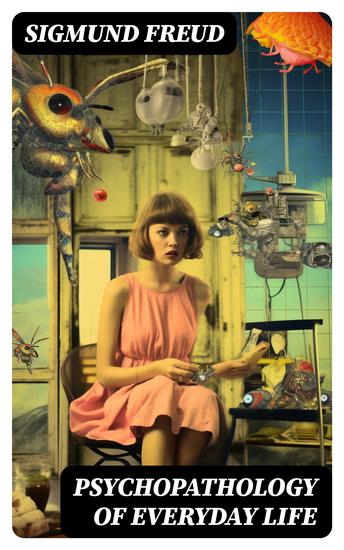
Psychopathology of Everyday Life - Enriched edition Why We Forget Words and Make Errors - cover

Psychopathology of Everyday Life - Enriched edition Why We Forget Words and Make Errors

Sigmund Freud

Publisher: DigiCat

  • 0
  • 0
  • 0

Summary

In "Psychopathology of Everyday Life," Sigmund Freud meticulously examines the seemingly trivial mistakes and slips of the tongue that permeate daily interactions. Establishing a pioneering framework, Freud delves into the unconscious mind, unraveling the intricate connections between our repressed desires and the mundane mishaps that punctuate human existence. His literary style combines anecdotal evidence with crisp analysis, marking a seminal contribution to psychoanalytic theory and establishing a context wherein the ordinary becomes a portal to understanding the psyche's deeper mechanisms. This work is not merely an exploration of neuroses; it is an invitation into the inner workings of human thought and behavior, revealing a hidden world shaped by unacknowledged motives and conflicted emotions. Freud, an Austrian neurologist and the father of psychoanalysis, was driven by a profound curiosity about the workings of the mind and the human condition. His extensive clinical experience, coupled with an interest in literature and philosophy, significantly influenced his approach to psychology. Through his investigations, Freud sought to illuminate the complexities of human thought, making "Psychopathology of Everyday Life" not only a personal exploration of his insights but also a foundational text that challenges traditional perceptions of rational behavior. This book is recommended for anyone interested in the depths of human psychology, as it offers profound insights into the seemingly trivial aspects of daily life. Freud's engaging style and profound revelations enrich our understanding of human fallibility, making this a vital read for psychologists, literary scholars, and anyone curious about the complexities of the mind.

In this enriched edition, we have carefully created added value for your reading experience:
- A succinct Introduction situates the work's timeless appeal and themes.
- The Synopsis outlines the central plot, highlighting key developments without spoiling critical twists.
- A detailed Historical Context immerses you in the era's events and influences that shaped the writing.
- An Author Biography reveals milestones in the author's life, illuminating the personal insights behind the text.
- A thorough Analysis dissects symbols, motifs, and character arcs to unearth underlying meanings.
- Reflection questions prompt you to engage personally with the work's messages, connecting them to modern life.
- Hand‐picked Memorable Quotes shine a spotlight on moments of literary brilliance.
- Interactive footnotes clarify unusual references, historical allusions, and archaic phrases for an effortless, more informed read.
Available since: 11/24/2023.
Print length: 180 pages.


Other books that might interest you

  • Revolutionary Algorithms - A TikTok Manifesto - cover

    Revolutionary Algorithms - A...

    Torey Akers

    • 0
    • 0
    • 0
    From an artist and TikTok creator, a critical look at the controversial app and its effect on cultural heritage, artificial intelligence, community organizing, and digital censorship. In Revolutionary Algorithms, Torey Akers approaches TikTok with a deep understanding of the app, as both a prolific creator and consumer of its content. In these essays, she interrogates how the TikTok ban and the multiple genocides happening around the world are deeply intertwined; how the app can empower creators, amplify social movements, and document abuses of power. She addresses the good, bad, and sometimes uncanny parts of maneuvering and communicating in a digital space.  As a new era of social media looms, Akers makes the case for techno-progressivism, looking toward a future where TikTok continues to connect, inspire, and create space for more intersectionality, equity, and joy.
    Show book
  • Specialized Therapies - Breaking Boundaries (3 in 1) - cover

    Specialized Therapies - Breaking...

    Vivian Westlake

    • 0
    • 0
    • 0
    This book contains three kinds of therapy: 
    Psychosexual Therapy - Psychosexual therapy is a specialized form of counseling designed to address psychological factors that impact a person's sexual health and intimacy. It explores the complex relationship between emotional well-being, physical health, and sexual experiences. Often, psychosexual therapy is sought by individuals or couples experiencing challenges in their sexual relationships, such as low libido, sexual dysfunction, or communication difficulties around intimacy. 
    Narrative Therapy - Narrative therapy is a therapeutic approach that views individuals as the authors of their own stories. This perspective emphasizes that people are not defined by their problems, but rather by the way they relate to and interpret their experiences. The central premise of narrative therapy is that we can rewrite our stories, even the ones shaped by challenges, in ways that empower us to lead fulfilling lives. 
    Solution-Focused Brief Therapy - Solution-Focused Brief Therapy (SFBT) is a collaborative, goal-directed approach to therapy that emphasizes finding solutions to clients' problems rather than focusing extensively on the problems themselves. This method arose in the 1980s, developed by Steve de Shazer, Insoo Kim Berg, and their colleagues at the Brief Family Therapy Center in Milwaukee. The therapy stands apart from traditional problem-focused therapies by its strength-based philosophy, its reliance on the client’s own resources, and its focus on the future rather than the past. It offers a clear, practical approach that fosters rapid change and is often used in a brief therapy setting, making it highly efficient for clients seeking to improve their situations in a short amount of time.
    Show book
  • I Am the Law - How Judge Dredd Predicted Our Future - cover

    I Am the Law - How Judge Dredd...

    Michael Molcher

    • 0
    • 0
    • 0
    He is the law—and you better believe it! 


    Judge, jury, and executioner, Judge Dredd is the brutal comic book cop policing the chaotic future urban jungle of Mega-City One, created by John Wagner and Carlos Ezquerra and launching in the pages of 2000 AD in 1977. 


    But what began as a sci-fi action comic quickly evolved into a searing satire on hardline, militarized policing and "law and order" politics, its endless inventiveness and ironic humor acting as a prophetic warning about our world today—and with important lessons for our future. 


    Blending comic book history with contemporary radical theories on policing, I Am The Law takes key Dredd stories from the last forty-five years and demonstrates how they provide a unique wake up call about our gradual, and not so gradual, slide towards authoritarian policing. 


    From the politicization of policing to "zero tolerance," from violent suppression of protest to the rise of the surveillance state, I Am The Law examines how a comic book warned us about the chilling endgame of today's "law and order" politics.
    Show book
  • The Prince - cover

    The Prince

    Niccolò Machiavelli

    • 0
    • 0
    • 0
    "The Prince" is a political treatise by Niccolò Machiavelli, written in 1513 and published in 1532. The book is a pragmatic guide for political leaders, focused on how to maintain power and navigate the complex and often ruthless world of governance. Although the text is commonly viewed as a manual for manipulation and a justification for Machiavellian deceit and cunning, it has also been interpreted as a realistic, if cynical, analysis of power dynamics. The work is a foundational text in political theory and continues to be studied and debated today.
    Show book
  • Big Feelings Brave Hearts - The Proven 5-Step Emotion Coaching Guide to Raising Emotionally Resilient Children – For Parents and Educators - cover

    Big Feelings Brave Hearts - The...

    Anonymous

    • 0
    • 0
    • 0
    Big emotions in little bodies can feel overwhelming. This book helps grown-ups turn those big moments into beautiful ones. 
    Big Feelings, Brave Hearts is a practical, nurturing guide for parents and early educators to help children aged 2–6 identify, understand, and regulate their emotions. With evidence-based strategies, emotional coaching tips, and reflection prompts, this book offers gentle support for raising emotionally resilient children. 
    Perfect for parents, teachers, and professionals seeking everyday tools to support self-regulation, empathy, and calm confidence in young children.
    Show book
  • Evolution is Wrong - A Radical Approach to the Origin and Transformation of Life - cover

    Evolution is Wrong - A Radical...

    Erich von Däniken

    • 0
    • 0
    • 0
    A Fascinating Exploration on Why the Darwinists' Theory No Longer Explains Everything 


    Everywhere there are characteristics of animals that do not want to fit into the theory of evolution anywhere. And man? Are we really the most adapted life-form on this planet? Today, more and more scientists who contradict the previous theory of evolution speak out. The theory fits the changes within the species, but it can no longer be reconciled with the inner workings of the cell. Some other influence that has so far escaped us is affecting evolution. It is called "Intelligent Design." Intelligent planning is suspected behind this. Anyone or anything—a spirit of the universe? aliens?—could be behind this planning. 


    In this must-listen book, Erich von Däniken uses countless examples to demonstrate the impossibility of the previous evolutionary idea. He quotes scientists who argue against the previous teaching, but also those who defend it. Unfortunately, established science still refuses to look at discrepancies and holes in the theory of evolution, even though it is quite obvious that there is more going on with regard to the development of all species, as well as human culture, than could be explained by the theory of evolution alone.
    Show book