Junte-se a nós em uma viagem ao mundo dos livros!
Adicionar este livro à prateleira
Grey
Deixe um novo comentário Default profile 50px
Grey
Assine para ler o livro completo ou leia as primeiras páginas de graça!
All characters reduced
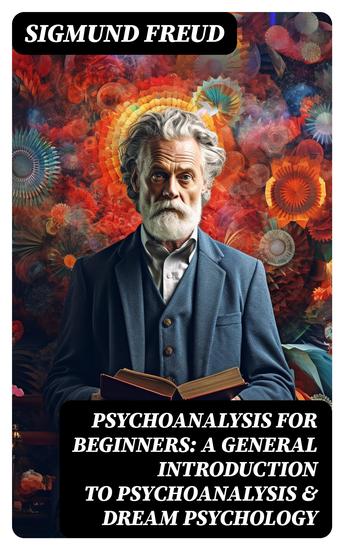
PSYCHOANALYSIS FOR BEGINNERS: A General Introduction to Psychoanalysis & Dream Psychology - cover
LER

PSYCHOANALYSIS FOR BEGINNERS: A General Introduction to Psychoanalysis & Dream Psychology

Sigmund Freud

Tradutor M. D. Eder, Stanley Hall

Editora: DigiCat

  • 0
  • 0
  • 0

Sinopse

In "Psychoanalysis for Beginners: A General Introduction to Psychoanalysis & Dream Psychology," Sigmund Freud lays the foundational principles of his revolutionary psychological theories, exploring the intricate workings of the unconscious mind, the significance of dreams, and the human psyche's inherent conflicts. Written in an accessible style, this introductory text demystifies complex concepts while situating them within the broader context of early 20th-century psychology. Freud employs vivid case studies and clear explanations, articulating the mechanisms of repression, transference, and the interpretation of dreams as pathways to understanding human behavior and emotions. Sigmund Freud, an Austrian neurologist and the father of psychoanalysis, developed his theories against the backdrop of a rapidly changing European intellectual landscape. His background in neurology and his fascination with the human mind propelled him to explore phenomena that traditional psychology could not adequately address. Freud's work emerged from his experiences with patients suffering from neuroses, leading him to propose that underlying psychological issues are often rooted in unresolved conflicts from childhood—a concept that would shape modern psychological thought. "Psychoanalysis for Beginners" is an essential read for anyone interested in understanding the complexities of the human mind. Freud's masterful blend of scholarly insight and relatable examples makes this work not only informative but an engaging journey into the hearts and minds of individuals. Readers will gain an invaluable perspective on the foundational ideas that heavily influenced psychology, literature, and the arts throughout the 20th century.
Disponível desde: 07/12/2023.
Comprimento de impressão: 160 páginas.

Outros livros que poderiam interessá-lo

  • The Roman Catholic Bishops of Lancaster - Celebrating the Centenary 1924–2024 - cover

    The Roman Catholic Bishops of...

    Paul Severn

    • 0
    • 0
    • 0
    In the century since its founding in 1924, the Roman Catholic diocese of Lancaster has had seven bishops and one auxiliary bishop. In a series of biographical portraits, Paul Severn tells the story of each of the bishops, explores their background and their impact on the life of the diocese in a century of change in the Church and in the wider world.
    
     
    Looking back on a century that has seen two world wars, profound changes in society, the “revolution” of the Second Vatican Council, increasing secularization and declining numbers of those attending church, and the beginnings of synodality, he reflects on the lives of the individual bishops and also on the role and responsibility of Roman Catholic bishops in the twenty-first century.
    Ver livro
  • Sundaland and Doggerland: The History and Mysteries of the Sunken Landmasses in Asia and Europe - cover

    Sundaland and Doggerland: The...

    Editors Charles River

    • 0
    • 0
    • 0
    By the time the Pleistocene Epoch ended around 12,000 years ago, Homo sapiens had become one of the most significant species on the planet. 	It was also near the end of that period of time that modern humans began to gradually populate what would become Europe, Asia, and the Americas, eventually becoming the inheritors of the Paleolithic era and the only human species to make it into the Neolithic era. 	The cold Pleistocene temperatures lowered water levels across the planet, exposing land that was not there before or after the period. At the same time, significant regions of the planet were very different during the Pleistocene, including Southeast Asia, particularly the modern islands of Bali, Borneo, Sumatra, and the Malay Peninsula, roughly equivalent to parts of Indonesia, Malaysia, and Thailand. This region, which modern scholars refer to as Sunda or Sundaland, was unique because all of it was connected by land, meaning today’s islands were once part of a contiguous subcontinent, and in terms of the people, flora, and fauna, it was very different than it is today.  
    Among the most significant water displacement phenomena in the Western world was Doggerland on the northern European continent. The notable inundation occurred in both a steady and eruptive fashion covering a vast stretch of former tundra, a land bridge between today’s British Isles and the European continent. The event brought about the modern English Channel and an expanded North Sea, and unlike the early supercontinents, the inundation of Doggerland took place after the appearance of people. Incrementally submerged since roughly 18,000 years ago as the climate warmed, the patch of sea between Britain and Europe is the subject of much recent scientific scrutiny. 
    Ver livro
  • Ordinary Men Turning Into Monsters - The Dark Descent of The Everyday Man - cover

    Ordinary Men Turning Into...

    Davis Truman

    • 0
    • 0
    • 0
    How can ordinary people, whom we consider "normal," unexpectedly commit repulsive and criminal actions that we would never have thought them capable of? The concept of evil is one of the great themes in history, philosophy, sociology, and psychology. We have always tended to categorize the perpetrators of evil as "the others," "them," bad people, monsters, and true villains who commit atrocities that "we" could never carry out. The German philosopher Hannah Arendt challenged this clear distinction between inherently good people and inherently bad people and introduced a new, original paradigm known as the "banality of evil." 
    Arendt's concept suggests that the vast majority of German soldiers who followed Hitler's orders and committed horrific crimes were not sadistic monsters but ordinary men, not much different from us. These normal men, placed within a context of hierarchy, modern bureaucracy, and obedience to authority, were capable of killings, abuse, torture, and inhumane treatment of victims. In essence, there were monsters, yes, but they were few, far fewer than commonly believed. Starting from here, we aim to answer how ordinary people can transform into real monsters. We will trace a path that leads up to the present day.
    Ver livro
  • Na Scéalta Atá Fós Ann - cover

    Na Scéalta Atá Fós Ann

    Ciara Geraghty

    • 0
    • 0
    • 0
    Tá an tUasal Ó Sé agus a mhadra dílis, Seoirse, ag dul amach ar cuairt ghairid chuig na siopaí. Tá dearmad déanta ag an Uasal Ó Sé ar a chuid eochracha, ach beidh Bean Uí Shé ann, mar a bhíonn sí i gcónaí, chun iad a ligean isteach. Ach ar an mbealach ar ais, tugann Seoirse faoi deara go bhfuil rud éigin amú – chas siad faoi dheis nuair ba chóir dóibh casadh faoi chlé, rud atá á dtabhairt níos faide ó bhaile. Chun rudaí a dhéanamh níos measa, tá an chuma air go mbeidh báisteach ann. Buaileann na seanchairde an bóthar ar thuras trasna Bhaile Átha Cliath agus trína gcuid cuimhní, atá, de réir cosúlachta, ag imeacht ceann ar cheann… 
    Mr Bolton and his faithful dog, George, are just popping down to the shops. He forgot his keys, but Mrs Bolton will be there to let them in like always. But on the way back, George notices something wrong - they turned right when they should have turned left, bringing them farther from home. To make things worse, it's beginning to look like rain. The old friends set off on a journey across Dublin and through their memories, which seem to be disappearing one by one...
    Ver livro
  • Medieval Europe: A Captivating Guide to European History during the Middle Ages Starting with the Fall of Rome through Byzantium the Carolingian Empire and Crusades to the Renaissance - cover

    Medieval Europe: A Captivating...

    Captivating History

    • 0
    • 0
    • 0
    Did you know that the English longbow was the “machine gun” of the medieval era, with its effectiveness being far greater than the crossbow? 
    The English longbow, typically made of yew wood, was one of the most powerful weapons in the Middle Ages that could change the course of battles. Measuring up to six feet in length, this weapon was highly regarded for its power and accuracy—trained archers could accurately shoot their target from over 200 yards. 
    The longbow also had a faster rate of fire compared to crossbows. Archers could release up to twelve arrows in a minute, while a crossbowman could only fire a maximum of three bolts in the same span of time. Because of this, longbowmen could unleash a devastating rain of arrows upon their enemies, disrupting their formations so the other units could charge in. 
    The medieval archers also required less training time to master the art of the longbow since the weapon’s mechanics were far simpler than that of crossbows. The most significant advantage of the longbow, however, was its penetrating power. An accurate shot could easily pierce through the armor of medieval soldiers. These archers would also fire at charging steeds to take down mounted knights. Without their mounts, heavily armored knights would be rendered immobile, making them almost completely vulnerable. 
    The history of the Middle Ages is rather complex and intricate. With so many events taking place simultaneously, it is easy to get confused over time. But that is about to change as this all-new history audiobook allows you to easily explore the gripping events that took place within this interesting period. 
    Scroll up and click the “add to cart” button to learn more about Medieval Europe!
    Ver livro
  • 200 Random Boring Facts to Help You Fall Asleep - cover

    200 Random Boring Facts to Help...

    8 Hour Sleep Music

    • 0
    • 0
    • 0
    Get ready to unwind with one of the most unique sleep experiences available. 200 Random Boring Facts to Help You Fall Asleep blends curiosity and calm in a truly original way. 
    This audiobook begins with one hour of soothing narration, gently guiding you through 200 weird, random, funny, and fascinating facts from the worlds of science, nature, history, and life. Each fact is designed to be light, intriguing, and relaxing — perfect for letting go of stress and distracting your mind from the noise of the day. 
    Following the narration, you'll be treated to 8 full hours of peaceful music and ambient nature sounds, carefully designed to help you fall asleep and stay asleep all night long. 
    Whether you're a trivia lover, a restless sleeper, or someone looking for a calming nighttime routine, this audiobook offers the perfect combination of gentle entertainment and deeply relaxing soundscapes. 
    Features: 
    • 1 hour of calming, sleep-friendly narration 
    • 200 fun and fascinating facts, each read slowly and softly 
    • 8 hours of continuous ambient music and nature sounds for deep sleep 
    • Ideal for bedtime listening, background relaxation, or overnight use
    Ver livro